Eating Georgian food and learning to cook it are two different pleasures. A table of khinkali gives you the result; folding the dumplings yourself shows why the pleats and the hot broth matter. A cooking class buys structure, ingredients and someone who can correct your technique. An independent bakery-and-restaurant walk buys variety, spontaneity and the freedom to stop whenever you find a dish worth trying.
The useful decision is not whether Georgian cooking is worth experiencing — it is how you want to spend a limited afternoon in Tbilisi. A short workshop can be an excellent rainy-day plan or a shared activity for friends, but it is not automatically a walking tour, a home visit or a complete introduction to every regional food tradition.
Guided experience or independent visit?
Swipe sideways to compare all three columns ↔
| Decision | Guided | Independent |
|---|
| Main purpose | Prepare dumplings and cheese bread yourself with instructions and a fixed table setting. | Taste different dishes from independent bakeries and restaurants without a lesson. |
|---|
| Time | The selected Tbilisi workshop lists around 2.5 hours at one indoor venue. | A tasting walk can last an hour or an afternoon, depending on queues and appetite. |
|---|
| Location | The class meets at the St. Bunny restaurant in the Merani shopping-centre building on Rustaveli Avenue. | Choose venues around your accommodation and arrange each stop yourself. |
|---|
| Food included | The checked option lists five khinkali per guest and one khachapuri per pair, plus accompaniments. | You order and pay separately, choosing your preferred portions and variations. |
|---|
| Diet and allergies | Ask the kitchen in advance about fillings, dairy, wheat, cross-contact and possible substitutes. | You can seek out particular dishes, but each restaurant still needs to confirm ingredients. |
|---|
| Best fit | Travelers who value a shared hands-on memory and specific cooking skills. | People who would rather discover a wider range of local dishes at their own pace. |
|---|
What the checked cooking class actually teaches
The Georgian Cuisine listing for the St. Bunny restaurant advertises a 2.5-hour class preparing khinkali and khachapuri. It describes the hands-on preparation of filling and folding dumplings, a choice between Imeretian, Megrelian and Adjarian styles of cheese bread, and eating the finished food together. In the reviewed description, the khinkali dough has already been mixed and rested before the lesson; this is not a start-from-flour masterclass in every stage of dough making.
Portions matter when comparing activities. The advertised package specifies five khinkali for each participant, while one khachapuri is prepared by a pair of guests. The supplier also describes a shared tomato-and-cucumber salad, Georgian cheese, and a glass of wine or a non-alcoholic alternative. Extra items ordered from the restaurant are separate. Treat this as a workshop meal and communal experience, not a promise of unlimited food or a private restaurant kitchen.
The meeting point is St. Bunny on the third floor of the Merani complex, accessible from Rustaveli Avenue or the parallel Griboyedov Street. It is an in-city, fixed-location experience, not a pickup-based food crawl. Confirm your booking slot and directions before leaving your hotel; the word Tbilisi in an activity title does not imply a transfer from every neighborhood.
Why an independent food walk is a real alternative
If your goal is to taste, rather than cook, you may get more variety by putting together a small route: a bakery for a fresh khachapuri, a restaurant with khinkali made to order, and a stop for a different Georgian specialty such as pkhali or lobio. Georgia's tourism authority explains that khachapuri has distinct regional forms; a restaurant meal can let you compare them without tying the day to one recipe.
That freedom has its own responsibilities. Do not assume every restaurant makes every style, that a dish is suitable for a vegetarian simply because it contains cheese, or that the bill includes service in the same way at every venue. Georgian food can involve wheat, dairy, nuts, meat and herbs in varying combinations. Check ingredients with staff rather than translating a menu photograph into a medical assurance.
An independent walk also pairs naturally with Old Tbilisi sightseeing. You could browse the streets near your base between dishes, schedule museums around lunch, or return for a second meal if a place is busy. By contrast, in a structured class the best value comes from participating, asking questions and accepting the group timetable.
Choose the format for your party, not just the photographs
A workshop is not always the easiest option for every traveler. Children may enjoy folding the dumplings, but adults must check the supplier's current minimum age, supervision and food-handling arrangements. People with mobility needs should ask about the route to the third-floor venue, elevators, workstation height and seating. A marketplace accessibility badge alone cannot describe the participant's actual experience.
If you follow a restricted diet, contact the organizer before paying. A class built around cheese bread and dumplings may be able to discuss alternatives, but a substitution should never be invented on the reader's behalf. Also confirm whether everyone prepares individual portions, whether you will share a station with other guests, and whether you can take recipes home.
For many couples or groups the ideal solution is to cook once and eat independently on another day. The class explains how particular dishes are made; independent meals introduce different interpretations. Neither needs to displace Tbilisi's museums, markets or neighborhood cafés.
Plan the surrounding Tbilisi day
Keep the hours immediately before the class reasonably light if you want to enjoy the finished food. Build travel time to Rustaveli Avenue and avoid assuming the whole experience will finish exactly on the scheduled minute, especially when groups need time to eat. Check restaurant access and any temporary roadworks on the date of your booking.
For a self-guided food day, plan a small number of worthwhile stops rather than trying to collect every famous dish in one afternoon. Heat, rainy weather, opening hours and the wait for freshly cooked khinkali can all affect how far you go. Comfortable accommodation near your preferred Tbilisi neighborhood is more valuable than an unrealistically dense restaurant checklist.
What to confirm before booking
Read the selected date and language, exact meeting point, dietary policy, age rules, ingredient coverage, drinks, cancellation terms and any items purchased on top of the class. The advertised portions and venue are sourced from the listing reviewed in October 2026; individual operators can revise them.
Choose the workshop when hands-on instruction is what you want. Choose an independent tasting route when wandering and comparing dishes matter more. No article can confirm available spaces for a future date without the provider's live booking response.
Questions before you go
Does this cooking class include making dumpling dough from scratch?
The checked supplier says the khinkali dough is prepared and rested in advance. Guests work on filling, folding and learning the technique.
Will I cook my own whole khachapuri?
The current listing describes one khachapuri per two guests. Check the selected session if your group wants a particular version.
Is it a cooking class inside a family home?
No. The referenced experience takes place at St. Bunny restaurant in central Tbilisi, not at a private residence.
Can someone who does not drink alcohol join?
The reviewed listing mentions juice or lemonade instead of wine. Confirm your preference with the organizer before arrival.
Can vegetarian or gluten-free guests attend?
Do not assume either diet is supported: the core dishes may contain meat, dairy or wheat and require specific advance confirmation with the supplier.
Is the workshop better than a food tour?
It is better for learning specific techniques. A separate walk or food tasting is better for sampling more dishes and neighborhoods.
Continue planning independently
Sources and further checking
Research reviewed in October 2026. Activity options, entrance conditions and provider routes can change. Confirm inclusions and the selected date before committing.
Photograph sources and licenses
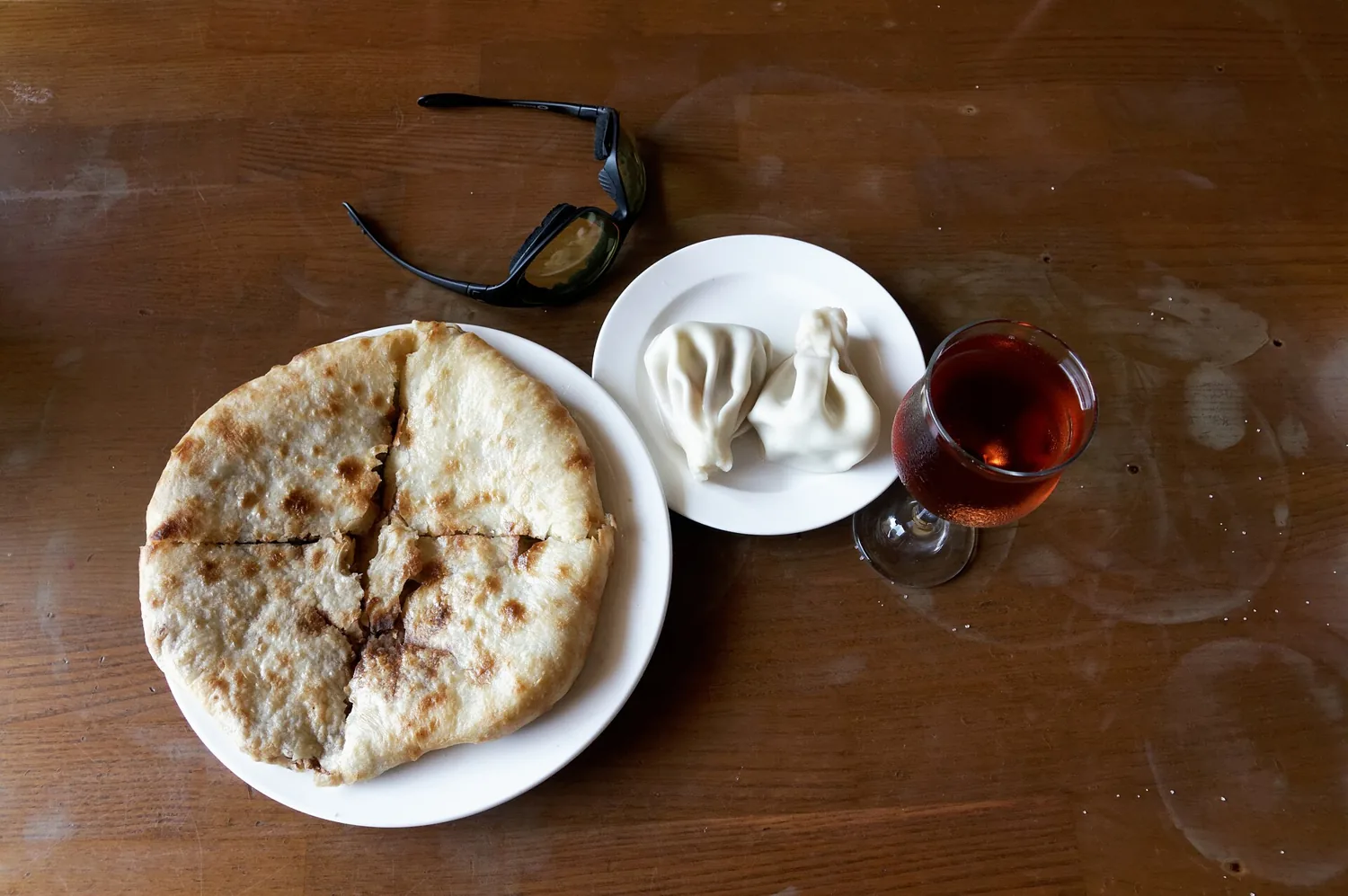
Khachapuri and khinkali served as traditional Georgian food in Tbilisi. By Vyacheslav Argenberg. Original photograph · CC BY 4.0. Scaled and converted to compressed WebP; original attribution and applicable share-alike terms retained. Location/context photography, not supplier-owned tour imagery.
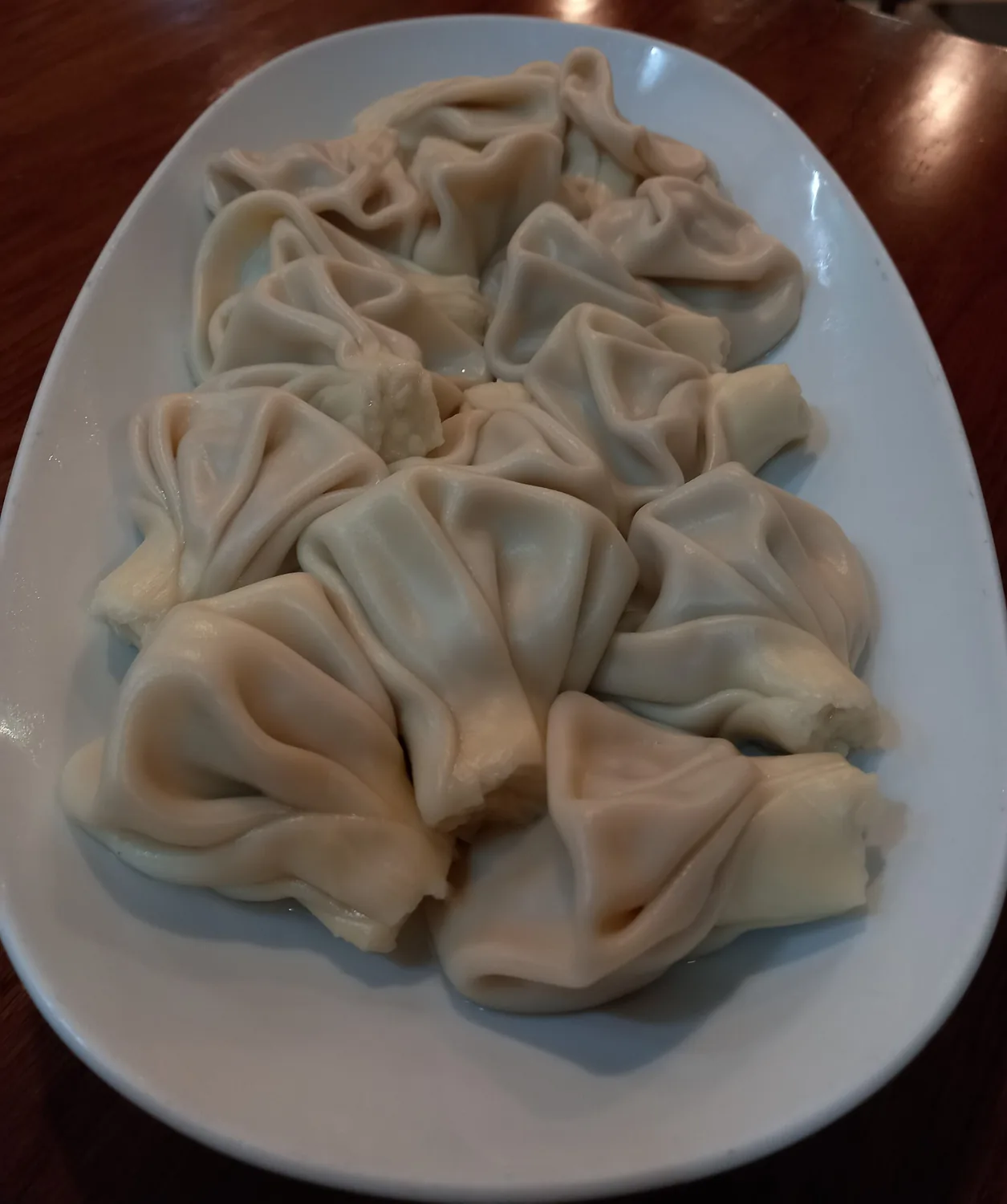
Traditional Georgian khinkali dumplings on a plate. By Helen Owl. Original photograph · CC BY-SA 4.0. Scaled and converted to compressed WebP; original attribution and applicable share-alike terms retained. Location/context photography, not supplier-owned tour imagery.