Follow the warm water west
Build a sensible multi-stop route around four very different warm-water landscapes.
Build from Tbilisi toward Borjomi and Imereti; include Nokalakevi only when a Samegrelo excursion and its road conditions fit the trip.
- Area
- Tbilisi to western Georgia
- Best first stop
- Tbilisi's Abanotubani for a staffed bookable bath and a compact old-city walk.
- Overnight base
- Tbilisi — compare options ↓
Area search, not a confirmed venue entrance. Use the guide's visitor details for the final approach.
In this guide
Georgia Hot Springs Itinerary: Tbilisi, Borjomi, Tskaltubo and Samegrelo
A hot-springs trip across Georgia takes several forms. Tbilisi has staffed historic sulfur bathhouses. Borjomi's forest-park pools offer outdoor bathing. Tskaltubo is a mineral-water resort town with balneological facilities. Near Nokalakevi, warm sulfurous water emerges into an unmanaged river landscape, better approached as a scenic stop than a promised swim.
Start with the accessible urban visit, then travel west with time for the changing landscape. Book managed experiences individually and leave the wild spring as a conditional nature stop. Trying to fit all four into one excursion would turn the drive into the main activity.
Days one and two: begin with a real bath in Tbilisi
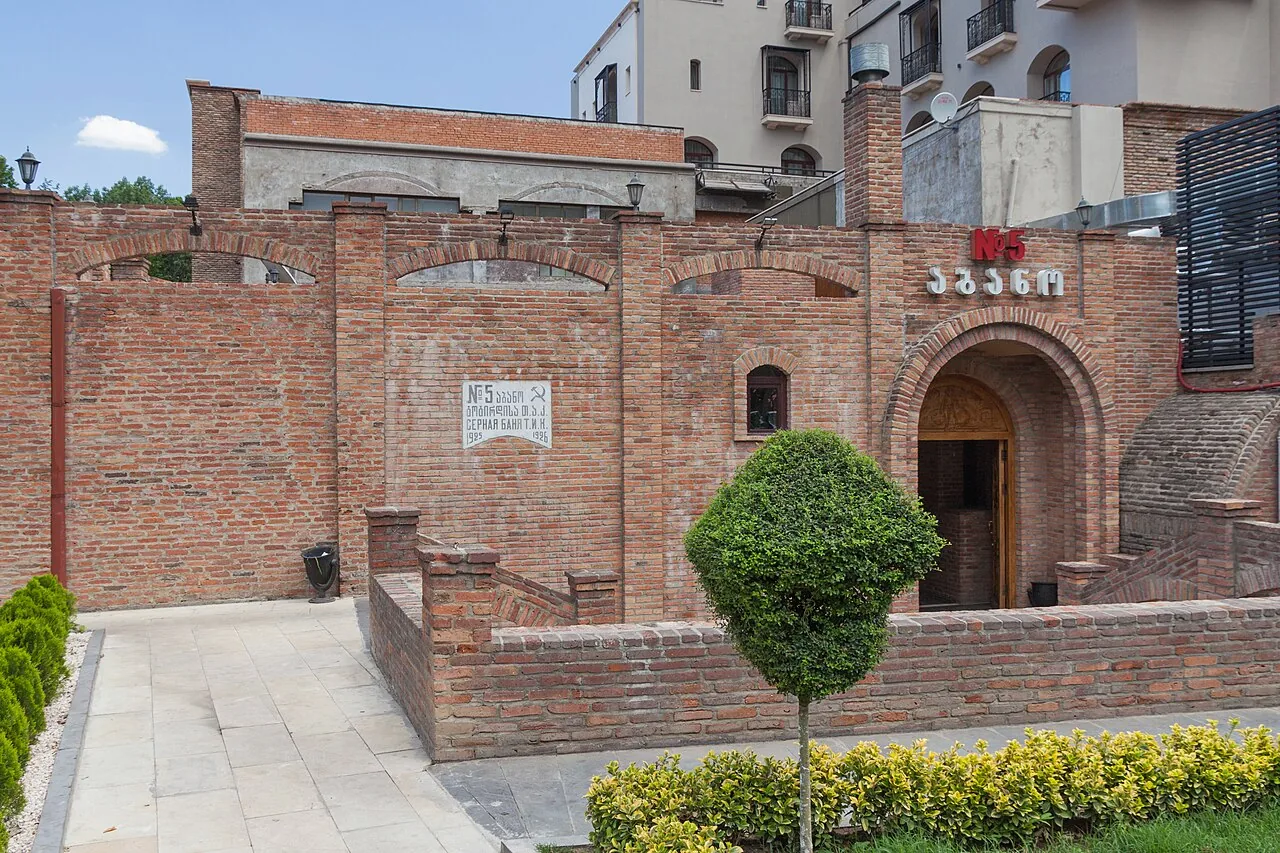
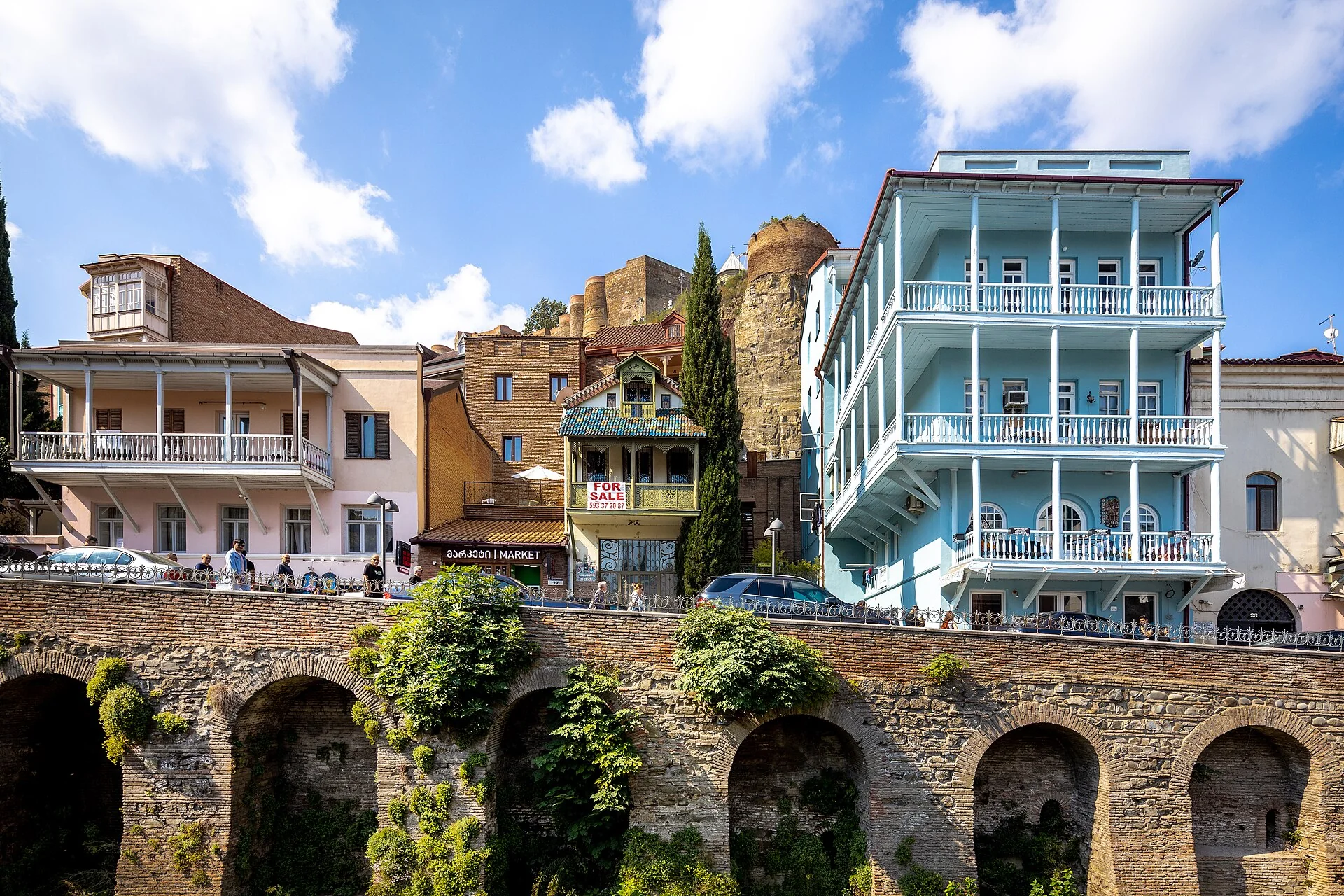
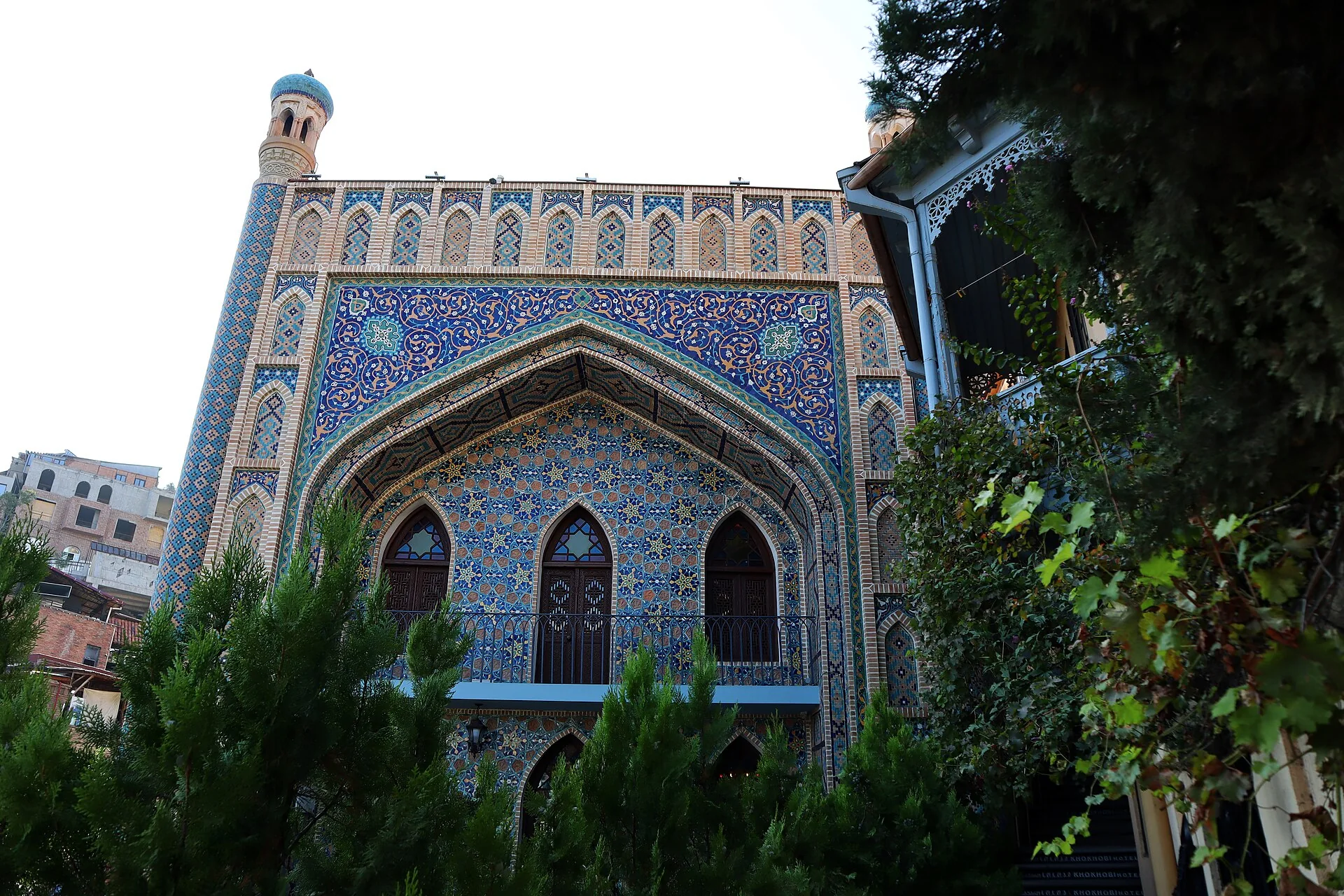
Use Tbilisi for your first base and reserve an Abanotubani slot after your arrival. The bathhouses lie below Narikala, so pair a private room or public section with a walk around the domes, Meidani and the Old Town. Allow time to change, rinse and rest before sightseeing.
Choose the bathhouse by its public or private format, room capacity and optional kisa scrub. Keep the next morning flexible for more of the city. This is the most dependable bathing stop, within a staffed, reservable facility.
Day three: Borjomi's outdoor sulfur pools
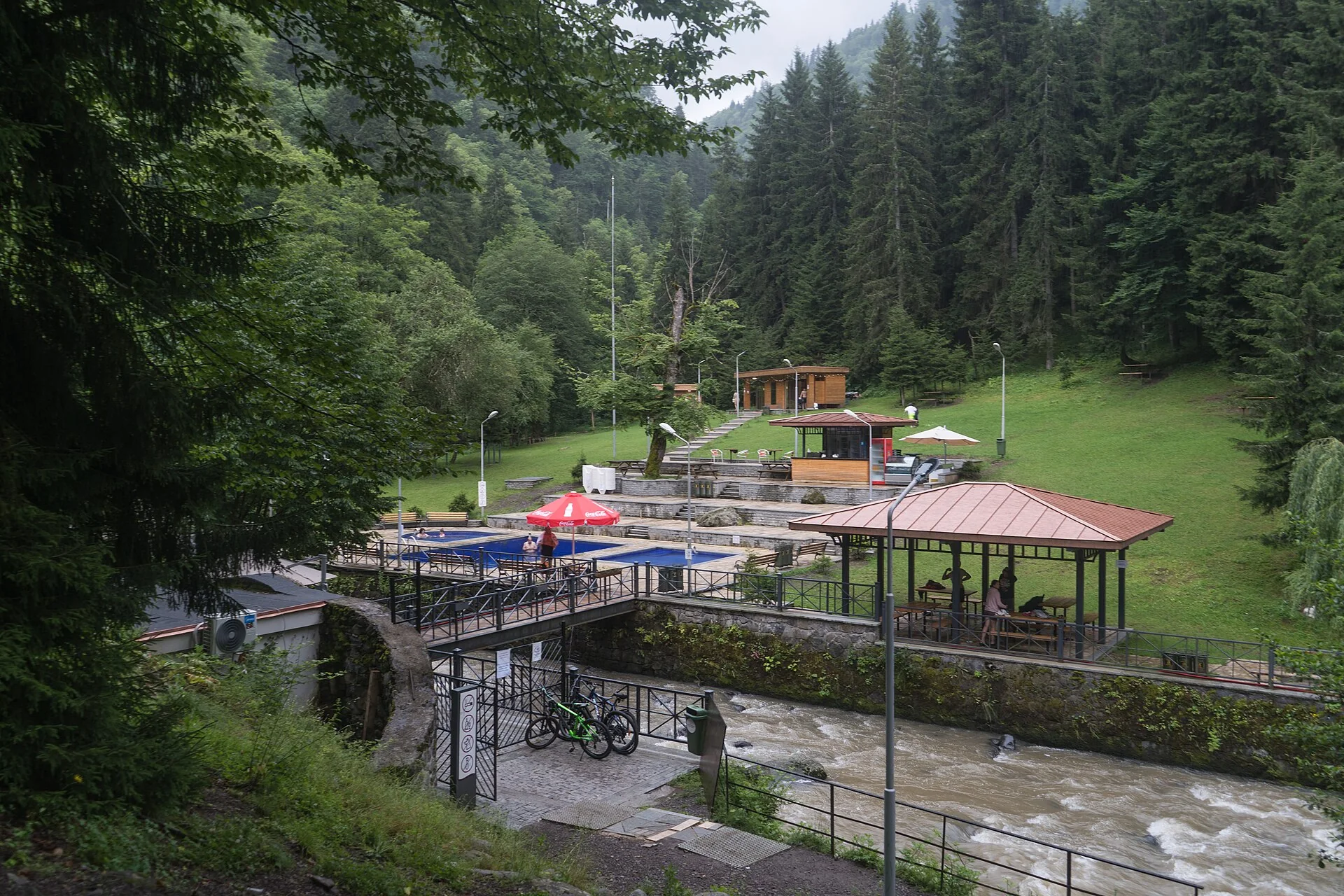
Borjomi adds trees, open sky and pools reached beyond the town's central park. Georgia Travel describes a roughly two-kilometer path along the Borjomula River and a pool complex with showers and changing areas. Check present-day admission, maintenance and seasonal operation before setting out; do not confuse these outdoor pools with a hotel spa.
Stay overnight if you want the park and town to feel unhurried. This can also break a westbound journey; check the precise road route for your date. Wet weather or changes on site may make a park walk the better plan.
Days four and five: Tskaltubo's spa-town architecture and working baths
Move toward Kutaisi in Imereti, using Kutaisi or Tskaltubo as the overnight base. Tskaltubo's broad park, old sanatorium buildings and formal bathing facilities tell the story of a town shaped by mineral-water tourism. Georgia Travel describes Baths No. 1 and No. 6 as facilities offering individual procedures and, in some cases, a medical consultation. Decide whether you want to look at the resort landscape or arrange a particular service; admission to a treatment facility is not equivalent to a casual swimming-pool ticket.
Call the operator about visitor access, booking requirements and what a service actually entails. Some facilities use naturally occurring radon-containing mineral water. That is a reason to avoid treating a tourist brochure's health claims as personal medical advice. A central Kutaisi base keeps additional city sights and transport practical; Tskaltubo itself suits a quieter overnight focused on the resort town.
Day six or an extra western day: Nokalakevi as a landscape visit
A Samegrelo extension leads toward Nokalakevi, near Senaki, and the Tekhuri River. The archaeological museum-reserve preserves the remains of an ancient fortified settlement, while the nearby sulfur-water formations make a striking contrast to Tbilisi's tiled pools. Keep the historical site and the natural spring separate in your plans: a museum ticket or published archaeological opening schedule does not establish safe access, facilities or permission to bathe at the riverside spring.
Approach the wild waters as a geological sight. Discharge temperature can be dangerous at the source; river current, unstable banks and slippery deposits change with conditions. Do not enter the water unless local, present-day conditions and permissions are clearly established, and never rely on the absence of a warning sign as a safety guarantee. Independent transport can help with this rural excursion, but plan the exact road approach, safe parking and return while it is light. An overnight in Samegrelo can be better than forcing a hurried return.
Shorten or lengthen the route without turning it into a race
For three or four days, prioritize Tbilisi and one western or southern stop. Tbilisi plus Borjomi works for an urban bath and an outdoor park; Tbilisi plus a longer Kutaisi and Tskaltubo chapter works if resort history matters more. For six or seven days, the westward sequence of Tbilisi, Borjomi, Kutaisi or Tskaltubo, and an optional Samegrelo day gives each place a reason to be on the map. More days allow unhurried cultural visits between baths instead of a chain of check-ins.
Arrange the intercity journey before selecting hotels. Public transport may reach Tbilisi, Borjomi and Kutaisi, but a specific bathhouse, outlying pool, or rural riverbank still needs a final-mile plan. In cooler months, confirm outdoor-pool operation and daylight for excursions; after heavy rain, remove the Nokalakevi river stop if conditions are uncertain. The strongest version of this route is the one in which every bathing stop is a deliberate choice, and each overnight makes the next journey manageable.
Plan the visit and the journey back.
- Best first stop
- Tbilisi's Abanotubani for a staffed bookable bath and a compact old-city walk.
- Outdoor alternative
- Borjomi's park-area sulfur pools, subject to current facility access and operations.
- Heritage chapter
- Tskaltubo for mineral-bath institutions, central park and sanatorium architecture; ask before booking any procedure.
- Conditional extension
- Nokalakevi near Senaki for archaeology and a wild sulfur-water landscape, without assuming the natural source is swimmable.
- Base strategy
- Use Tbilisi first, then Borjomi and Kutaisi or Tskaltubo; add a Samegrelo overnight if it makes the Nokalakevi excursion reasonable.
Area search, not a confirmed venue entrance. Use the guide's visitor details for the final approach.
Stay where the next day makes sense.
Compare the base first, then check the property's location and transport for your outing.
Tbilisi
Compare a city stay; check the property's actual neighbourhood and the return journey from your outing.
Compare directory stays →Search Tbilisi on Booking.com ↗Useful answers before setting out.
Can I visit Georgia's main hot-spring areas in one day?
No practical one-day route allows meaningful visits to Tbilisi, Borjomi, Tskaltubo and Samegrelo. Choose a single destination or build a westbound multi-day itinerary.
What is a good three-day hot springs itinerary in Georgia?
Spend time in Tbilisi's Abanotubani and add either Borjomi for outdoor sulfur pools or a Kutaisi/Tskaltubo stop for spa-town heritage. Confirm the transport leg before choosing the second base.
Are Tskaltubo baths like the pools in Borjomi?
They serve different purposes. Borjomi has outdoor park-area sulfur pools; Tskaltubo's named balneological baths focus on staffed mineral-water procedures and may have consultation or appointment requirements.
Should I plan to swim at Nokalakevi's wild springs?
Plan to observe the geological landscape and visit the nearby archaeological site. Do not assume that river water and the geothermal outlet are safe for bathing, or that managed facilities exist.
Confirm the current visitor details.
Access, weather, opening hours and bookable experiences can change. Check the relevant operator or visitor authority for your date.
- Georgia Travel: exploring Tbilisi's baths ↗
- Georgia Travel: Borjomi sulfur pools ↗
- Georgia Travel: Balneo Services No. 1 and No. 6 in Tskaltubo ↗
- Georgia Travel: Tskaltubo resort town ↗
- Georgia Travel: Nokalakevi museum-reserve ↗
- Georgian Travel Guide: Nokalakevi sulfur waters ↗
Photograph sources and licenses
Borjomi sulfur pools near the wooded valley. Photograph by Alexey Komarov. Source photograph, CC BY-SA 4.0. Converted to WebP. Responsive copies resized and compressed to WebP.
Bath No. 5 in Tbilisi historic Abanotubani district. Photograph by Marcin Konsek. Source photograph, CC BY-SA 4.0. Converted to WebP. Responsive copies resized and compressed to WebP.
Tbilisi Abanotubani historic sulfur bath district. Photograph by Supanut Arunoprayote. Source photograph, CC BY 4.0. Converted to WebP. Responsive copies resized and compressed to WebP.
Chreli Abano colourful tile-front bathhouse in Tbilisi. Photograph by Natia an. Source photograph, CC BY-SA 4.0. Converted to WebP. Responsive copies resized and compressed to WebP.