A city built around water
Read the city's foundation story through the brick domes, bathhouse rituals and streets below Narikala.
Abanotubani is worth visiting for its architecture and urban history even if you never book a sulfur bath.
- Where
- Abanotubani sits in Old Tbilisi below Narikala, close to the Mtkvari and the routes around Meidani.
- Access
- Photograph exterior architecture from public areas. Interior bathing chambers are active private or shared facilities, subject to house rules.
- Overnight base
- Tbilisi — compare options ↓
Area search, not a confirmed venue entrance. Use the guide's visitor details for the final approach.
In this guide
Abanotubani Bathhouse History: The Warm Water Behind Old Tbilisi
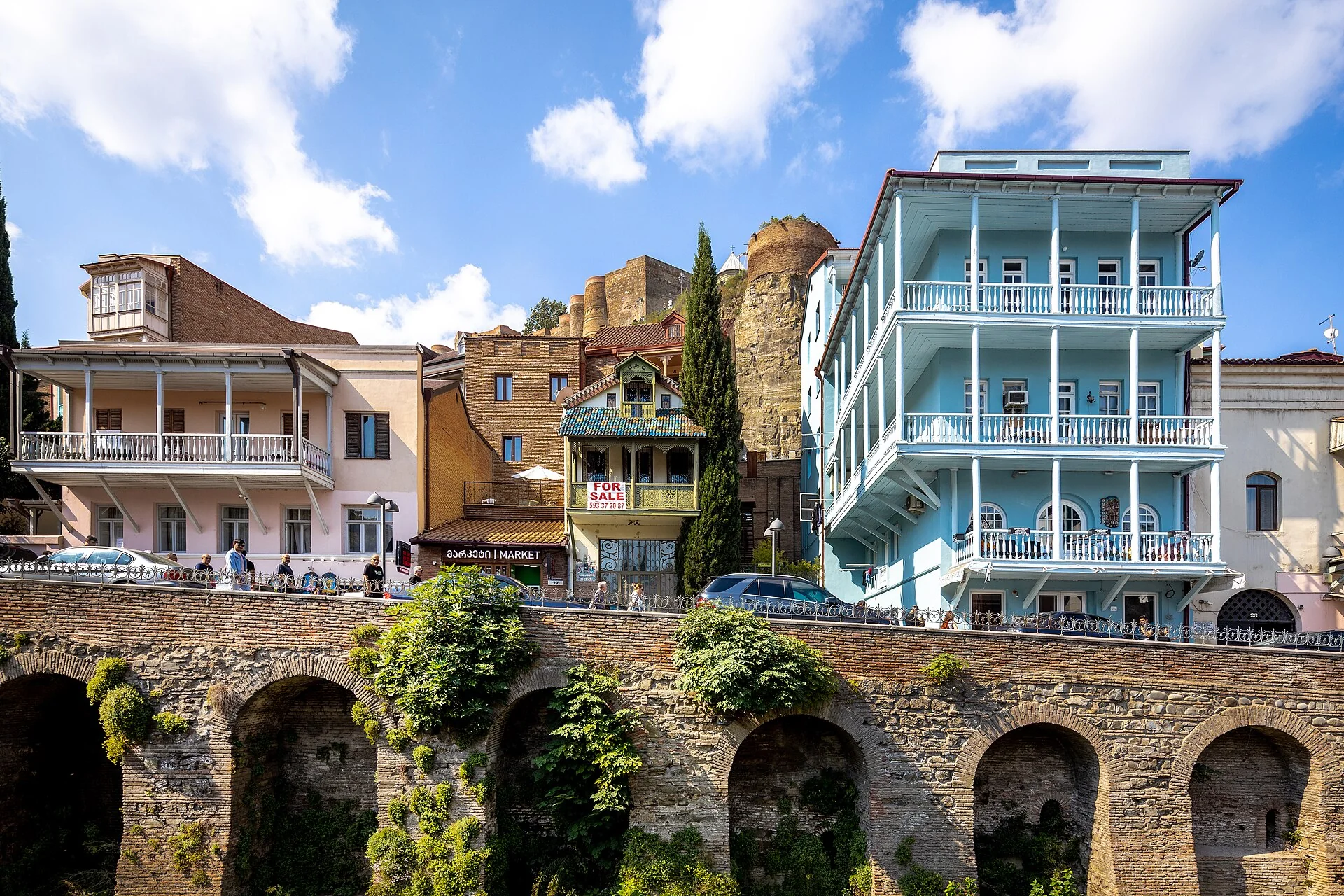
Abanotubani announces itself through a cluster of low brick domes rather than a grand civic square. From above, the roofs seem to emerge from the street; underneath are rooms built around naturally warm sulfur water. The district sits below Narikala in the old city, close to the Mtkvari River and the steep lanes that connect several centuries of Tbilisi's history.
To understand these bathhouses, separate three overlapping stories: the legend explaining Tbilisi's name, the long development of a city around the springs, and the daily life that took place in the baths. The legend is memorable. The social and architectural history is what makes a walk through Abanotubani rewarding today.
The falcon and the pheasant: a foundation legend
In the familiar story, fifth-century King Vakhtang Gorgasali was hunting when a bird of prey chased a pheasant into a hot spring. The birds were found in the scalding water, and the king decided to build a city around the springs. The Georgian word tbili, meaning 'warm,' is connected to Tbilisi's name. Georgia's official tourism account tells the episode as legend, and it remains part of the city's identity.
That story should not be mistaken for proof that the valley was empty before the king arrived. Official heritage descriptions note earlier settlement and records of Tbilisi before the late fifth century; they also associate the expansion of the settlement with Vakhtang and the later transfer of the capital under his successor Dachi. The springs help explain why this location mattered, while the legend explains how generations chose to remember it.
Why the baths look like roofs rather than buildings
Much of a traditional Abanotubani bathhouse lies beneath street level. The rounded brick structures are roofs over bathing chambers, and their openings admit light and help ventilate the heat. This arrangement produces one of Tbilisi's most distinctive street scenes: an expanse of domes beside ordinary lanes, with the actual bath spaces largely concealed below. Stand back before entering a bathhouse and the roofs begin to read as an inhabited landscape rather than decorative garden ornaments.
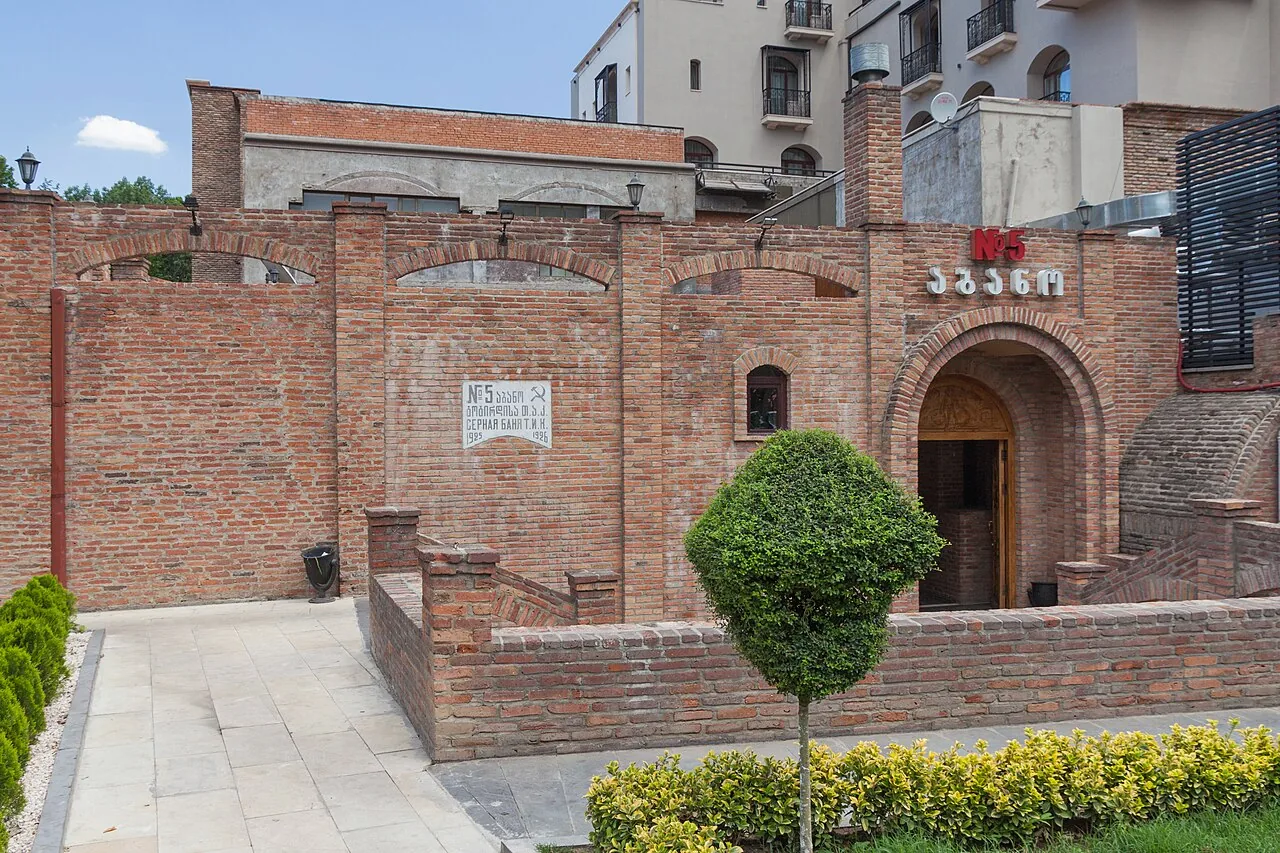
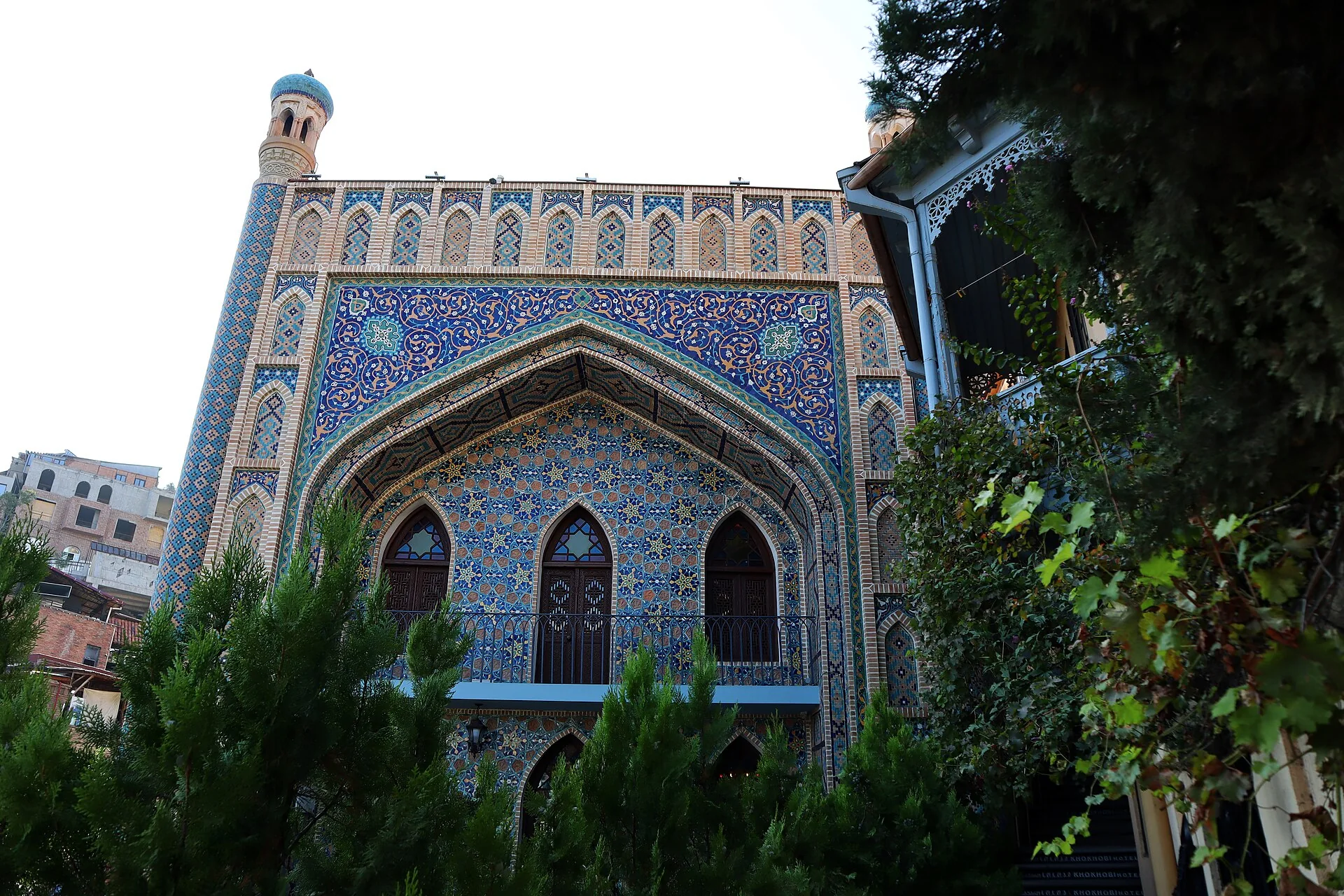
The blue-tiled, Persian-influenced facade of the Orbeliani or Chreli Abano bath is a contrasting landmark. Its decorative frontage attracts photographs, while the quieter domes speak to the district's more workaday architecture. Georgia Travel identifies Chreli Abano, Bath No. 5, King Erekle's Bath and other active houses, each with its own appearance and interior treatment. A striking facade does not represent every room in the quarter.
A bathhouse was a social address
The baths were never only facilities for washing. Official tourism history describes them as spaces for meeting acquaintances, doing business, socializing and holding gatherings. The Silk Road location of Tbilisi brought merchants and travelers from many backgrounds into an urban culture where the baths could be places of welcome and conversation. Later accounts even recall families using bath gatherings in the social process of arranging marriages.
Their fame reached visitors from abroad. The French writer Alexandre Dumas père visited the city in the nineteenth century, and his enthusiasm for the bathhouses entered local storytelling. These anecdotes matter less as celebrity endorsements than as evidence of how visible the bathing tradition was in everyday life. The scale also changed: Georgia Travel recounts many dozens of medieval baths but far fewer in later periods. Today's operating houses preserve a living practice within a considerably altered neighborhood.
How to read Abanotubani on a short walk
Begin around the domed bathhouse roofs and compare them with the ornamented Chreli Abano facade. Walk slowly enough to notice how the district fits against the slopes below Narikala, then continue toward the nearby Legvtakhevi gorge and its waterfall if access is open. You can connect this compact stretch to Meidani and the lanes of Old Tbilisi without needing a vehicle for the district itself. The best viewpoint is whichever one lets you see both the domes and the surrounding city fabric.
Respect the fact that these are working baths, not abandoned monuments. Stay on public pedestrian routes, do not stand on roofs or enter an active bathing room to take photographs, and treat changing spaces as private. If you want to understand the interiors, book a session with the specific bathhouse rather than assuming you can tour the rooms. Whether or not you bathe, the quarter offers a clear way to understand how a natural resource shaped the city's name, its buildings and its social habits.
Plan the visit and the journey back.
- Where
- Abanotubani sits in Old Tbilisi below Narikala, close to the Mtkvari and the routes around Meidani.
- Look for
- Low brick domes, daylight openings, the ornate Chreli Abano facade and the contrasting lanes of the old town.
- Interpret carefully
- The king's hunting tale is a foundation legend; earlier habitation means the city's origin is historically more complex.
- Access
- Photograph exterior architecture from public areas. Interior bathing chambers are active private or shared facilities, subject to house rules.
Area search, not a confirmed venue entrance. Use the guide's visitor details for the final approach.
Stay where the next day makes sense.
Compare the base first, then check the property's location and transport for your outing.
Tbilisi
Compare a city stay; check the property's actual neighbourhood and the return journey from your outing.
Compare directory stays →Search Tbilisi on Booking.com ↗Useful answers before setting out.
What does Abanotubani mean?
The name combines Georgian words associated with baths and neighborhood: it is the bath district of Old Tbilisi.
Did King Vakhtang Gorgasali discover Tbilisi's hot springs?
That is the famous founding legend, involving his hunting bird and a pheasant. Historical and archaeological accounts also identify settlement before his reign, so it should be told as legend rather than a verified discovery event.
Can you see the sulfur bathhouses without bathing?
Yes. Their characteristic brick domes and ornate facades are visible from the surrounding public streets. Entry to a bathing room is a separate, working-bathhouse experience.
Why are so many bathhouses underground?
Traditional chambers were built below street level around the hot springs; the low domes visible above are roofs with light and ventilation openings.
Confirm the current visitor details.
Access, weather, opening hours and bookable experiences can change. Check the relevant operator or visitor authority for your date.
- Georgia Travel: history of Abanotubani ↗
- Georgia Travel: strolling through Old Tbilisi ↗
- Georgia Travel: Tbilisi sulfur baths ↗
- Georgia Travel: exploring sulfur-bath architecture ↗
Photograph sources and licenses
Chreli Abano colourful tile-front bathhouse in Tbilisi. Photograph by Natia an. Source photograph, CC BY-SA 4.0. Converted to WebP. Responsive copies resized and compressed to WebP.
Bath No. 5 in Tbilisi historic Abanotubani district. Photograph by Marcin Konsek. Source photograph, CC BY-SA 4.0. Converted to WebP. Responsive copies resized and compressed to WebP.
Tbilisi Abanotubani historic sulfur bath district. Photograph by Supanut Arunoprayote. Source photograph, CC BY 4.0. Converted to WebP. Responsive copies resized and compressed to WebP.
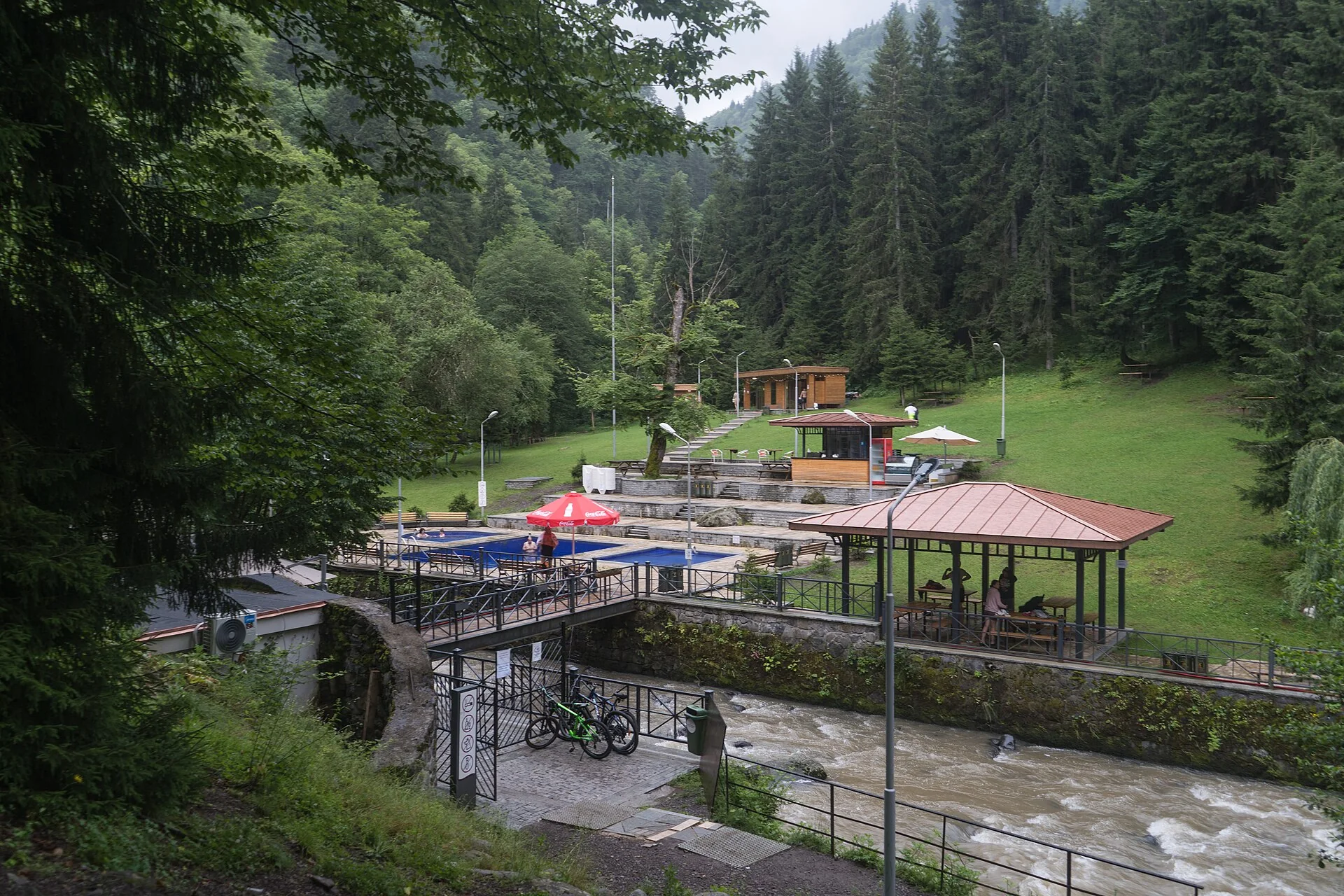
Borjomi sulfur pools near the wooded valley. Photograph by Alexey Komarov. Source photograph, CC BY-SA 4.0. Converted to WebP. Responsive copies resized and compressed to WebP.