
Why add Svetitskhoveli to a Georgia itinerary?
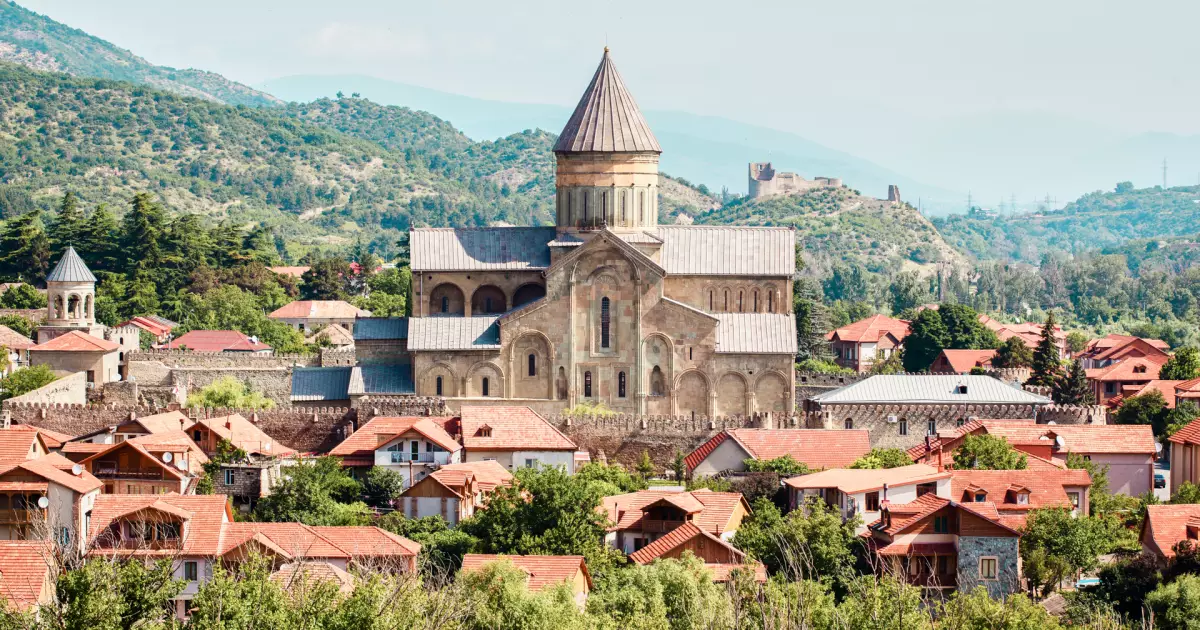
The carved stone façades make the building's medieval craftsmanship easier to appreciate, including sculptural details around windows, arches and the tall cross-in-square form. Use Mtskheta as the practical starting point, then check the exact map position before fitting the stop into a wider Mtskheta-Mtianeti route.
How to plan Svetitskhoveli Cathedral into your route
Start with the site itself, then use the closest complementary stops to avoid a day of unnecessary backtracking. These three pairings are the most useful places to consider first.
Mtskheta old town
Historic lanes, small museums and river views around the cathedral.
Samtavro Monastery
Major monastic complex within walking distance.
Antioch Church
Small historic church near the confluence area.
What to see at Svetitskhoveli Cathedral
I would not rush straight to the most photographed angle. These are the details that make the visit more useful once you are actually there.
Study the cathedral exterior before going inside
The carved stone façades make the building's medieval craftsmanship easier to appreciate, including sculptural details around windows, arches and the tall cross-in-square form.
Look for surviving wall painting
The interior preserves layers from different periods. Treat it as an active religious site first and a sightseeing stop second, with respectful dress and photography behavior.
Walk the old center around the cathedral
Svetitskhoveli sits inside Mtskheta's compact historic core, so the cathedral works naturally with Samtavro, riverside streets and a later drive to Jvari.
Svetitskhoveli Cathedral: facts that add context to the visit
The present cathedral dates to 1010–1029
The current monumental building was constructed in the early eleventh century under Catholicos Melchizedek, with Arsukidze traditionally named as its architect.
A church stood here centuries earlier
Georgian tradition places the first church on the site in the fourth century during the reign of King Mirian III.
It is part of a UNESCO World Heritage property
UNESCO includes Svetitskhoveli within the Historical Monuments of Mtskheta, inscribed in 1994.
It was associated with Georgian royal ceremony
The cathedral served as an important place for coronations, burials and major religious events in medieval Georgia.
Christian tradition connects the site with Christ's robe
A long-standing Georgian religious tradition associates Svetitskhoveli with the burial place of Christ's robe, an important part of the cathedral's spiritual significance.
Where is Svetitskhoveli Cathedral?
Svetitskhoveli Cathedral is in Mtskheta-Mtianeti, with the map pin at approximately 41.842833, 44.720944. Use the location map for route planning rather than estimating travel from the name of the nearest town alone.
Things to see near Svetitskhoveli Cathedral
Mtskheta old town
Historic lanes, small museums and river views around the cathedral.
Samtavro Monastery
Major monastic complex within walking distance.
Antioch Church
Small historic church near the confluence area.
Bebris Tsikhe
Fortress ruins north of central Mtskheta.
Jvari Monastery
Hilltop UNESCO monument across the rivers.
Planning the visit
- Allow time for Mtskheta itself rather than treating Svetitskhoveli as a photo stop.
- This is an active cathedral; dress and behavior should reflect a working religious site.
- Jvari is nearby geographically but sits on a separate hill, so check the driving map rather than judging distance by sight.
Use Mtskheta as the accommodation starting point.
Compare real directory listings by map position and current booking source instead of choosing a room before you choose the route.
Booking.com links may earn Georgian Stays a commission at no extra cost to you.
Where the facts and image come from
Stable historical and geographic claims are checked against tourism, heritage or reference sources. Prices, opening hours and temporary access rules are deliberately not frozen into this article; use the current official source before travel.