Inside the mountain cellar
How to understand Kvareli's famous wine tunnel, choose a visitor experience and avoid mistaking it for a natural cave.
Visit the Kvareli Wine Cave for cellar history and a guided winery experience; book the service you actually want rather than assuming the whole tunnel is open.
- Area
- Kvareli · Kakheti
- Transport
- Arrange a sober return from the winery; avoid driving after any tasting.
- Tours & tastings
- Compare guided wine experiences ↓
The marker is the mapped winery location, not a guaranteed entrance to the underground tunnel.
In this guide
Kvareli Wine Cave: Visiting Winery Khareba's Historic Wine Tunnel
Kvareli Wine Cave sounds like a natural cave attraction, but the name describes a purpose-built wine-storage tunnel complex carved into the rock near Kvareli, operated today as a visitor attraction by Winery Khareba. The producer dates the opening of the tunnel to 1962, in connection with the World Congress of Vine and Wine. The experience belongs to Georgia's winemaking history and cellar culture rather than to the country's stalactite-and-stalagmite show caves.
Winery Khareba's official account describes 7.7 kilometres of interconnected passages, including two principal tunnels and thirteen connecting tunnels. That figure describes the whole storage system, not the walking distance of an ordinary visitor tour. One entrance serves tourism while other passages have wine-aging functions. Before you go, separate the scale of the facility from the itinerary actually included in your booking.
Find your Kakheti wine experience.
Choose a day around the wine, the food or the places you want to see. Compare these partner tours, then select your date and party on the booking site.
Regional photographPrivate wine day with Khareba tunnel
- Starts in
- Tbilisi hotel pickup
- Allow
- About 7 hours
Choose a private vehicle for a wine-focused route with Patardzeuli, Sighnaghi and a Khareba wine-tunnel stop. Compare this when the cellar visit matters more than a group sightseeing circuit.
Before booking: Khareba tunnel entrance is listed as an extra cost. Confirm the tasting package and final itinerary.
View tour & dates on Booking.com ↗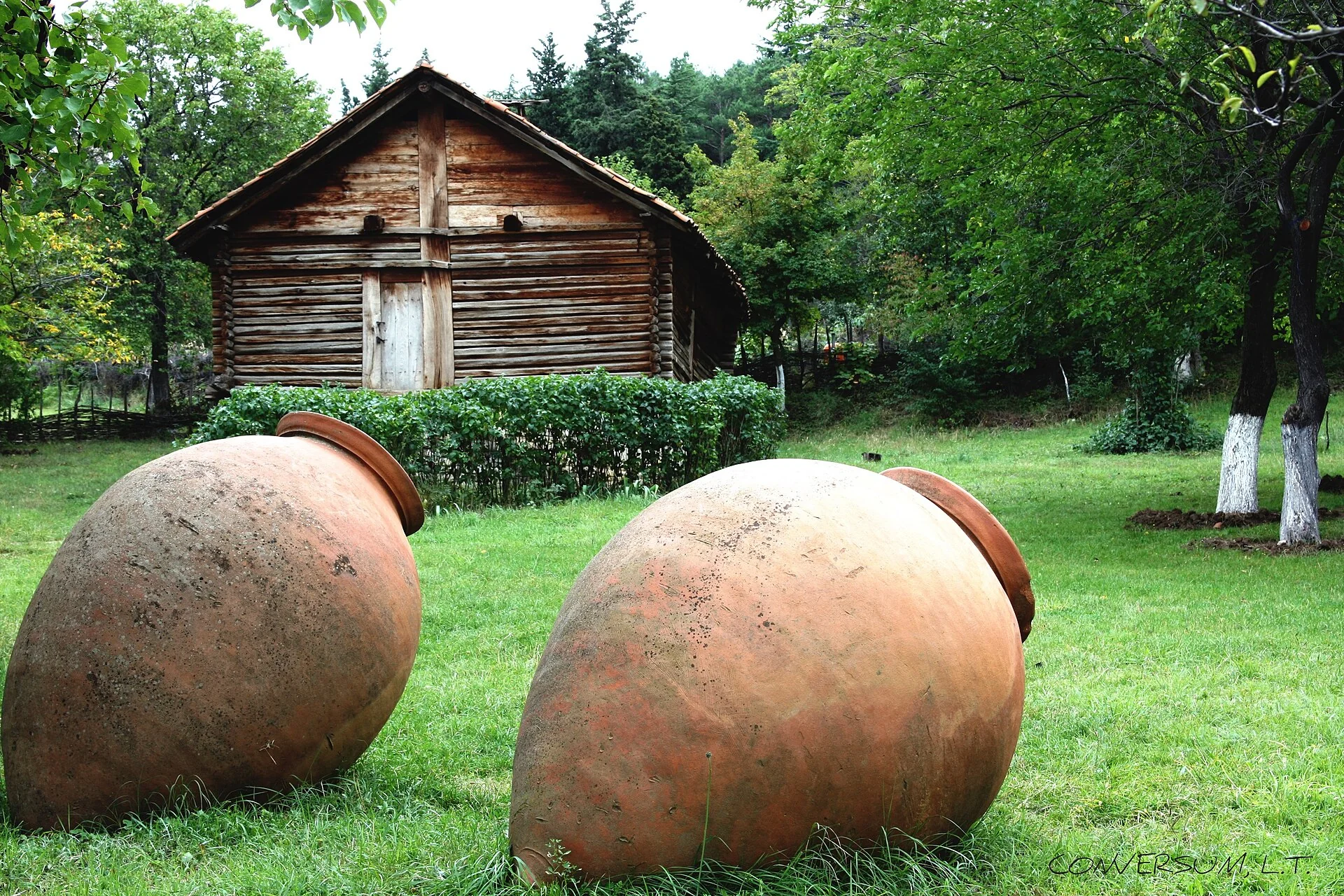 Regional photograph
Kakheti cellars, tastings & lunch
- Starts in
- Tbilisi hotel pickup
- Allow
- About 9 hours
Make cellar visits and wine-country food the focus of the day. The listing describes vineyard time and return transport, rather than a visit to one guaranteed named estate.
Before booking: Confirm the lunch menu, winery stops and which drinks or additional tastings cost extra.
View tour & dates on Booking.com ↗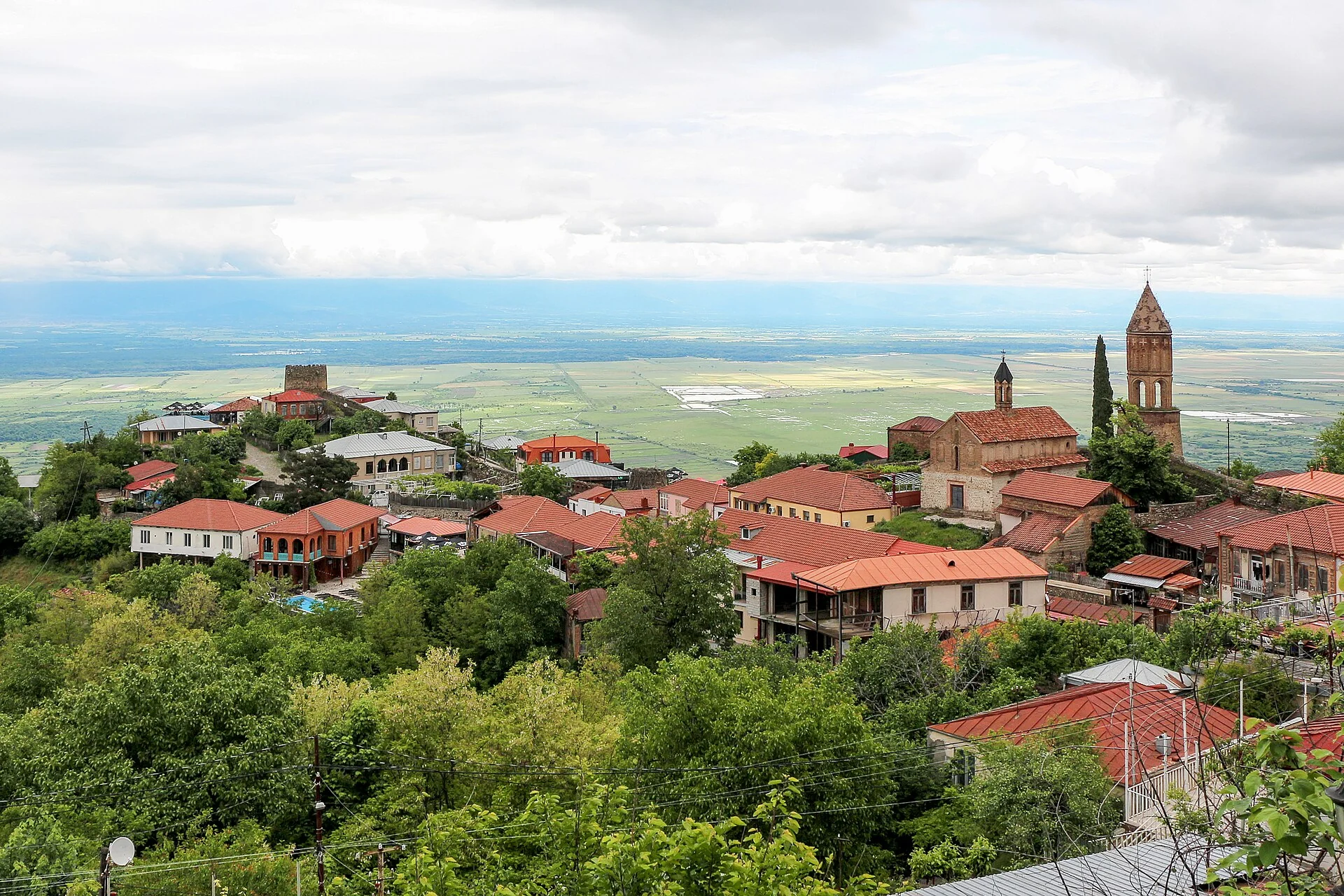 Regional photograph
Kakheti wine, Sighnaghi & Bodbe
- Starts in
- Tbilisi
- Allow
- About 9 hours
Combine a wine-country introduction with Sighnaghi, Bodbe and Georgian food traditions. A useful choice when you want a varied day rather than one estate appointment.
Before booking: Check the tastings and food workshops included in your chosen option; dinner is separate.
View tour & dates on Booking.com ↗Product descriptions reviewed 15 October 2026. Prices, dates, stops and inclusions can change; confirm the selected package with the provider. Arrange a non-drinking driver for independent winery visits.
Tour references & photograph credits
The photographs show the region or wine setting, not a documented group on the advertised tour.
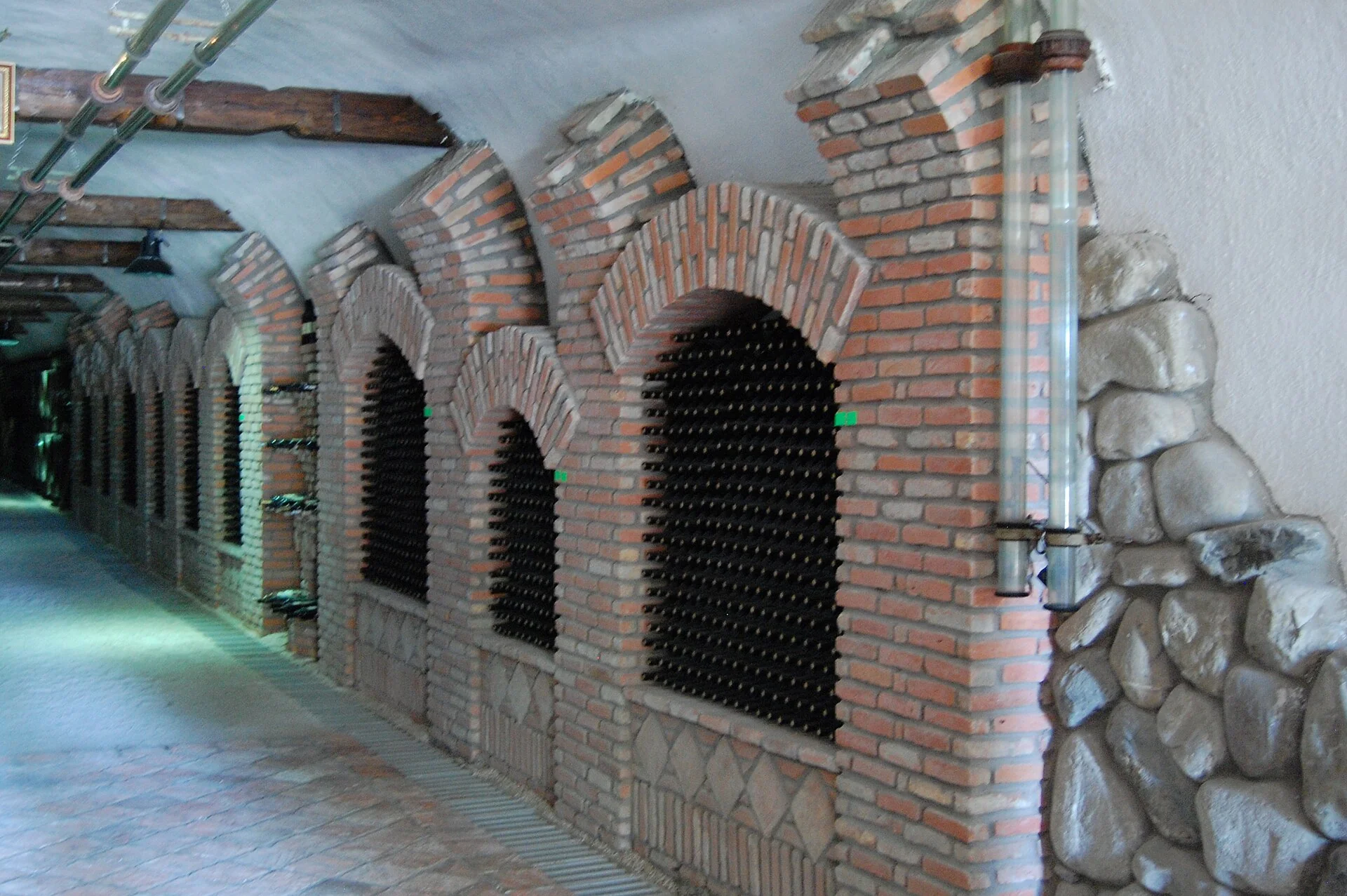
Winery Khareba tunnel in Kvareli, Georgia. Andrzej Wójtowicz from Poznań, Poland. Photo source · CC BY-SA 2.0. Resized by Wikimedia to a maximum 1920px width where applicable and converted to WebP. Responsive copies resized and compressed to WebP.
Traditional Georgian clay qvevri wine-making vessels. Levan Totosashvili. Photo source · CC BY-SA 2.0. Resized and converted to WebP. Responsive copies resized and compressed to WebP.
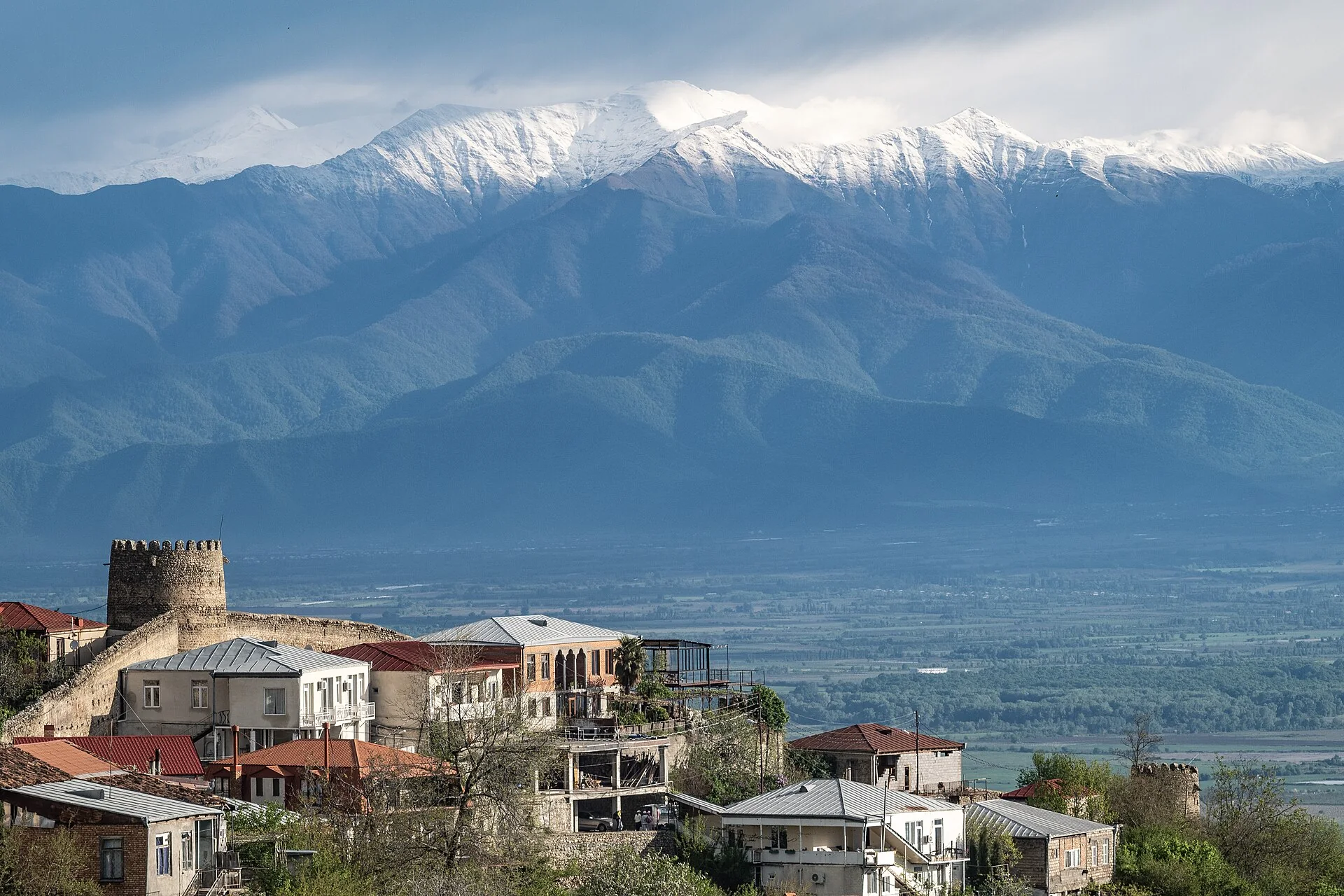
View across Sighnaghi in Kakheti, Georgia. Bernard Gagnon. Photo source · CC BY 4.0. Resized by Wikimedia to a maximum 1920px width where applicable and converted to WebP. Responsive copies resized and compressed to WebP.
What the tunnel was built to do
The tunnel uses the rock mass as an enclosed wine-storage environment. The producer explains that its relatively stable cool conditions support storage and aging, with bottles and containers kept in designated areas. These are operational cellar spaces, not an underground wilderness. Wine production, cellar temperature, the treatment of bottles and the relationship between storage and aging are good questions for a guide; there is more to learn here than the impressive length mentioned in tourism publicity.
It is useful to distinguish the physical tunnel from the broader estate. The same operator advertises vineyards, landscaped outdoor areas, traditional bread baking, culinary workshops, a restaurant and wine tastings. Not every visit necessarily includes each of those experiences. The official tourism establishments listing identifies the site as a winery destination and describes several possible activities; it is a menu of offerings, not a commitment that every workshop can be arranged at any hour.
Choose between a cellar tour, a tasting and a longer visit
The visitor websites for Kvareli Wine Cave describe packages that may pair a tasting with bread baking, churchkhela making, cooking or qvevri demonstrations. Start by deciding whether you chiefly want to hear the tunnel's story, sample wines or spend more time on food and Georgian customs. Ask the operator for an exact written description of your selected experience: the route through the tunnel, languages available, wines included, whether food is served and how long your appointment is expected to take.
A published package may be seasonal, revised or subject to group size. The website's historical price list is not a substitute for confirming today's total and cancellation rules. If visiting with children or non-drinkers, ask what parts of the experience they can join and what non-alcoholic options exist. An underground tour also involves a different environment from an open-air tasting: confirm stairs, walking surfaces, lighting and temperature if anyone in your party has accessibility or mobility concerns.
Do not confuse qvevri heritage with the tunnel itself
Georgian qvevri are large earthenware vessels used for fermenting and storing wine. UNESCO inscribed the ancient Georgian traditional qvevri winemaking method on its intangible cultural heritage list in 2013, recognizing a practice maintained through family and community knowledge. The Kvareli tunnel has a separate twentieth-century construction history. Its existence does not make the building itself UNESCO-listed, and a wine aged in a tunnel is not automatically a qvevri wine.
A useful tasting question is which specific bottle was fermented in qvevri, which was made using other methods, and which parts of production happened elsewhere. Winery Khareba describes vineyards and winemaking activities beyond this one location. The tunnel is an excellent setting for comparing these methods, provided the visit offers that explanation. Resist generalizations that all Georgian wine tastes the same or follows a single ancient recipe: production varies by grape, region, producer and wine.
Make the visit practical from Kvareli or a wider Kakheti route
The Kvareli Wine Cave lies in the Kvareli area of Kakheti, while the tourism listing gives an establishment-specific location in the Meurneoba district. Use that address and a confirmed entrance point, rather than searching for a generic 'wine cave' on a mapping app. Contact the visitor operation before leaving and check whether your booked experience begins at a reception area or another meeting point. If you intend to add Nekresi, lakeside scenery or another cellar, check the actual road route and available time first.
Do not drive after drinking. Arrange a driver, designated abstaining companion or transfer that includes the return to your accommodation. Kvareli is the natural overnight base when the tunnel and neighboring wineries anchor the trip; Telavi or a broader Kakheti tour can work if you are prepared for longer connections. Bring an extra layer for the underground portion, follow the guide's designated route and keep photographs within the venue's rules. The day is more satisfying when the booking is clear than when you attempt to fit every advertised activity into one visit.
Plan the visit and the journey back.
- What it is
- A carved wine storage and visitor tunnel operated by Winery Khareba, rather than a geological show cave.
- Length explained
- The operator reports 7.7 km of combined tunnels; a normal visitor tour does not imply access to every passage.
- Choose a package
- Confirm whether your booking includes the tunnel route, tasting, food, workshops, guide language and total cost.
- Underground comfort
- Expect a cooler environment; ask about steps, surfaces and access requirements before booking.
- Meeting point
- Confirm the entrance or reception location in Kvareli's Meurneoba district with the current operator.
- Transport
- Arrange a sober return from the winery; avoid driving after any tasting.
The marker is the mapped winery location, not a guaranteed entrance to the underground tunnel.
Useful answers before setting out.
Is Kvareli Wine Cave a natural cave?
No. Winery Khareba describes a wine cellar tunnel excavated into rock and opened in 1962, used for storing and presenting wine.
Can visitors walk all 7.7 kilometres?
That distance refers to the total tunnel network. Tourist access is through an operating visitor route, which should be confirmed when booking; the wine-storage passages are not all public walkways.
Are tastings and bread baking included in the cave ticket?
The operator offers multiple experiences and packages. Confirm exactly what your reservation includes; tastings, meals and workshops should not be assumed interchangeable.
Is the tunnel a UNESCO World Heritage Site?
The cave itself is not identified here as a UNESCO World Heritage property. UNESCO recognition applies to Georgia's traditional qvevri winemaking method as intangible heritage, which is a different designation.
Should I book Kvareli Wine Cave ahead?
Booking ahead makes the service, language, timing and group arrangements clear. Check availability directly with the current operator, especially for food or workshops.
Confirm the current visitor details.
Access, weather, opening hours and bookable experiences can change. Check the relevant operator or visitor authority for your date.
- Winery Khareba — Official Kvareli Wine Cave history ↗
- Kvareli Wine Cave — Current visitor packages ↗
- Places Georgia Travel — Kvareli Wine Cave establishment ↗
- Georgia Travel — Kvareli city ↗
- UNESCO — Qvevri winemaking intangible heritage ↗
Photograph sources and licenses
Winery Khareba tunnel in Kvareli, Georgia. Photograph by Andrzej Wójtowicz from Poznań, Poland. Source photograph, CC BY-SA 2.0. Resized by Wikimedia to a maximum 1920px width where applicable and converted to WebP. Responsive copies resized and compressed to WebP.
Kvareli town center in Kakheti, Georgia. Photograph by Gaga.vaa. Source photograph, CC BY-SA 4.0. Resized by Wikimedia to a maximum 1920px width where applicable and converted to WebP. Responsive copies resized and compressed to WebP.
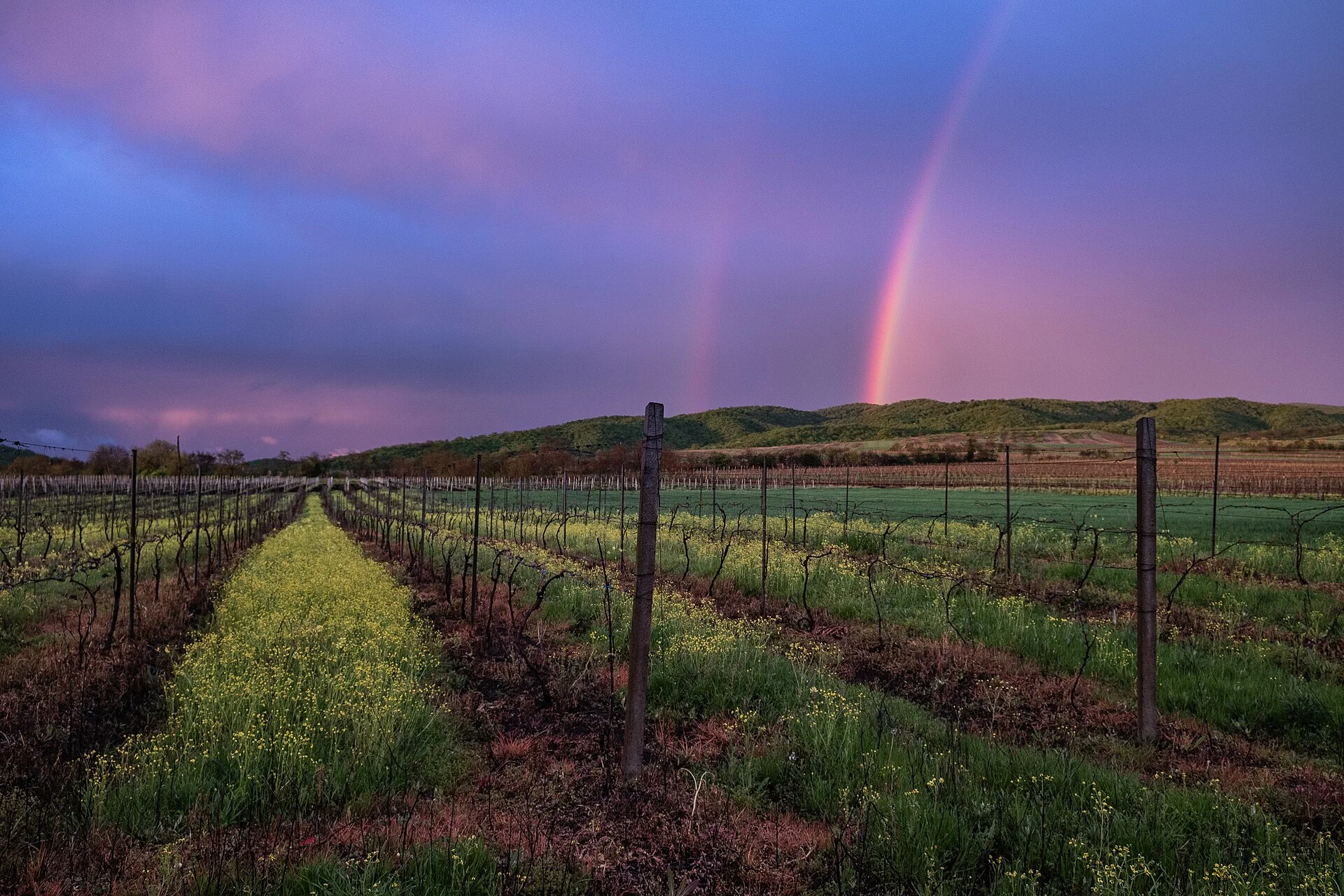
Rainbow above vineyards in Kakheti, regional context for Kindzmarauli wine. Photograph by Vladimir Pankratov. Source photograph, CC BY-SA 4.0. Resized to a maximum 1920px width and converted to WebP. Responsive copies resized and compressed to WebP.
Sighnaghi fortress wall with the mountain backdrop across the Alazani Valley. Photograph by Vladimir Pankratov. Source photograph, CC BY-SA 2.0. Resized to a maximum 1920px width and converted to WebP. Responsive copies resized and compressed to WebP.