Follow the vine. Stay for the story.
One estate remembers Georgia's literary salons. Another explores grape varieties. A vineyard château invites you to remain for dinner. Here is how to choose a winery day that feels like Kakheti, not a tasting checklist.
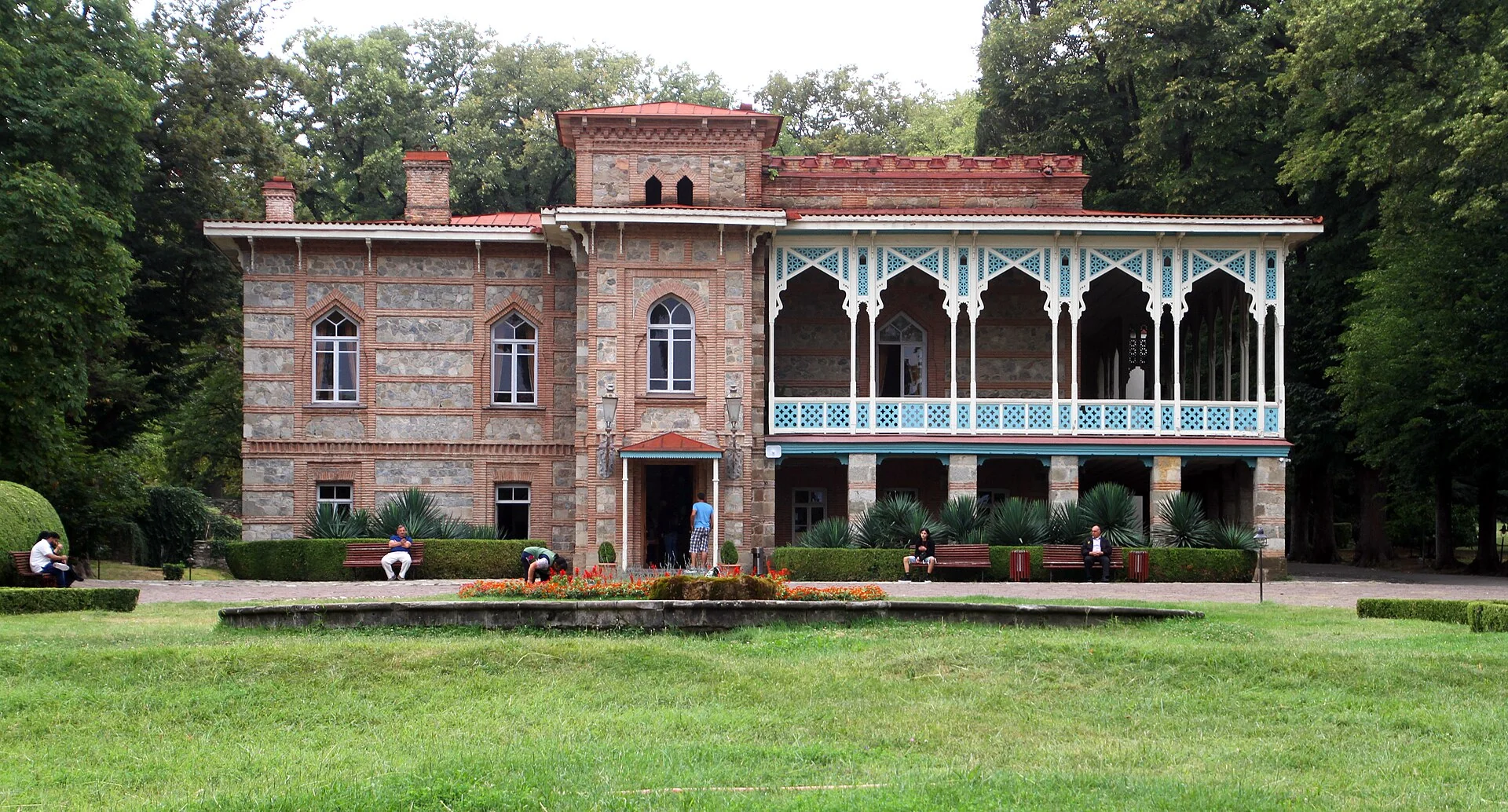
The historic Tsinandali Estate house; this is not a photograph of every winery in the guide. See the photograph sources and licenses below.
Reserve the visit and arrange the ride before the tasting.
- Where
- Tsinandali, Kisiskhevi and Napareuli are separate village visits around Telavi.
- Before you go
- Museum entry, tasting, meals and a hotel room can need separate reservations. Arrange a sober driver.
- Tours & tastings
- Compare wine tours and tasting experiences ↓
The best winery visit isn't always the one with the most glasses.
South of Telavi, historic Tsinandali sits against the great spread of the Alazani Valley. The landscape invites you to think about vineyards; the village and its neighbours ask you to think about people. There is a difference between visiting a 19th-century estate, exploring a modern family-owned producer's wines, and booking dinner and a room at a vineyard château.
Tsinandali Estate, SHUMI Winery and Schuchmann Wines are useful places to compare because each leads with a different experience. The qvevri-focused Twins Wine House in Napareuli adds a further option for travellers who can give Kakheti more than one hurried afternoon. None should be treated as an automatic walk-in tasting: check actual visitor arrangements and transport first.
Find your Kakheti wine experience.
Choose a day around the wine, the food or the places you want to see. Compare these partner tours, then select your date and party on the booking site.
 Regional photograph
Kakheti cellars, tastings & lunch
- Starts in
- Tbilisi hotel pickup
- Allow
- About 9 hours
Make cellar visits and wine-country food the focus of the day. The listing describes vineyard time and return transport, rather than a visit to one guaranteed named estate.
Before booking: Confirm the lunch menu, winery stops and which drinks or additional tastings cost extra.
View tour & dates on Booking.com ↗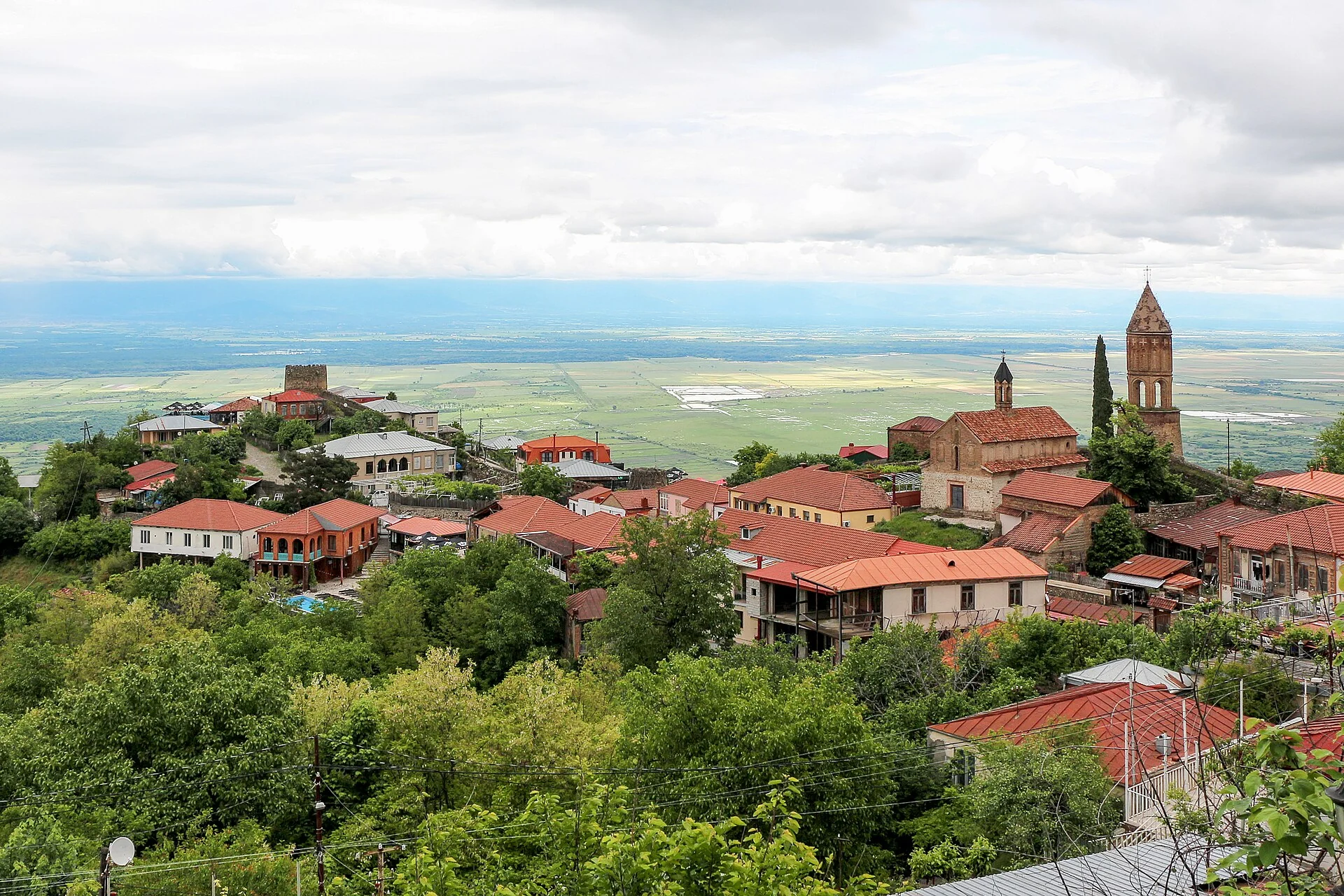 Regional photograph
Kakheti wine, Sighnaghi & Bodbe
- Starts in
- Tbilisi
- Allow
- About 9 hours
Combine a wine-country introduction with Sighnaghi, Bodbe and Georgian food traditions. A useful choice when you want a varied day rather than one estate appointment.
Before booking: Check the tastings and food workshops included in your chosen option; dinner is separate.
View tour & dates on Booking.com ↗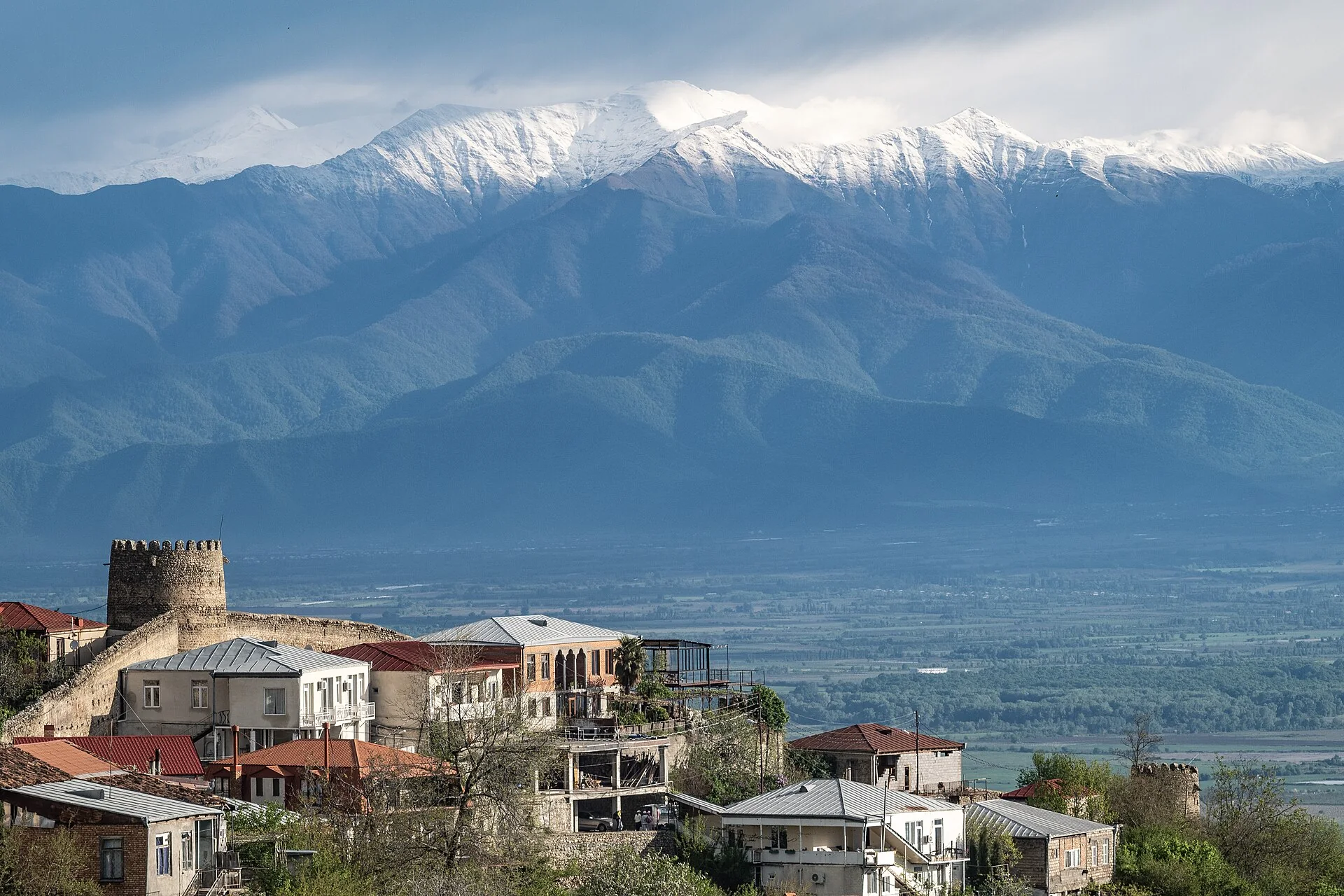 Regional photograph
Sighnaghi, Bodbe & Chronicles wine day
- Starts in
- Tbilisi meeting point
- Allow
- About 10 hours
Compare another Tbilisi departure combining Kakheti wine-country stops with Sighnaghi and Bodbe. The current product also names the Chronicles of Georgia in its route.
Before booking: Check the current stops, tasting inclusions, meeting point and package terms on Trip.com.
View tour & dates on Trip.com ↗Product descriptions reviewed 15 October 2026. Prices, dates, stops and inclusions can change; confirm the selected package with the provider. Arrange a non-drinking driver for independent winery visits.
Tour references & photograph credits
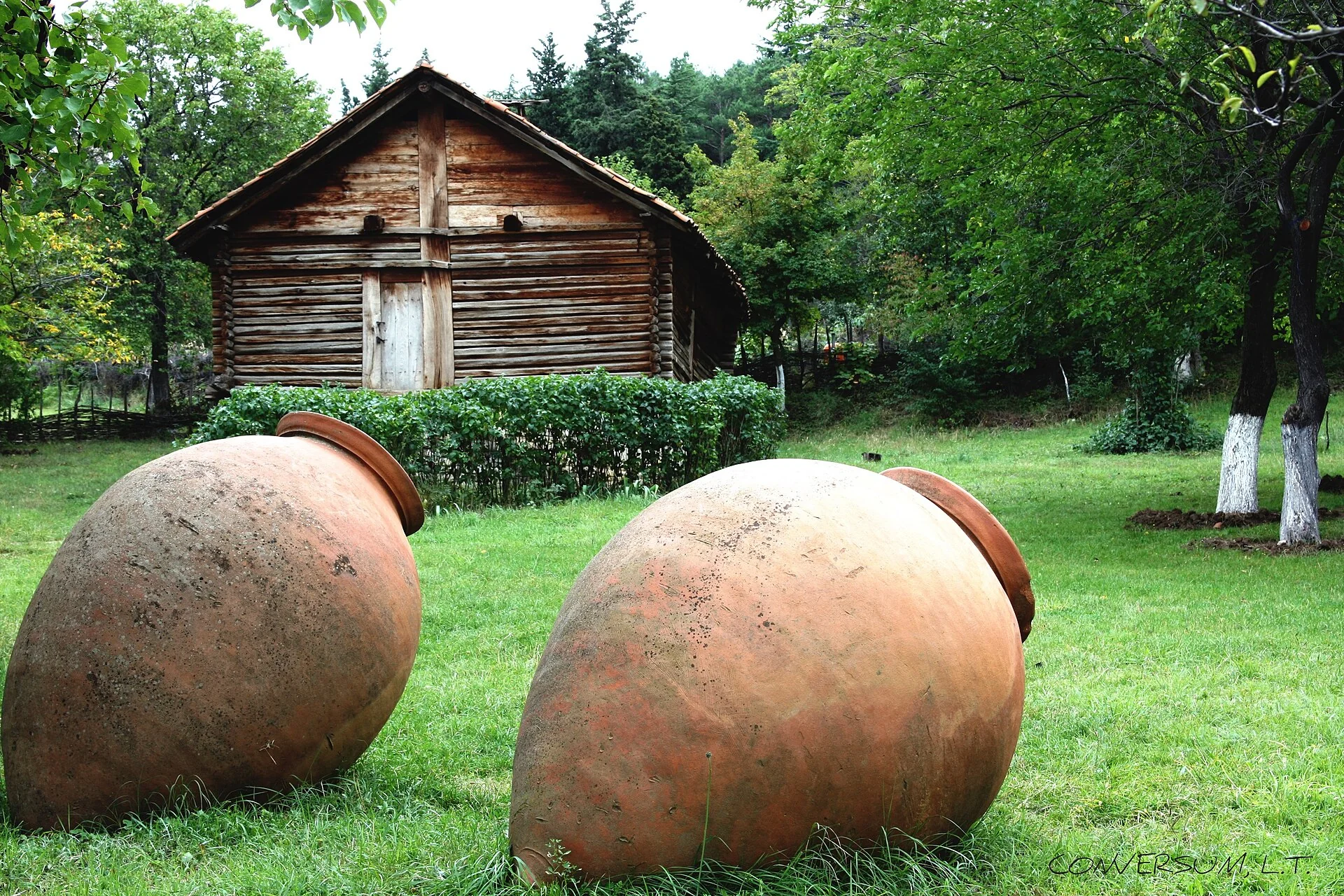
The photographs show the region or wine setting, not a documented group on the advertised tour.
Traditional Georgian clay qvevri wine-making vessels. Levan Totosashvili. Photo source · CC BY-SA 2.0. Resized and converted to WebP. Responsive copies resized and compressed to WebP.
View across Sighnaghi in Kakheti, Georgia. Bernard Gagnon. Photo source · CC BY 4.0. Resized by Wikimedia to a maximum 1920px width where applicable and converted to WebP. Responsive copies resized and compressed to WebP.
Sighnaghi fortress wall with the mountain backdrop across the Alazani Valley. Vladimir Pankratov. Photo source · CC BY-SA 2.0. Resized to a maximum 1920px width and converted to WebP. Responsive copies resized and compressed to WebP.
Choose the experience, not just a bottle.
These are visitor recommendations based on published operator information, not invented tasting scores or a claim that every package is currently available.
Tsinandali Estate
A graceful starting point for Georgian wine history, Chavchavadze's house, a remarkable old cellar and tree-filled grounds.
Explore the estate →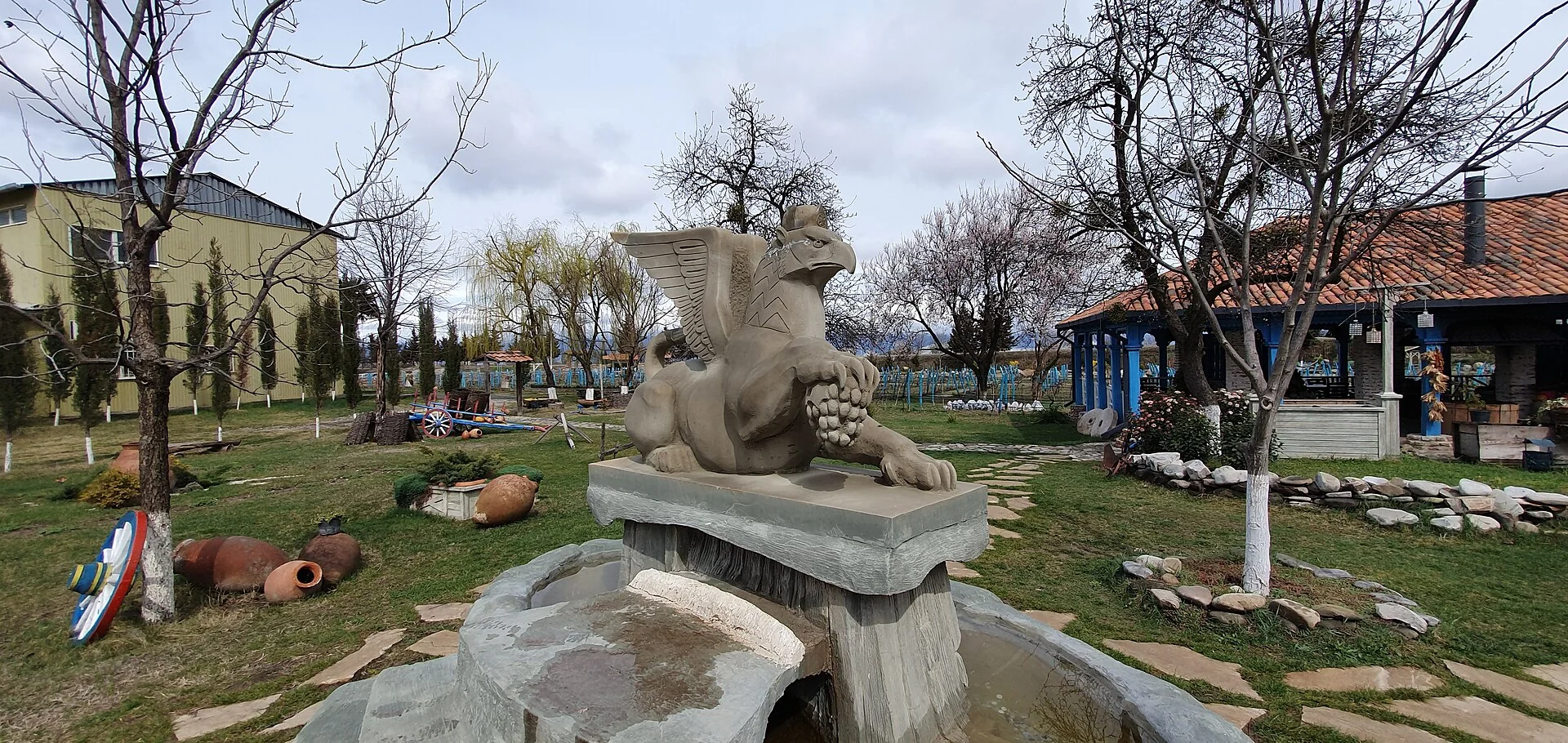
SHUMI Winery
A separate family-owned producer close to Tsinandali's historic estate, with a focus on indigenous grapes and vineyard identity.
Explore SHUMI →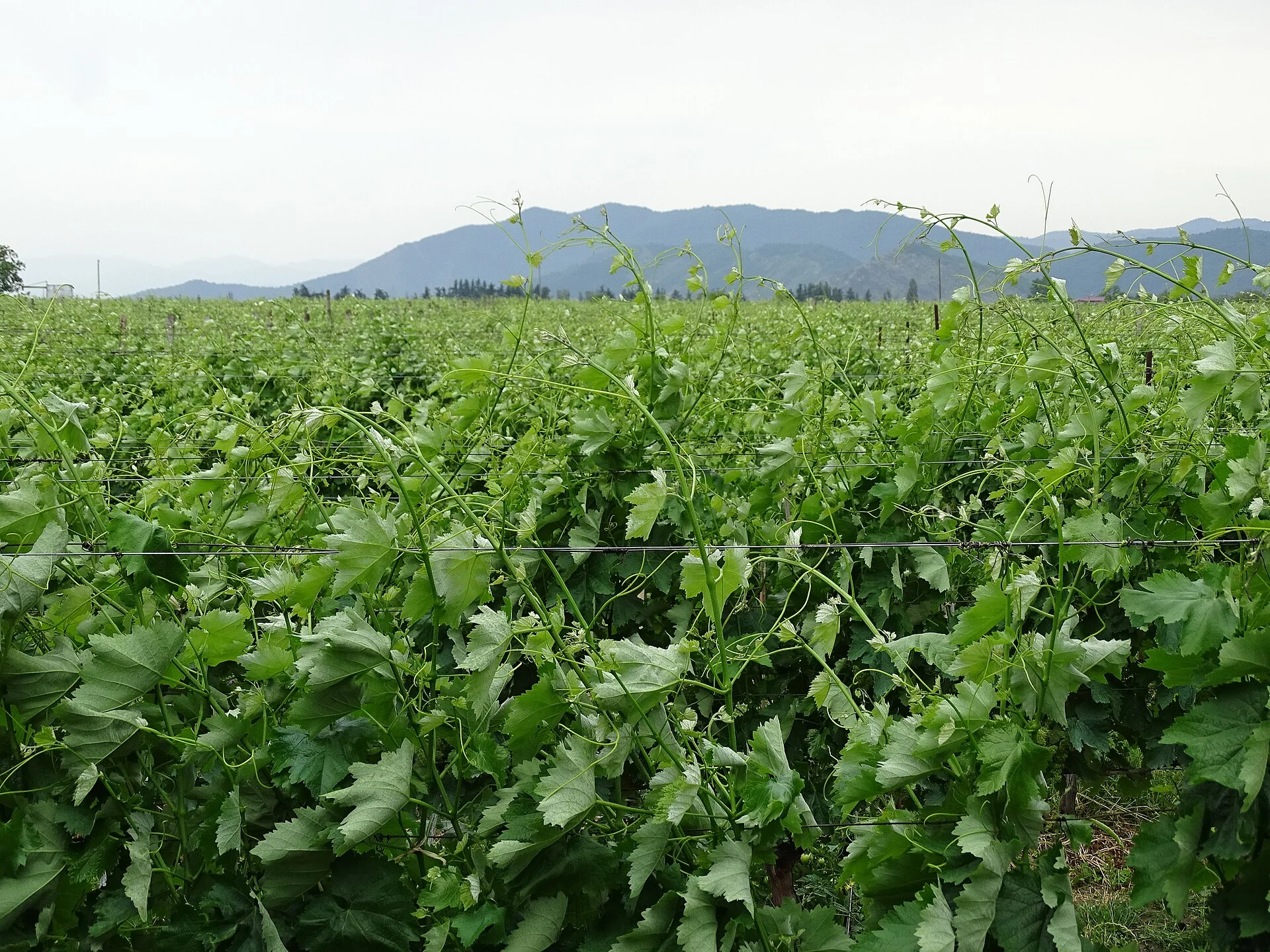
Schuchmann Wines
A château-style hospitality experience in Kisiskhevi, well suited to travellers who don't want to drive away after a tasting.
Explore the château →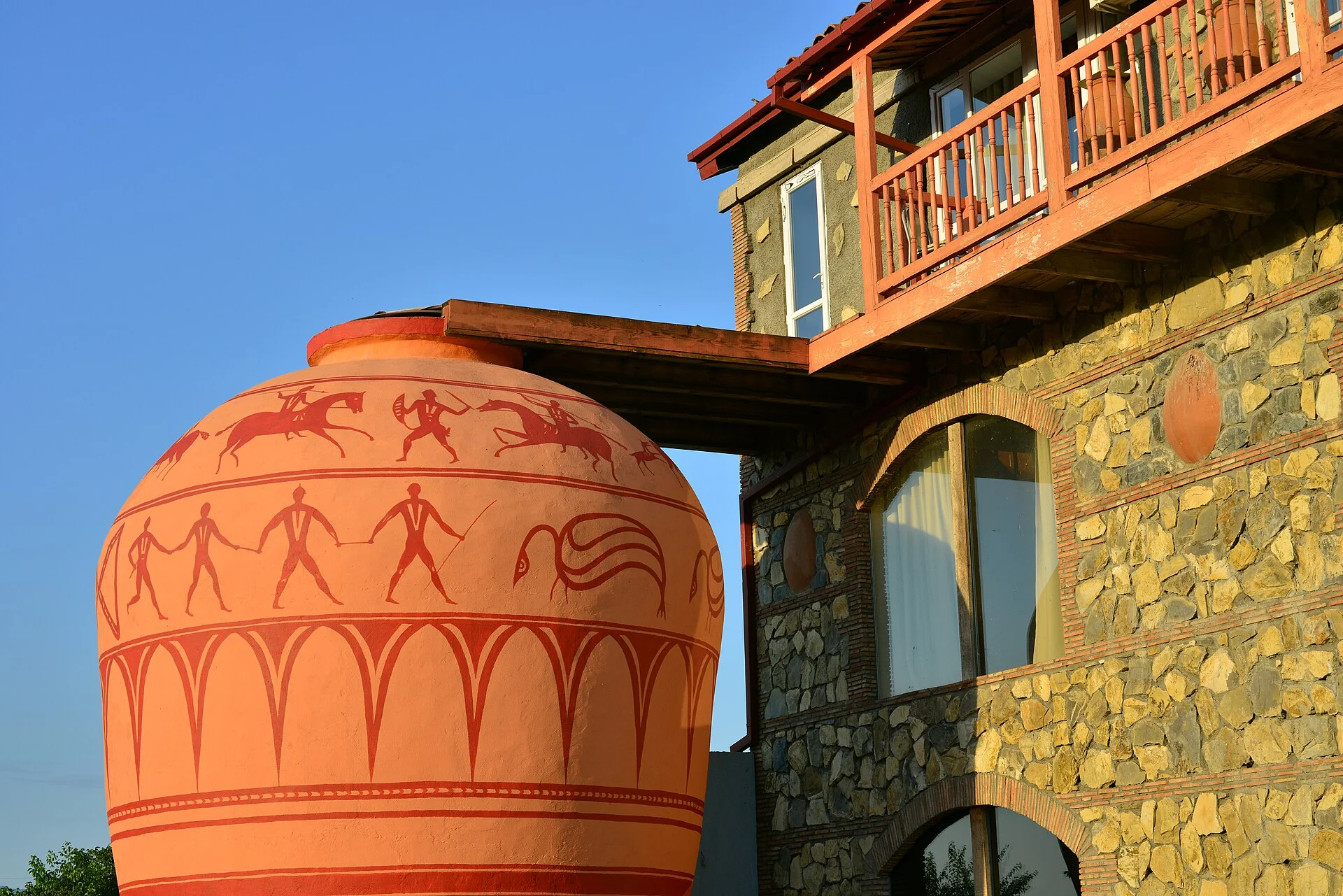
Twins Wine House
In Napareuli, a dedicated qvevri and qvevri-wine museum connects an extended day to family winemaking traditions.
Explore Napareuli →If your party has mixed interests, start with Tsinandali Estate: the house and garden make sense even to someone who doesn't taste wine. Choose SHUMI for a more producer-focused appointment, Schuchmann when wine and an overnight meal belong together, and Twins when the qvevri story justifies a separate visit north of Telavi.
Four places. Four distinct reasons to visit.
| What matters | Tsinandali Estate | SHUMI | Schuchmann | Twins Wine House |
|---|---|---|---|---|
| Main reason to go | 19th-century heritage, historic cellar and gardens | Family-owned wine estate near the museum | Restaurant, tasting and vineyard stay | Qvevri museum and family wine tradition |
| Where | Tsinandali village | Tsinandali village | Kisiskhevi village | Napareuli village |
| Best for | History lovers and mixed-interest groups | Grape varieties and winery-focused visitors | Couples who want to stay for dinner or overnight | Travellers curious about qvevri and family winemaking |
| Booking decision | Choose museum, park and tasting components separately | Confirm actual tour and tasting availability | Reserve restaurant, cellar experience or room directly | Ask about qvevri museum, tour, tasting and lunch |
| If you don't drink | Historic house and landscape gardens remain worthwhile | Ask about a non-tasting estate visit | Scenery, restaurant and accommodation may still appeal | Museum and winemaking explanations may be of interest |
Published descriptions establish the type of experience, not a live booking slot. The table scrolls on narrow screens. Confirm wine flights, meal inclusion, tour languages, ages and prices with each operator.
The cellar has a floor. Sometimes the wine lives below it.
In traditional Georgian winemaking, a qvevri is an egg-shaped clay vessel sunk into the earth. Pressed grapes, and sometimes skins, seeds and stems, ferment within it. The technique is not a fashionable modern invention: UNESCO inscribed the ancient Georgian traditional qvevri winemaking method on its Intangible Cultural Heritage list in 2013.
Imagine the rhythm rather than an invented tasting note: harvest in autumn, grapes crushed and transferred to clay, the vessel sealed, the cellar waiting through colder months. The people who tend the vessel carry a skill learned in families and communities. Kakheti is one of the places where a visitor can ask to see this tradition explained alongside other ways of making wine.
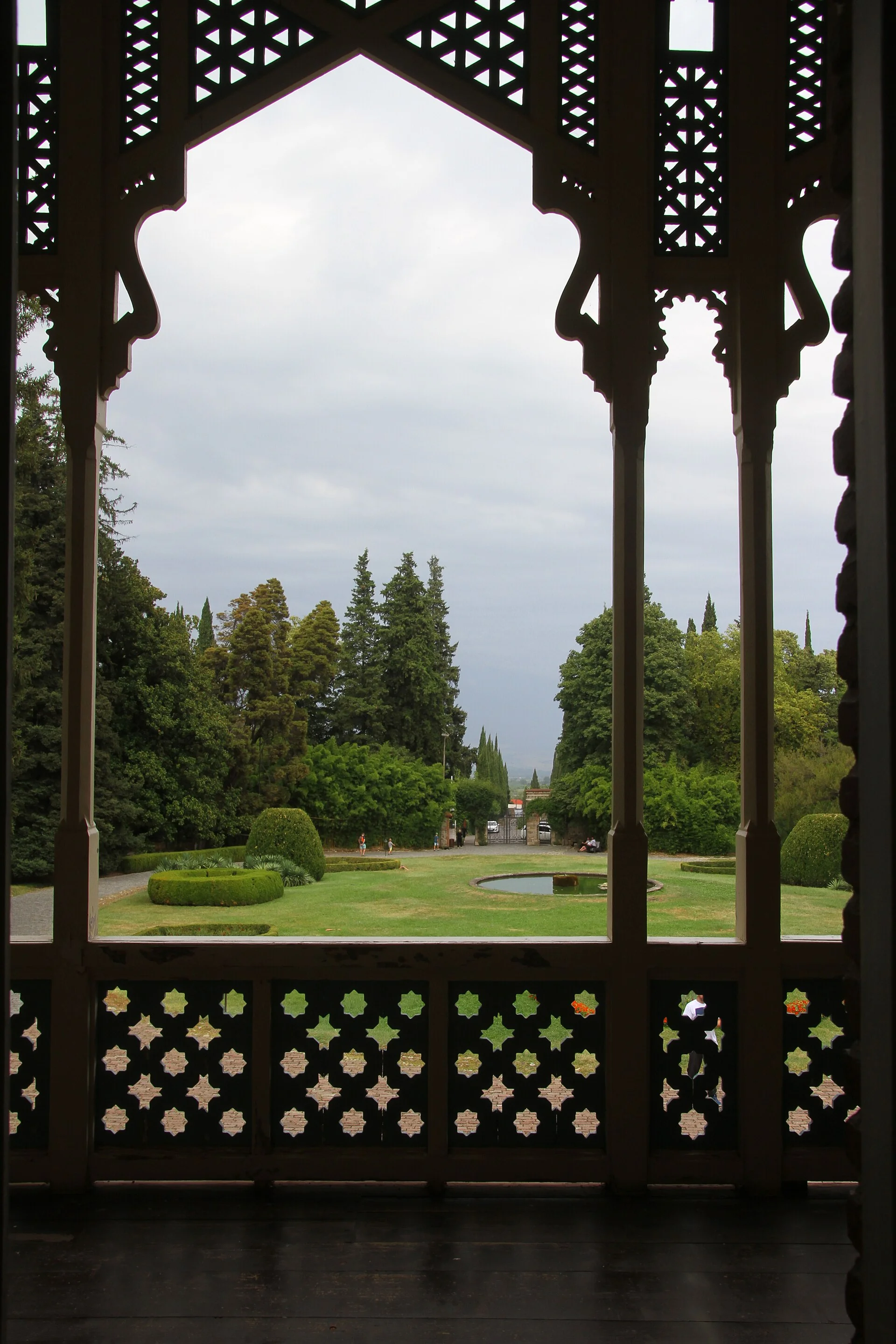
Tsinandali Estate: a glass of Georgian history.
Begin with the house rather than the wine flight. The Aleksandre Chavchavadze estate tells a story of 19th-century Georgia looking outward: literary conversation, new ideas, European-style landscape gardening and wine production all occupied the same household. Georgia Travel connects the house to Prince Aleksandre Chavchavadze, a poet and influential cultural figure who brought European winemaking practices into conversation with Georgian traditions.
Today, the estate presents a house museum, large landscaped park, historic wine collection and contemporary hospitality venues. Its current website advertises tours and tastings that include the old cellar and oenothèque. A room or restaurant reservation at the hotel is a different product from access to the museum or a guided tasting; ask exactly which ticket or experience you need. It is entirely sensible to choose a house-and-park visit without tasting alcohol.
This is the best of the four for a group whose interests extend beyond grape varieties. Leave time for the park and the museum instead of compressing everything into a tasting slot. The historical collection is noteworthy, but the existence of old bottles does not mean visitors can taste those vintages. Treat the cellar as heritage and the hosted wine experience as a separately confirmed activity.
SHUMI: a producer's side of Tsinandali.
It is easy to read the word “Tsinandali” on a tour listing and assume every wine experience in the village belongs to the historic Chavchavadze estate. SHUMI is a separate winery, founded in 1997 and describing itself as family-owned. Its published history places it next to the Chavchavadze museum and park, with vineyards in several important Kakheti microzones. This makes it a logical geographical companion to the museum, not an identical tour.
For someone interested in how growers connect different grape varieties to places, SHUMI may be the more producer-centred conversation. The company's official material speaks of indigenous grapes and work across selected vineyard areas. An operator's production story is a useful starting point for questions, but should not be turned into invented taste descriptions or promises about who conducts a tour on a particular day.
Contact the winery for the visitor programme, whether appointments are necessary, what a tour includes and which language is available. A photograph of grounds or vessels does not prove the tasting room accepts unannounced arrivals. If you plan to pair SHUMI with the Chavchavadze house, leave time for two separate check-ins; proximity is not shared admission.
Schuchmann: make the wine day a night away.
Schuchmann Wines operates a chateau-style wine complex in Kisiskhevi, in the Telavi area. The operator describes a hotel, villas, restaurant, wine bar, spa and winery experiences involving both traditional Kakhetian and European-style winemaking. Its proposition is hospitality as much as production: guests can plan a meal, a guided cellar component and an overnight stay rather than returning to the road immediately after tasting.
That combination can be useful for couples or travellers who prefer a long lunch and a gentle evening to three short cellar appointments. The operator publishes a one-day experience including wine-tour and hospitality options, but packages change and not every feature is included in every booking. Treat wine-spa language as a description of a commercial treatment, not a health claim or a reason to expect medical benefits.
For a non-drinking companion, vineyard scenery, food and accommodation may still make Schuchmann worth considering. Check whether the restaurant, tour or day programme accepts outside visitors, whether a reservation is required, and how you will reach Kisiskhevi. The photograph alongside this section depicts real vineyards near Telavi, not the Schuchmann property itself.
Twins Wine House: the family story of the qvevri.
Napareuli is a separate village north of Telavi, not another name for Tsinandali. Twins Wine House is rooted in the Gamtkitsulashvili family's winemaking history, and the Georgian tourism listing describes a focus on traditional qvevri-aged wines. The operator also advertises a qvevri and qvevri-wine museum, cellar experiences and accommodation. This makes it the most natural detour in our selection for someone who wants to understand the buried clay vessel rather than simply compare contemporary wine labels.
A museum can help translate an otherwise abstract process into equipment, scale and family practice. UNESCO's recognition of qvevri winemaking concerns an inherited method and its role in communities, not an award given to any particular winery. Ask Twins what the current museum or cellar tour actually demonstrates, whether a hosted tasting is included and if traditional food can be arranged in advance.
Because Napareuli is farther from the Tsinandali cluster, it is often better as a dedicated northern Telavi excursion or part of an overnight Kakheti route. You gain more from one real conversation about qvevri than from racing through a half-dozen winery gates. Pair the museum visit with time in the village and a safely arranged return, or choose a stay where transport will not dictate the last glass.
Why is the clay vessel buried?
The earth around a qvevri helps moderate temperature during fermentation and storage. Ask your guide whether the wine uses extended skin contact, which local grapes are involved and how the cellar handles cleaning, sealing and ageing. These questions tell you more than an imaginary list of tasting scores.
Learn about the UNESCO-listed method ↗Three days you could build—without making up appointments.
The routes below are planning patterns, not verified tour bookings. Choose confirmed sessions first, then arrange a driver or use an overnight base.
Tsinandali house & garden, then SHUMI.
Spend unhurried time at the Chavchavadze house museum and park. If a suitable appointment is available, follow with a focused SHUMI visit rather than trying to fit in a distant third winery. The sites are distinct even when their locations make them convenient companions.
Kisiskhevi, dinner and no driving afterward.
Reserve a genuine tasting-and-meal or overnight experience with Schuchmann, or stay around Telavi with safe return transport. Leave space for the countryside and a relaxed breakfast. The point is not to maximise tasting stops but to finish the day without a rushed transfer or unsafe drive.
Make Napareuli a separate qvevri day.
Choose a confirmed Twins Wine House museum or cellar session and ask questions about the traditional vessel and winemaking season. Pair it with another verified stop in northern Kakheti only if your driver, opening arrangements and energy make sense.
What makes a winery visit genuinely work.
Reserve the actual experience
A wine estate may have separate tickets for a museum, gardens, tasting, cellar tour, meal, or accommodation. Confirm the date, group size, language, duration, food and included pours in writing rather than assuming a standard package.
Plan a sober journey
Never drive after wine tasting. Book a sober driver or transfer, designate someone who will not drink, or stay close to the venue. Confirm how you return to the hotel before any first tasting starts.
Ask about children and non-drinkers
History, gardens, food and production stories can interest people who do not sample wine. Ask each operator what minors and non-tasting visitors may join and whether alternative drinks are available. Do not assume every cellar is a child-friendly space.
Understand the season
Autumn rtveli can mean harvest activity, but each producer works to its own grape and weather calendar. Hands-on grape picking, live pressing, and special meals are not guaranteed; reserve a real advertised programme before promising one.
Stay curious about wine styles
Traditional qvevri, contemporary stainless-steel and barrel-aged approaches are not the same experience. Ask whether the tasting compares Rkatsiteli, Saperavi or other local grapes; never assume an operator stocks a particular wine on your visit.
Don't confuse the villages
Tsinandali and Kisiskhevi lie on the Telavi side of Kakheti; Napareuli is a different village to the north. Map the correct visitor entrance, road route and return pickup rather than trusting a generic "Kakheti wine region" location.
Before you book the first glass.
Which wineries should I visit near Telavi?
For a first visit, Tsinandali Estate is an excellent historical starting point and SHUMI adds a winery-focused stop nearby. Schuchmann in Kisiskhevi is attractive if you want wine with dining or an overnight stay. Twins Wine House in Napareuli offers a different qvevri-museum experience, but it is a separate village trip. Book actual tours rather than assuming every cellar accepts walk-ins.
Are Tsinandali Estate and SHUMI the same winery?
No. Tsinandali Estate is associated with the historic Chavchavadze house, gardens and wine collection. SHUMI is a separate family-owned wine producer based near that heritage site. They may be geographically convenient to pair, but reservations, tasting programmes and admission conditions are different.
Can I visit Kakheti wineries without drinking?
Yes. The historic house and gardens of Tsinandali Estate, landscapes and wine-production explanations can be interesting without sampling alcohol. Contact operators to confirm whether a non-tasting tour, food option or museum-only visit is offered. Never assume a tasting fee includes a non-alcoholic alternative.
Do Kakheti wineries require a reservation?
Do not assume a cellar tasting can be booked at the gate. Group sizes, guide languages, meals, harvest work and private events may affect availability. Contact each operator directly for a confirmed appointment and clarify the difference between a garden or restaurant visit and a hosted tasting.
Can I drive myself between wineries after tasting?
Do not drive after drinking alcohol, even if the tastings seem small or spaced out. Arrange a sober designated driver, a hired driver or transport service and confirm the return journey. Another good option is to stay overnight within the region and keep the day focused on one or two stops.
What is a marani, and how is it different from a chateau?
A marani is a Georgian wine cellar or winemaking space, often associated with family wine production and qvevri vessels buried in the ground. A chateau-style wine estate may combine tastings, dining, accommodation and other hospitality. Neither label alone guarantees a traditional qvevri tour; ask what the specific experience includes.
Is autumn the best time to visit a Kakheti winery?
Autumn is associated with the rtveli grape harvest, but timing varies by vineyard, grape and weather. Harvest activities are work, not automatically visitor performances. Confirm whether a particular winery offers a public harvest programme on your dates; spring, summer and winter can also offer meaningful cellar and landscape experiences.
Where should I stay for winery visits near Telavi?
Telavi is a versatile base for dining, transport and several directions across Kakheti. Kisiskhevi and Tsinandali suit an estate-focused stay, while Napareuli works for a deliberately slower northern wine route. Choose your accommodation together with a safe transport plan, not after committing to several tastings.
Check directly with the people who run each place.
Wine programmes, languages, prices and booking policies change. Confirm the specific experience before travelling. Historical sources explain the wine tradition; they do not establish that a particular tasting is available today.
- Tsinandali Estate — official experiences ↗Museum, park, wine tour, tasting, restaurants and hotel arrangements
- Georgia Travel — Chavchavadze House Museum ↗Historical context for the house, gardens and 19th-century cellar
- SHUMI Winery — official estate information ↗Family ownership, location beside the Chavchavadze estate and vineyard history
- Schuchmann Wines — Château, Villas & SPA ↗Kisiskhevi location, rooms, dining and wine-tour options
- Schuchmann Wines — one-day experience ↗Operator's example of a bookable cellar, food and wine-day programme
- Twins Wine House — official hotel & museum ↗Napareuli accommodation and qvevri museum as described by the operator
- Georgia Travel — Twins Wine House listing ↗Independent tourism-directory listing and Napareuli location
- UNESCO — traditional qvevri wine-making method ↗Primary cultural-heritage record; inscribed in 2013
- Georgia's National Wine Agency — qvevri wine ↗Production method, earthenware vessels and Georgian winemaking context
- Georgia Travel — rtveli harvest traditions ↗Harvest-season background, without assuming visitor participation
Photograph sources and Creative Commons licenses
Every photograph is from a real Georgian destination or wine-related scene, adapted from a licensed Wikimedia Commons file. The Schuchmann section explicitly uses regional vineyard imagery, not a representation of its actual hotel or cellar.
- Historic Chavchavadze palace at Tsinandali Estate near Telavi — Gerd Eichmann; CC BY-SA 4.0; Resized and converted to WebP.
- Historic landscape park at Tsinandali Estate in Kakheti — Gerd Eichmann; CC BY-SA 4.0; Resized and converted to WebP.
- Shumi Winery estate in Tsinandali village, Kakheti — Hijas Rahim Binutha; CC BY-SA 4.0; Resized and converted to WebP.
- Twins Old Cellar Wine House building in Napareuli, Telavi municipality — Panegyrics of Granovetter; CC BY-SA 2.0; Resized and converted to WebP.
- Vineyard in the Telavi area of Kakheti, not specifically Schuchmann Wines — Adam Jones from Kelowna, BC, Canada; CC BY-SA 2.0; Resized and converted to WebP.
- Traditional Georgian clay qvevri wine-making vessels — Levan Totosashvili; CC BY-SA 2.0; Resized and converted to WebP.