Where hot meets cold
Find the steaming travertine by the Tekhuri River, and understand why this is not a managed spa.
Visit for striking natural mineral formations beside the Tekhuri, but treat access and bathing as an unstaffed river outing with real heat and current hazards.
- Location
- Tekhuri River valley near Nokalakevi/Archaeopolis in Senaki Municipality, Samegrelo; the fortress and springs are separate stops.
- Facilities
- Treat the spring as an undeveloped natural site; do not plan around staffed changing areas, lifeguards or ticketed bathing.
- Overnight base
- Martvili · Kutaisi — compare options ↓
Area search, not a confirmed venue entrance. Use the guide's visitor details for the final approach.
In this guide
Nokalakevi Sulfur Springs: A Wild Riverside Soak in Samegrelo
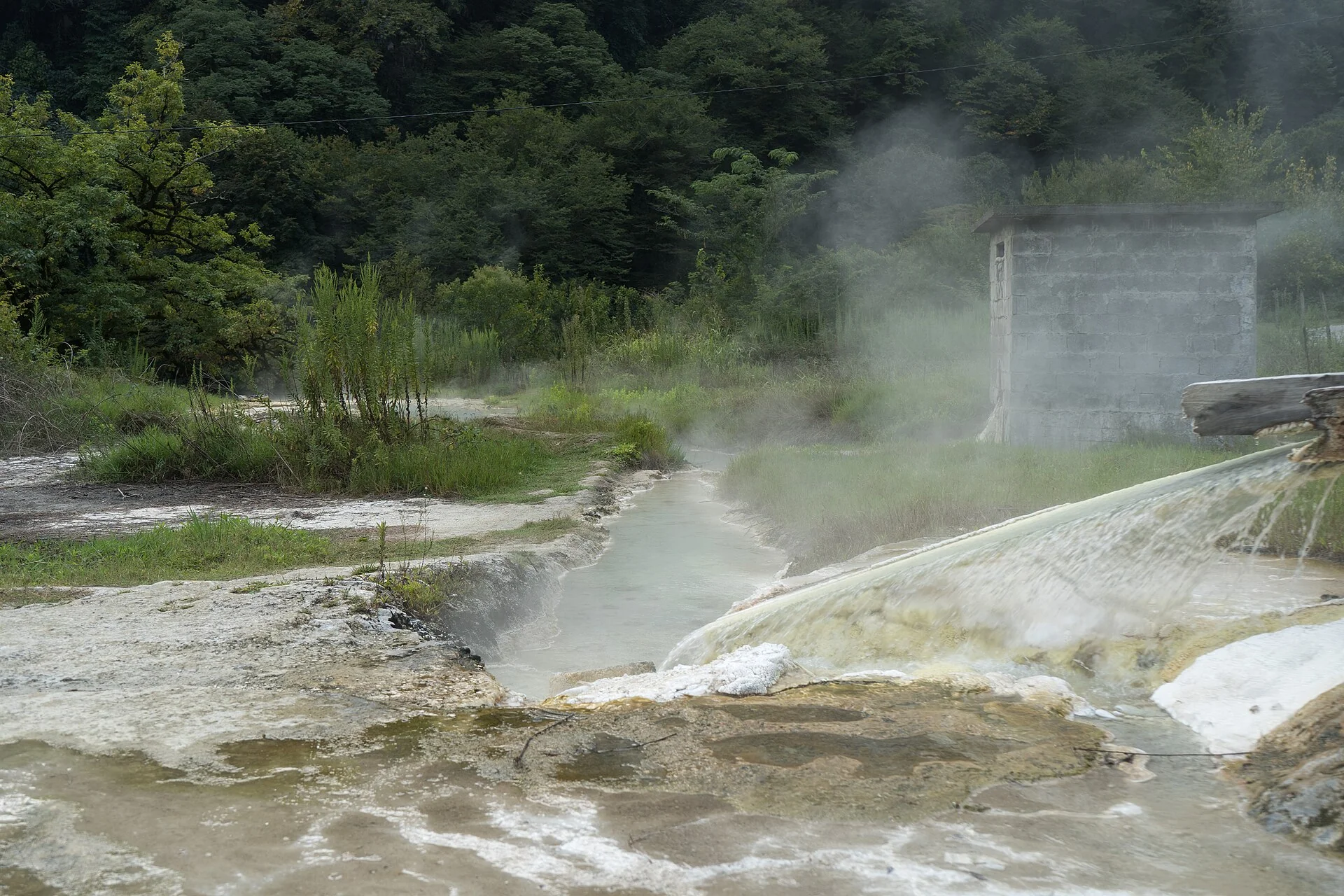
The sulfur springs near Nokalakevi are a completely different proposition from Georgia's tiled bathhouses. On the Tekhuri River in Samegrelo, hot mineral water emerges from the ground, travels across pale deposits and meets cold running water. The scene is dramatic: steaming rock, a wooded riverbank and the sound of the river all in one place.
The crucial point is that the spring is not a staffed thermal pool. There is no dependable reception desk, controlled bathing temperature or supervised entrance to count on. The source water can be dangerously hot, and river conditions change with rainfall. Plan a visit around observing the formations first; entering any water is a separate decision you should make only after assessing the site in front of you.
The landscape: hot springs, mineral terraces and a cold river
Mineral-rich water surfaces near Nokalakevi and flows over a pale carbonate formation often described as travertine. Repeated deposits give the rock its layered, almost frozen appearance, even while steam rises above it. The visual contrast is the main reason to seek out the site.
The Tekhuri is a living river rather than a plunge pool. The cool current mixes unevenly with the hot flow, leaving small pockets that may vary sharply in temperature over a short distance. A spot used by someone in a photograph may be too hot, too deep or too fast on another day. Avoid the outlets and cascades themselves, test nothing with bare feet, and never assume that improvised stone pools have safe temperatures.
Finding the spring from Nokalakevi and Senaki
Nokalakevi lies in Senaki Municipality, close to the archaeological complex also known as Archaeopolis or Tsikhegoji. The thermal outflow is farther along the Tekhuri valley from the main fortress area, so a map pin for the museum does not put you at the springs. The last stretch may involve a rough roadside stop and a steep, muddy descent to the bank. A hired local driver who knows the river access is useful when signage is uncertain.
Kutaisi can work as a day-trip base, while Senaki places you closer to the area. Public transport can bring you toward larger towns or villages, but it is not a reliable door-to-spring service. Arrange the return journey before setting out, download an offline map and leave adequate daylight for the river path. Rain may make the approach slippery or raise the river; when access looks unsafe, turn the trip into a fortress and landscape visit instead.
Why Nokalakevi's ancient city belongs on the same day
The Nokalakevi Museum-Reserve preserves the fortified site known to Greek writers as Archaeopolis, with long sections of defensive wall, church remains and traces of urban life on the Tekhuri's banks. Georgia's tourism authority notes Roman-style bathing remains among the archaeological discoveries. Those ancient structures help explain why water and river geography mattered here, but they must not be confused with today's natural spring farther up the valley.
Give the complex time before driving toward the hot outflow. Its sixth-century Church of the Forty Martyrs, fortifications and elevated terrain offer context that a quick spring photograph cannot. Some historic routes involve steps, uneven stone and exposed sections; admission arrangements for the museum-reserve are separate from access to the open riverbank.
A sensible approach to bathing, belongings and river safety
Bring footwear with dependable grip, drinking water, a towel and dry clothes if you may approach the shore. Do not rely on toilets, changing rooms, lockers, bins or rescue equipment being present. Keep valuables away from the water and leave no soap, food packaging or other waste on the bank. Thermal flow and sulfurous deposits can be fragile; avoid breaking crusts or constructing dams that redirect water through delicate formations.
Above all, assess heat and current separately. Scalding spring water can cause severe burns while nearby river water may have submerged obstacles or an unexpectedly strong pull. Never submerge your head at an unknown outflow, jump between hot and cold water or let children explore the edge without direct supervision. If the river is high or the mixing zones cannot be judged safely, photograph the springs and enjoy the scenery without entering.
Plan the visit and the journey back.
- Location
- Tekhuri River valley near Nokalakevi/Archaeopolis in Senaki Municipality, Samegrelo; the fortress and springs are separate stops.
- Facilities
- Treat the spring as an undeveloped natural site; do not plan around staffed changing areas, lifeguards or ticketed bathing.
- Bring
- Grippy footwear, offline directions, water, daylight buffer and dry clothes; consider a local driver familiar with the river approach.
- Main hazard
- Source water may scald and river flow changes after rain. Observe from shore if safe entry conditions are uncertain.
Area search, not a confirmed venue entrance. Use the guide's visitor details for the final approach.
Stay where the next day makes sense.
Compare the base first, then check the property's location and transport for your outing.
Martvili
Search near Martvili for a Samegrelo outing. Our directory also includes other bases in the region.
Compare directory stays →Search Martvili on Booking.com ↗Kutaisi
Compare a city base for an Imereti itinerary, with a separate return journey to the attraction.
Compare directory stays →Search Kutaisi on Booking.com ↗Useful answers before setting out.
Are Nokalakevi's sulfur springs the baths inside Archaeopolis?
No. Archaeopolis has archaeological remains of historic bathing structures; the natural steaming springs are a separate riverside feature farther along the Tekhuri valley.
Can I count on an entrance ticket, showers or a changing room?
No. Plan as for an undeveloped outdoor site, with no guaranteed staff or visitor facilities. The nearby museum-reserve has its own separate visitor arrangements.
Is the waterfall itself safe for swimming?
Do not assume so. Water at the thermal outlet can be scalding, while the river has variable current and footing. Looking at the formation without entering the water is a valid visit.
Confirm the current visitor details.
Access, weather, opening hours and bookable experiences can change. Check the relevant operator or visitor authority for your date.
- Georgia Travel: Nokalakevi Museum-Reserve and the ancient city ↗
- Georgia Travel: the Tekhuri River and its terrain ↗
- Georgia Today: Nokalakevi Hotsprings, Ice and Fire (2025) ↗
Photograph sources and licenses
Natural steaming sulfurous mineral-water formations in Nokalakevi, Samegrelo. Photograph by Alexey Komarov. Source photograph, CC BY-SA 4.0. Converted to WebP. Responsive copies resized and compressed to WebP.
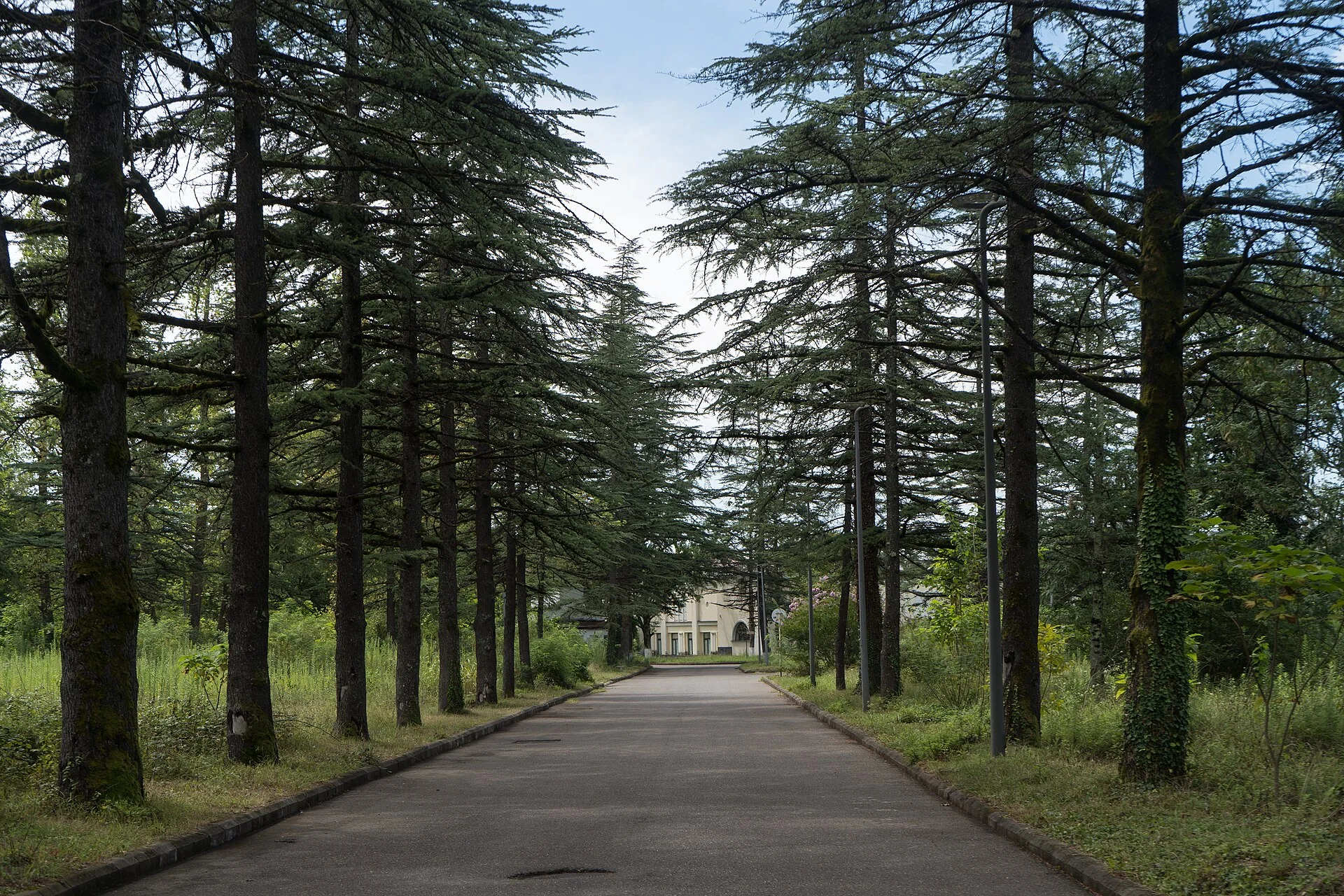
Tskaltubo mineral-water park. Photograph by Alexey Komarov. Source photograph, CC BY-SA 4.0. Converted to WebP. Responsive copies resized and compressed to WebP.
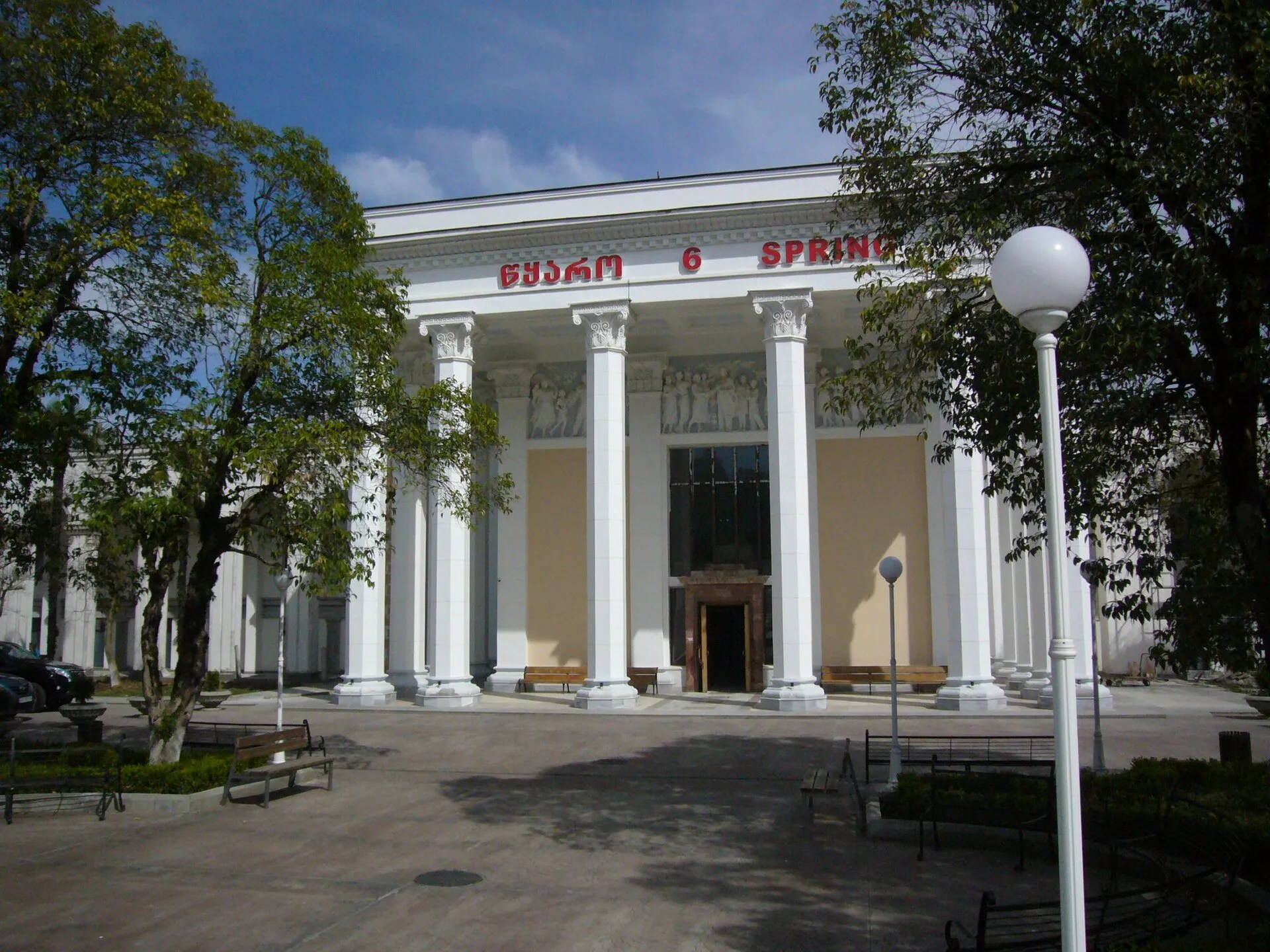
Spring No. 6 mineral-water bath building with white columns in Tskaltubo. Photograph by Georgia 2017. Source photograph, CC BY-SA 4.0. Converted to WebP. Responsive copies resized and compressed to WebP.