Where Georgia runs warm.
A bath beneath Tbilisi's old roofs. Steam on a Samegrelo riverbank. A resort town built around mineral water. They are all called “hot springs”—but they make three entirely different trips.
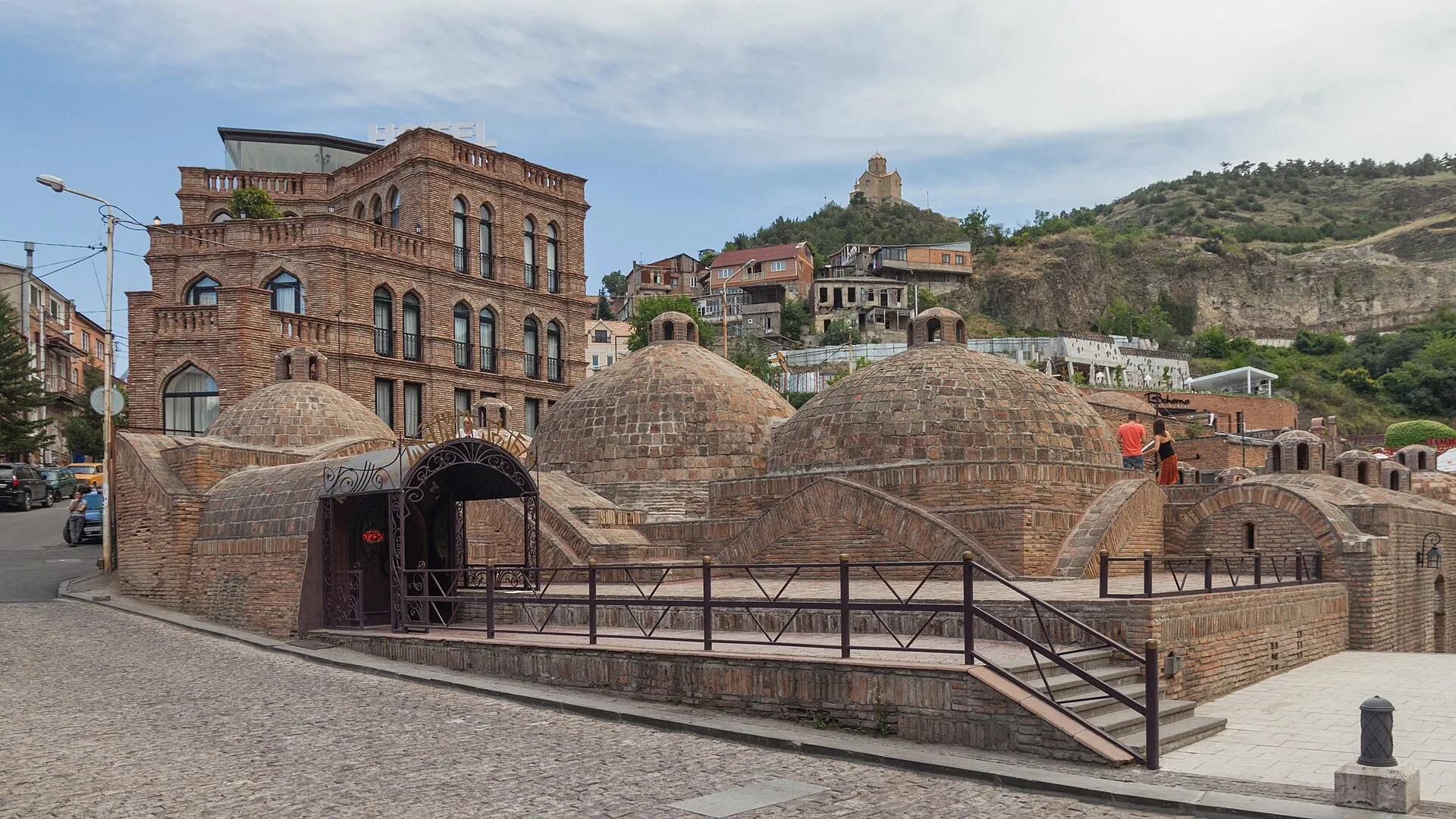
Historic bathhouse domes in Tbilisi's Abanotubani district. See the photograph sources and licenses below.
Choose the kind of bath before choosing the town.
- Where
- Tbilisi bathhouses, Tskaltubo facilities and western Georgia's natural springs offer different experiences.
- Before you go
- Book staffed bathhouse sessions with the operator. Natural springs are not managed swimming pools.
Choose the experience, not just the temperature.
If you want warm water and an easy-to-plan evening, choose a staffed sulfur bath in Tbilisi. If you want to see an unusual natural spring in the landscape, put Nokalakevi on a Samegrelo itinerary without treating a soak as guaranteed. If mineral-water traditions and twentieth-century spa architecture interest you, choose Tskaltubo.
Start with the kind of visit you'd enjoy most, then check the details for that particular place. Facilities, access, water conditions and rules differ far more than the phrase "hot springs" suggests.
Which kind of warm water is yours?
One label, three very different promises. The best choice is the one that matches how you actually travel.
Tbilisi's sulfur baths
For a first visit, a city break or anyone who wants a bath with a story attached.
Abanotubani · Tbilisi→02The wild encounterNokalakevi sulfur waters
For confident independent travellers who value a remarkable landscape more than comfort.
Senaki · Samegrelo→03The spa-town chapterTskaltubo's mineral-bath tradition
For travellers curious about Georgia's resort architecture, managed mineral baths and slow travel.
Tskaltubo · Imereti→“Hot spring” is a useful search phrase, not a safety rating. Sulfur water, natural riverside heat and professionally managed mineral treatments need different planning.
Three landscapes. Three ways of remembering.
In Tbilisi, the city folds over its sulfur water. Brick domes rise from the old streets like a second skyline. The bath is enclosed, social, scheduled: warm water with conversation and ritual.
To the west, the scene changes. At Nokalakevi the story is written outside, in white mineral deposits and the movement of the Tekhuri River. Local tradition calls the formation Dedamoka, the pregnant mother. That is a legend, not established history—and it adds meaning to a place whose physical conditions deserve respect.
Then comes Tskaltubo, where water reshaped an entire town. Park paths, formal bath buildings and the memory of great sanatoriums speak of a different age: one in which mineral water was organized into a whole resort system. The architecture is part of the visit, even if you choose not to book a procedure.
The useful details are in the differences.
What to expect, what to double-check and where it makes sense to sleep afterwards.
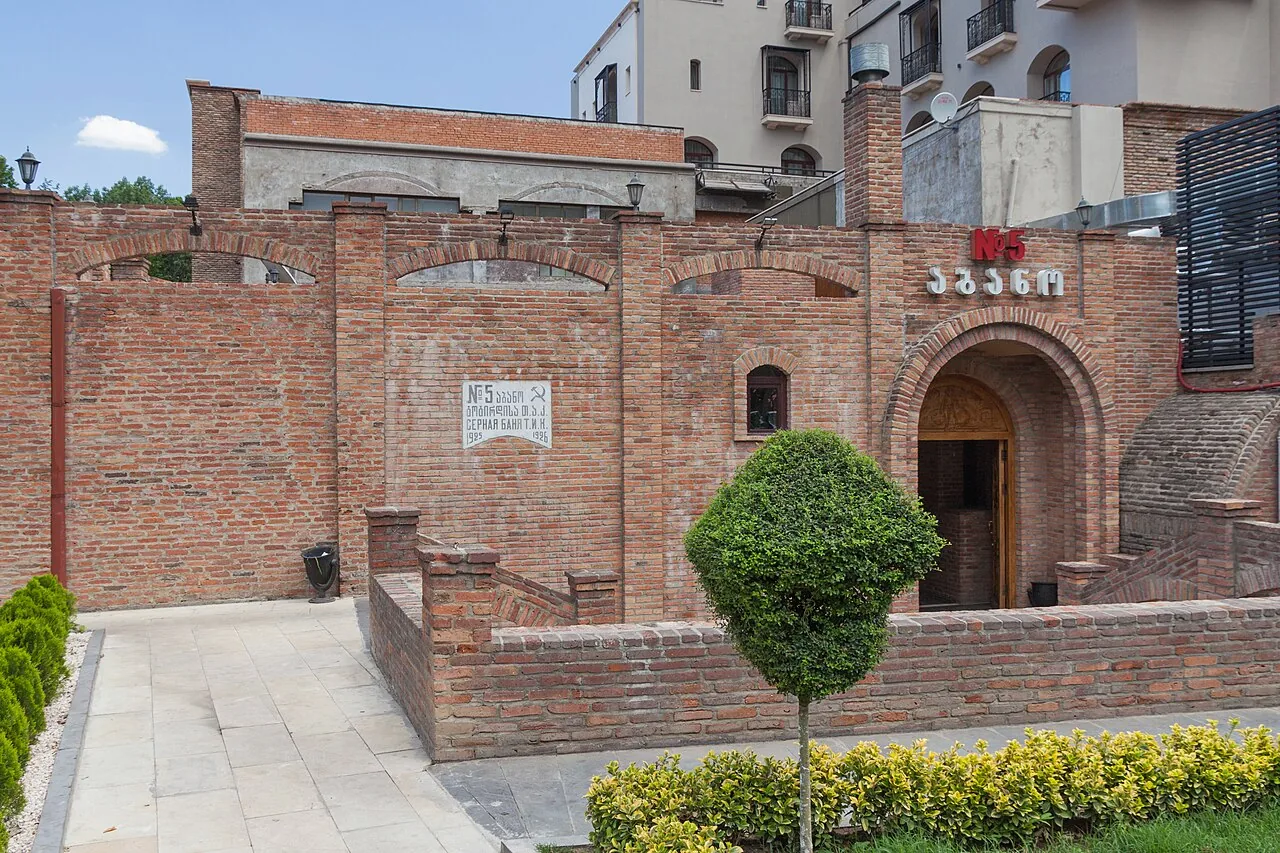
Tbilisi: the bathhouse is part of the neighbourhood.
In Abanotubani, it's easy to mistake the handsome domes for the whole attraction. They are the visible part of a much older bathing culture. Georgia Travel identifies Chreli Abano, Bath No. 5 and several other operating houses. Some offer shared facilities; others sell private-room sessions, sometimes with scrubs or massages.
Our recommendation: pick your bathhouse first, then choose the experience you want—shared, traditional, private or more polished. Don't assume the dramatic tile facade means every room has the same design or services. If privacy matters, confirm a private room directly before making plans.
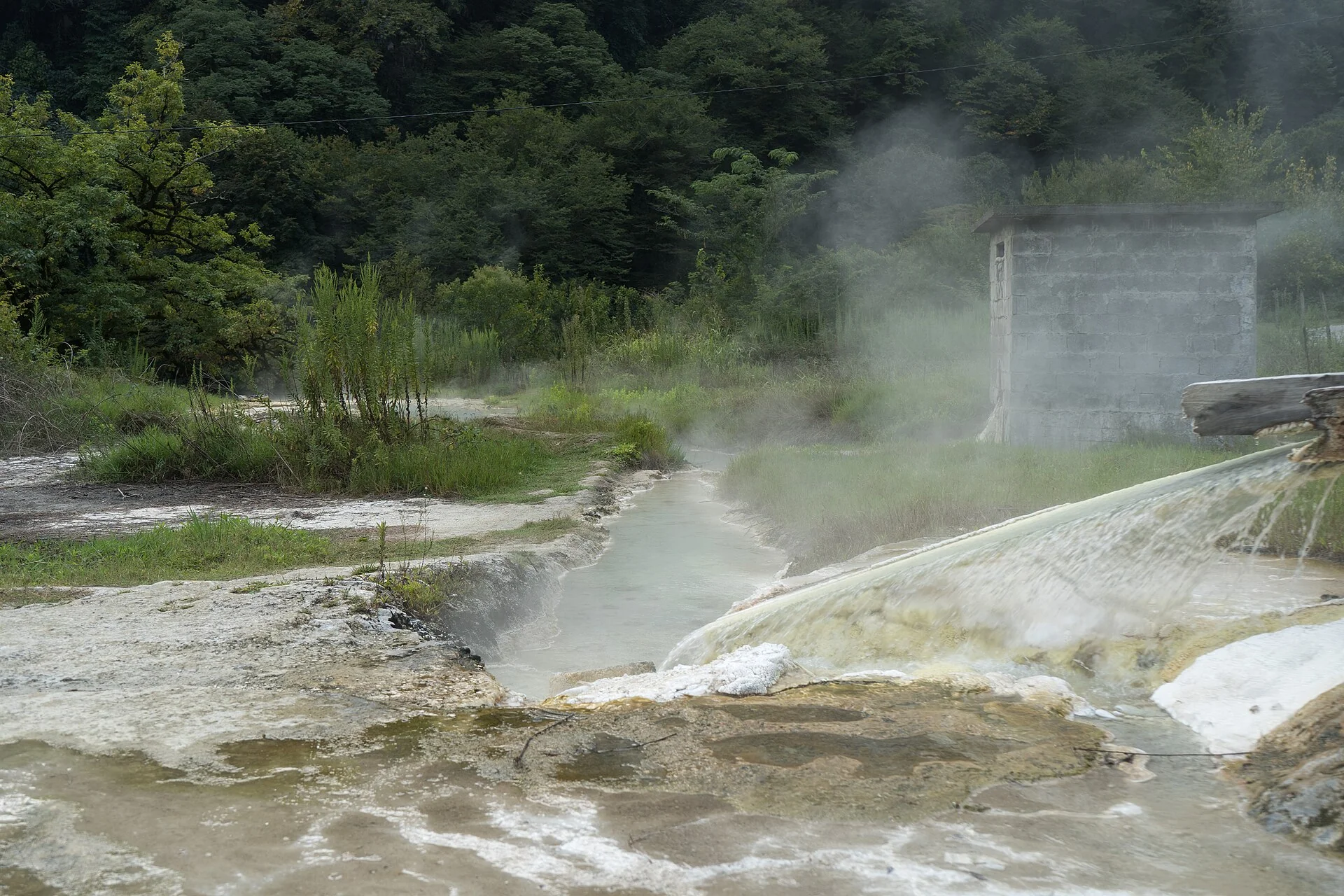
Nokalakevi: beautiful, elemental—and not a managed pool.
The natural sulfur waters near Nokalakevi appear beside the Tekhuri River in Samegrelo. Minerals leave pale travertine deposits and the escaping warm water makes an arresting scene. The nearby Nokalakevi archaeological site lets you pair geology with the history of an old fortified town.
Our recommendation: travel for the scenery and the unusual mineral formation, with bathing only as an option if present-day conditions genuinely allow it. Natural hot water may scald, river current changes, and wet stone is slippery. Avoid entering at the spring source or when the river is fast, high or discoloured. Never take the absence of a guard as permission or proof that swimming is safe.
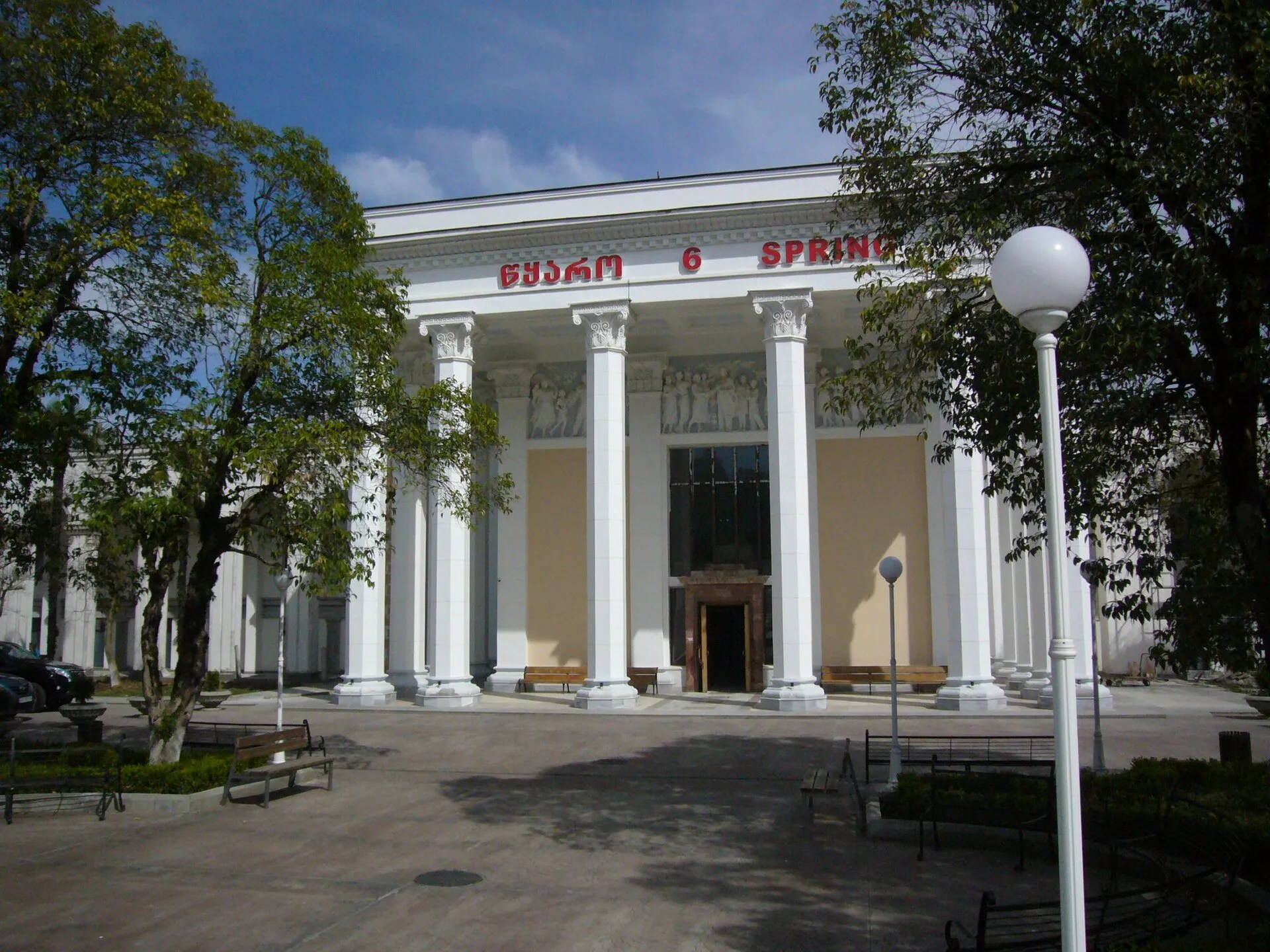
Tskaltubo: the ritual became a whole town.
Tskaltubo is different again. Georgia Travel describes the Balneo N1 and N6 facilities as operating mineral-bath centres. The town's central park and the architectural legacy of its grand sanatoriums give a visit more texture than a single pool could. The Spring No. 6 operator describes it as a separate rehabilitation and bathing centre—not a hotel.
Our recommendation: choose Tskaltubo if the history, park and structured spa experience appeal. Ask the operator exactly what a visitor can book. Tskaltubo water may contain naturally occurring radon; we do not endorse health claims or recommend radon therapies. Ask qualified clinicians about medical suitability, particularly before specialised procedures.
The best extra stop might be your overnight base.
Choose a base that lets you enjoy the bath, the neighbourhood and the journey without rushing.
Old Tbilisi, slowly
Walk through Abanotubani, reserve a bath experience that suits you, then leave space for an unhurried old-city evening. Staying centrally removes a late transfer from the equation.
Explore the old-city stay area →Ruins, river and Samegrelo
Combine the archaeological site of Nokalakevi with a look at the nearby mineral landscape, only if access conditions are suitable. An Imereti or Samegrelo overnight base depends on your next stop.
Browse western Georgia stays →Tskaltubo beyond the bath
Choose a bookable facility visit, make time for the park and the town's spa architecture, and consider the nearby Prometheus Cave on a separate verified visitor session.
Read the Prometheus Cave guide →Warm water requires a cool head.
Natural river spring, public sulfur bathhouse or clinical mineral-bath centre? They have different rules, facilities and risks.
Bathroom availability and bookings change; river flow, rain and slippery rock can change a wild spring from appealing to unsuitable.
Never infer therapeutic benefits. Very hot water and radon-containing mineral treatments may be inappropriate for some visitors; consult qualified medical advice where needed.
At an unmanaged spring, avoid soaps and chemicals in waterways, respect formations, keep distance from others and pack out all rubbish.
A few things worth asking before you soak.
Where are the best hot springs in Georgia?
For a historic, bookable bath, start in Tbilisi's Abanotubani district. For a wild natural setting, research Nokalakevi in Samegrelo—but treat the site as an outdoor attraction first, not a guaranteed safe swimming spot. For managed mineral-bath facilities and spa-town heritage, consider Tskaltubo.
Are Tbilisi sulfur baths the same as natural hot springs?
No. A Tbilisi bathhouse uses geothermal sulfurous water in managed rooms, while Nokalakevi is a natural spring beside a river. Tskaltubo's staffed facilities have a different mineral-water and balneological tradition. Rules, facilities and safety are not interchangeable.
Can I soak for free at Nokalakevi?
Accounts describe an unmanaged open natural spring rather than a ticketed bathhouse, but local access and conditions can change. The absence of a ticket does not make bathing safe. Consider the riverbank, water heat, strong flow and footing before approaching the water.
Can I visit Tskaltubo without staying at a spa hotel?
Yes. The operator describes Spring No. 6 as a dedicated treatment and rehabilitation facility separate from overnight accommodation. Contact the facility to confirm its visitor policy and any consultation requirements.
Are Georgia's sulfur or radon baths medically beneficial?
This guide does not recommend thermal, sulfur or radon exposure for treating medical conditions. Mineral-water composition and commercial treatment claims are not proof of health benefit for a particular person. Discuss relevant health conditions with a qualified clinician before considering a treatment.
Stay close enough to enjoy the day.
Choose a city, village or spa-town base first; then compare available accommodation. We send you to providers for current prices rather than showing invented rates.
Stay where the next day makes sense.
Compare the base first, then check the property's location and transport for your outing.
Tbilisi
Compare a city stay; check the property's actual neighbourhood and the return journey from your outing.
Compare directory stays →Search Tbilisi on Booking.com ↗