Navenakhevi: a smaller cave, a different rhythm.
Visit Navenakhevi Cave near Terjola for sculpted limestone, a compact managed route and a quieter contrast with Prometheus and Sataplia, with realistic access and stay advice.
Choose Navenakhevi for a compact limestone experience rather than Prometheus Cave's longer illuminated spectacle.
- Location
- Visitor centre at Navenakhevi village, Terjola municipality, Imereti; do not confuse it with Tskaltubo's Prometheus Cave.
- Booking
- Official ticket guidance mentions Navenakhevi sessions. Confirm current admissions, language and any closure before departure.
- Overnight base
- Kutaisi · Tskaltubo — compare options ↓
Area search, not a confirmed venue entrance. Use the guide's visitor details for the final approach.
In this guide
Navenakhevi Cave Near Kutaisi: The Quieter Imereti Cave
The villages east of Kutaisi are easy to rush past on the way to better-known sights. Navenakhevi gives you a reason to slow down. In the hills near Terjola, this managed cave reveals the architecture of water and rock on an intimate scale. It is not a rival trying to outdo Prometheus Cave in size; its interest lies in a shorter, more focused encounter with a sequence of limestone halls.
The Agency of Protected Areas describes a two-level cave with four halls and a route of approximately 250 metres. These figures make it tempting to call the excursion effortless, but the site has steps, an interior that can be damp and an organised visitor system. The most useful question is whether a shorter cave fits the rest of your Imereti day, not whether you can race through it in a fixed number of minutes.
Four chambers instead of a grand subterranean parade
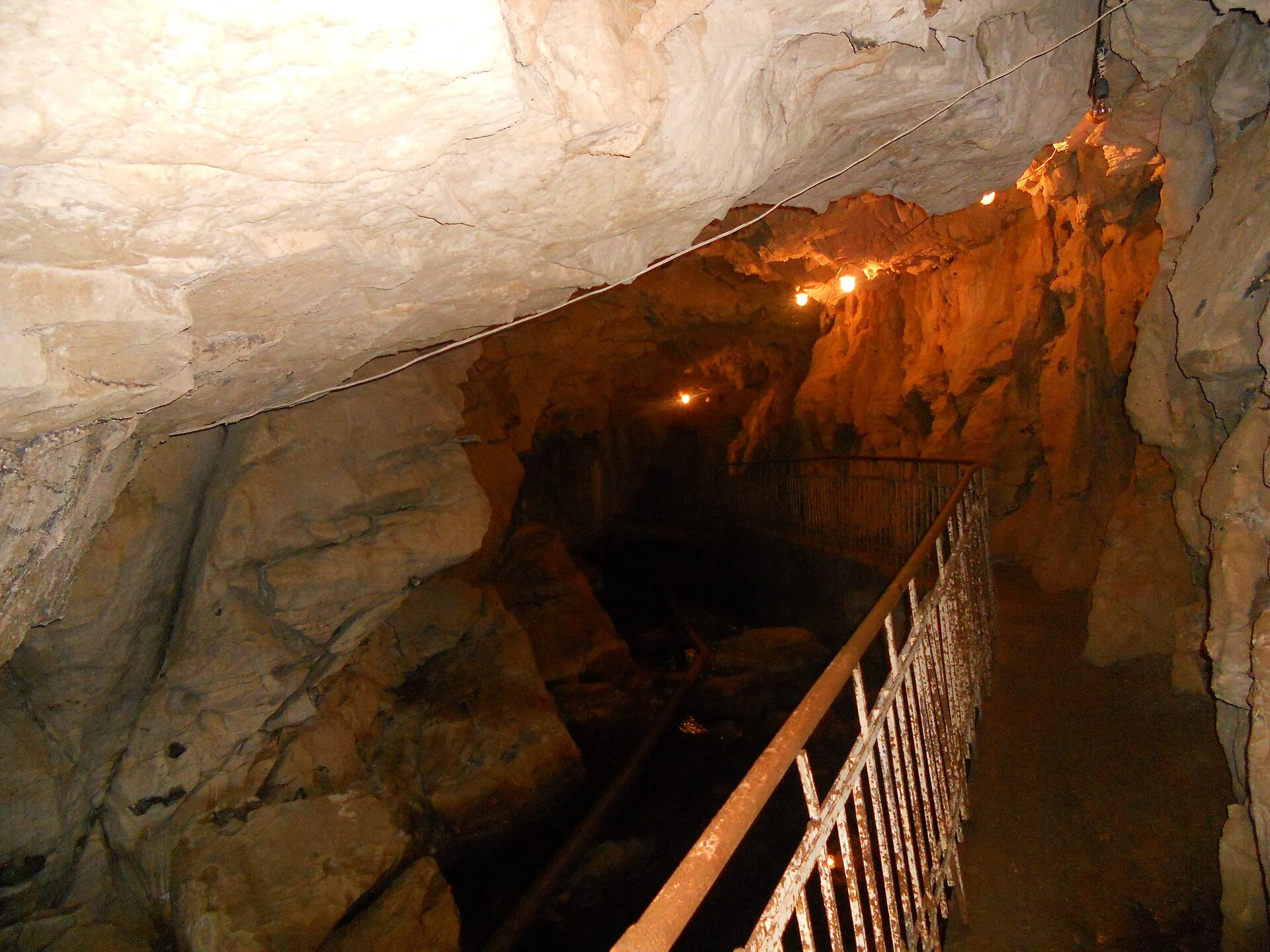
Navenakhevi's limestone forms are the work of water over time. The managing authority describes stalactites and stalagmites in a cave that divides into branches roughly 30 metres from its entrance. That split is part of what makes a smaller cave interesting: it invites attention to the shape of the passages and the mineral features instead of relying on the drama of a long underground itinerary. Inside, the details reward an unhurried eye.
It is useful to understand its two levels before visiting. The authority mentions steps connecting a higher section to another hall, so a compact distance does not make the cave automatically wheelchair accessible or suitable for someone unable to manage steps. If mobility or enclosed spaces are a concern, contact the visitor centre before buying a ticket. A short route can still involve the kind of ground that asks for deliberate footing.
A cave shaped by its second life as a visitor attraction
Navenakhevi had a visitor history long before its recent reinvention. The Agency of Protected Areas records that it was known to visitors in the 1980s, later closed after infrastructure problems and eventually reopened with a visitor centre and managed lighting. That chronology matters. What you encounter today is both an old natural formation and a modern conservation-and-tourism decision, designed to make a sensitive space accessible to more people.
The authority's opening announcement describes facilities such as a café, souvenir area and visitor space, but it would be misleading to promise every facility is staffed and working on the day of travel. Treat such descriptions as the infrastructure intended for the site, not a live guarantee. Visitor operations, entry sessions and maintenance can change. Confirm current arrangements directly rather than travelling solely on an archived opening announcement.
Where Navenakhevi fits in a day from Kutaisi
The cave sits in Terjola municipality, east of the usual Tskaltubo cave cluster. That makes it a different directional decision from Prometheus and Sataplia, which sit on the western side of the Kutaisi area. If you are travelling from Kutaisi, arrange a driver or verify the final road and return options before leaving; public transport to a municipality is not necessarily transport to a cave visitor entrance.
One sensible plan is to make Navenakhevi a modest central stop within an Imereti day rather than combining every cave that appears close on a regional map. A town lunch, a village stop or other nearby sightseeing can turn a short underground visit into a complete outing. Leave time for the countryside itself. The fields and settlements around Terjola are not scenery between attractions; they are part of the journey's texture.
Who should choose it over the famous caves
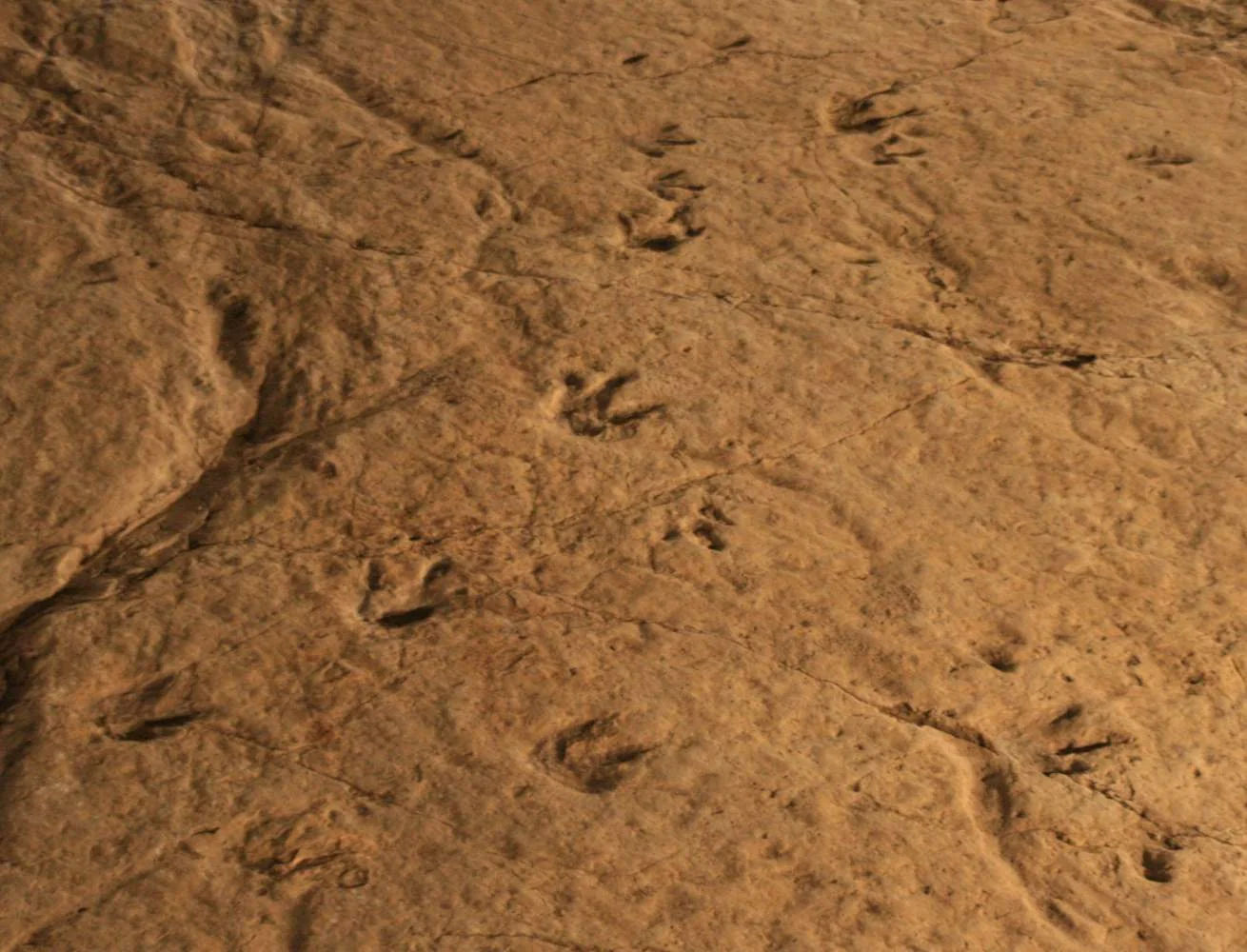
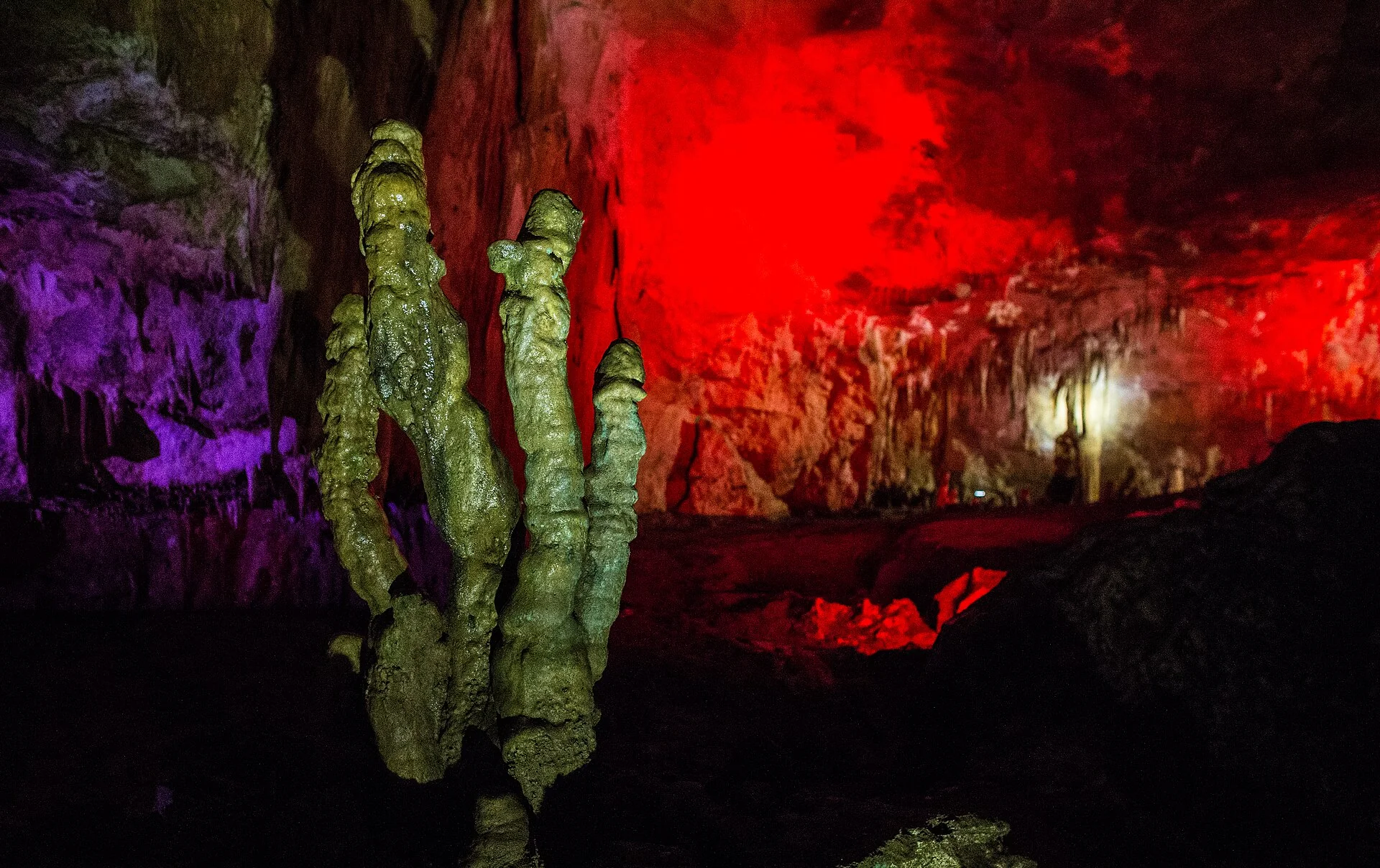
Choose Navenakhevi if you want a smaller cave and your party prefers not to spend the whole excursion inside an extensive underground system. Choose Prometheus if the cave is the main event and you are looking for a longer guided sequence with an optional boat service when river conditions allow. Choose Sataplia when dinosaur footprints, forest and a panorama are as important as the cave itself. Those are three genuinely different styles of day.
The decision may also turn on the current operating situation. The Agency's electronic-ticket guidance includes Navenakhevi among attractions with timed sessions, but published procedures can evolve. Before allocating a scarce holiday afternoon, verify the day's availability, language and visitor requirements. A right-sized attraction that is closed or has no suitable session is not a useful recommendation, however appealing the description sounds.
Plan the visit and the journey back.
- Location
- Visitor centre at Navenakhevi village, Terjola municipality, Imereti; do not confuse it with Tskaltubo's Prometheus Cave.
- Route
- The Agency describes around 250 metres across four halls on two levels, with steps. Confirm suitability for mobility limitations.
- Booking
- Official ticket guidance mentions Navenakhevi sessions. Confirm current admissions, language and any closure before departure.
- What to bring
- Grippy shoes and a light layer for cool, damp cave conditions; follow local rules about lighting and photography.
- Transport
- Arrange the last leg and return pickup in advance; a regional bus destination does not guarantee cave-door service.
- Stay base
- Kutaisi offers the broadest transport and accommodation choices for an Imereti visit that includes Terjola.
Area search, not a confirmed venue entrance. Use the guide's visitor details for the final approach.
Stay where the next day makes sense.
Compare the base first, then check the property's location and transport for your outing.
Kutaisi
Compare a city base for an Imereti itinerary, with a separate return journey to the attraction.
Compare directory stays →Search Kutaisi on Booking.com ↗Tskaltubo
Consider a quieter spa-town base for Tskaltubo and nearby cave visits. Confirm transport to each entrance.
Compare directory stays →Search Tskaltubo on Booking.com ↗Useful answers before setting out.
Is Navenakhevi Cave the same as Prometheus Cave?
No. Navenakhevi is a distinct protected cave in Terjola municipality. Prometheus Cave is at Kumistavi near Tskaltubo. The attraction, visitor-centre location and length of the managed experience are different; allow for separate journeys rather than assuming adjacent entrances.
How long is the visitor route at Navenakhevi?
The Agency of Protected Areas describes approximately 250 metres through four halls on two levels. This is route length, not a promise about queue or total excursion duration. Confirm the guided session and leave time for the drive and facilities.
Can visitors with limited mobility go inside?
Do not presume so. The authority describes steps between levels and the cave environment may be wet. Ask the visitor service for details about the exact sections currently open and any practical accessible alternative before purchasing.
Is Navenakhevi currently open every day?
The authority has published visitor infrastructure and ticketing information, but availability can change due to maintenance and operations. Use the official visitor page or contact channel for the date you intend to visit; avoid relying on historical hours in a travel blog.
Confirm the current visitor details.
Access, weather, opening hours and bookable experiences can change. Check the relevant operator or visitor authority for your date.
- Agency of Protected Areas — Navenakhevi Cave ↗
- Agency of Protected Areas — Cave reopening and facilities ↗
- Agency of Protected Areas — Ticket purchase rules ↗
- Agency of Protected Areas — Imereti Caves Administration ↗
Photograph sources and licenses
Illuminated limestone chamber and secured stairway inside Navenakhevi Cave in Imereti. Photograph by Ninomirotadze. Source photograph, CC BY-SA 4.0. Resized by Wikimedia where applicable and converted to WebP for web use. Responsive copies resized and compressed to WebP.
Protected dinosaur footprint surface at Sataplia in Imereti. Photograph by Aleksey Muhranoff. Source photograph, CC BY-SA 3.0. Resized and converted to WebP for web display. Responsive copies resized and compressed to WebP.
Illuminated limestone formations inside Prometheus Cave, Georgia. Photograph by Jon Gudorf Photography. Source photograph, CC BY-SA 2.0. Resized and converted to WebP for web display. Responsive copies resized and compressed to WebP.
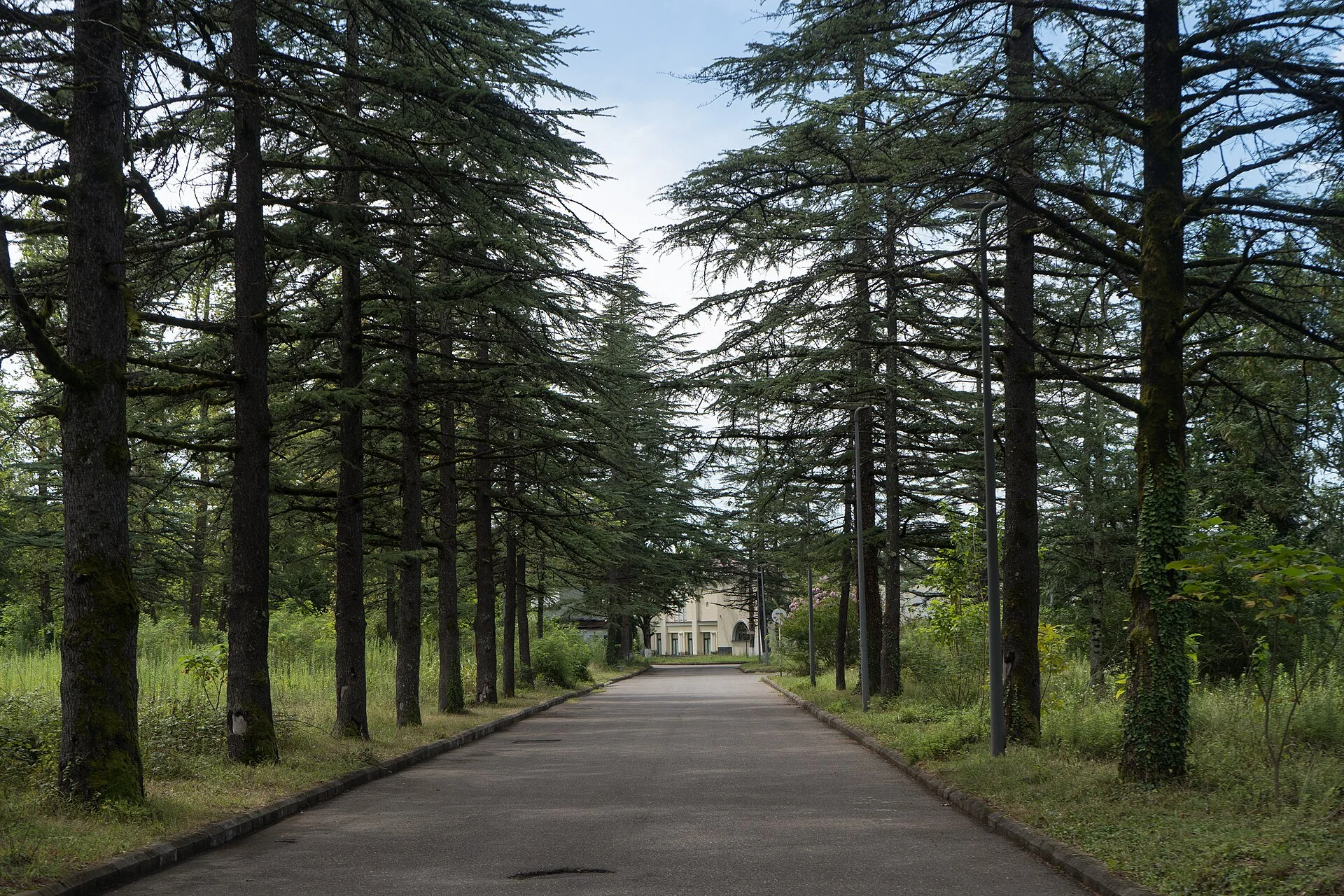
Tskaltubo Mineral Water Park, regional context only; this is not Tetra Cave. Photograph by Alexey Komarov. Source photograph, CC BY-SA 4.0. Resized by Wikimedia where applicable and converted to WebP for web use. Responsive copies resized and compressed to WebP.