Chiatura's valley, industrial architecture and hillside cable lines are unlike a typical Kutaisi cave-and-waterfall outing. Nearby Katskhi Pillar adds a very different form of vertical heritage: a church perched atop a narrow limestone monolith that ordinary visitors cannot climb. Linking these sights makes an interesting regional day, but it takes more than the word 'cable car' in a tour headline to understand what is actually accessible.
The practical choice is a Kutaisi-based group circuit with a local guide or a separately organized day with time for industrial history. Neither format grants access to derelict stations, mine infrastructure or the top of Katskhi Pillar.
Guided experience or independent visit?
Swipe sideways to compare all three columns ↔
| Decision | Guided | Independent |
|---|
| Where it starts | The researched activity starts and ends in Kutaisi, at the central McDonald's/Tbilisi Street meeting location. | Arrange your own transport out of Kutaisi and a workable return from the valley. |
|---|
| Total time | Advertised as approximately 7.5 hours, with a detailed itinerary running longer; verify actual return. | Leave a full day for travel, viewing, transfers and meals. |
|---|
| Cable-car reality | Supplier describes riding active Chiatura cable cars, sometimes with an optional ticket. | Use only officially open modern lines; don't enter abandoned Soviet installations. |
|---|
| Sacred places | Katskhi Pillar viewed from ground and Mghvimevi cave monastery subject to opening. | Visit the accessible religious areas respectfully, never climb the pillar. |
|---|
| Optional expenses | The listing separately prices the cable-car ticket and local meal. | Pay current transport, food and any venue charges directly. |
|---|
| History | A local guide may put manganese mining and cable-car networks in context. | Research local heritage and allow time for viewpoints beyond dramatic 'abandoned' photos. |
|---|
Chiatura's active cables and abandoned infrastructure are different
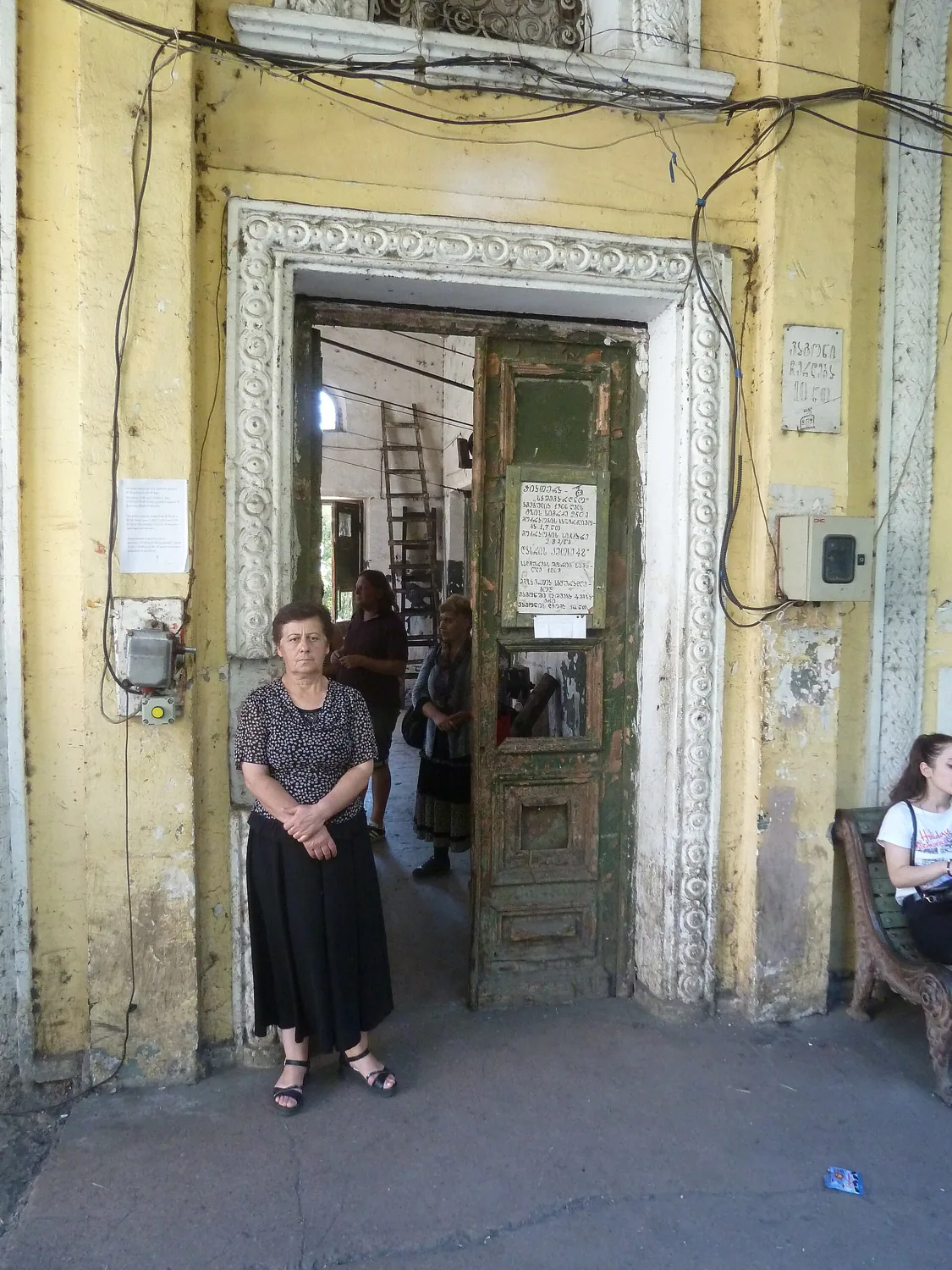
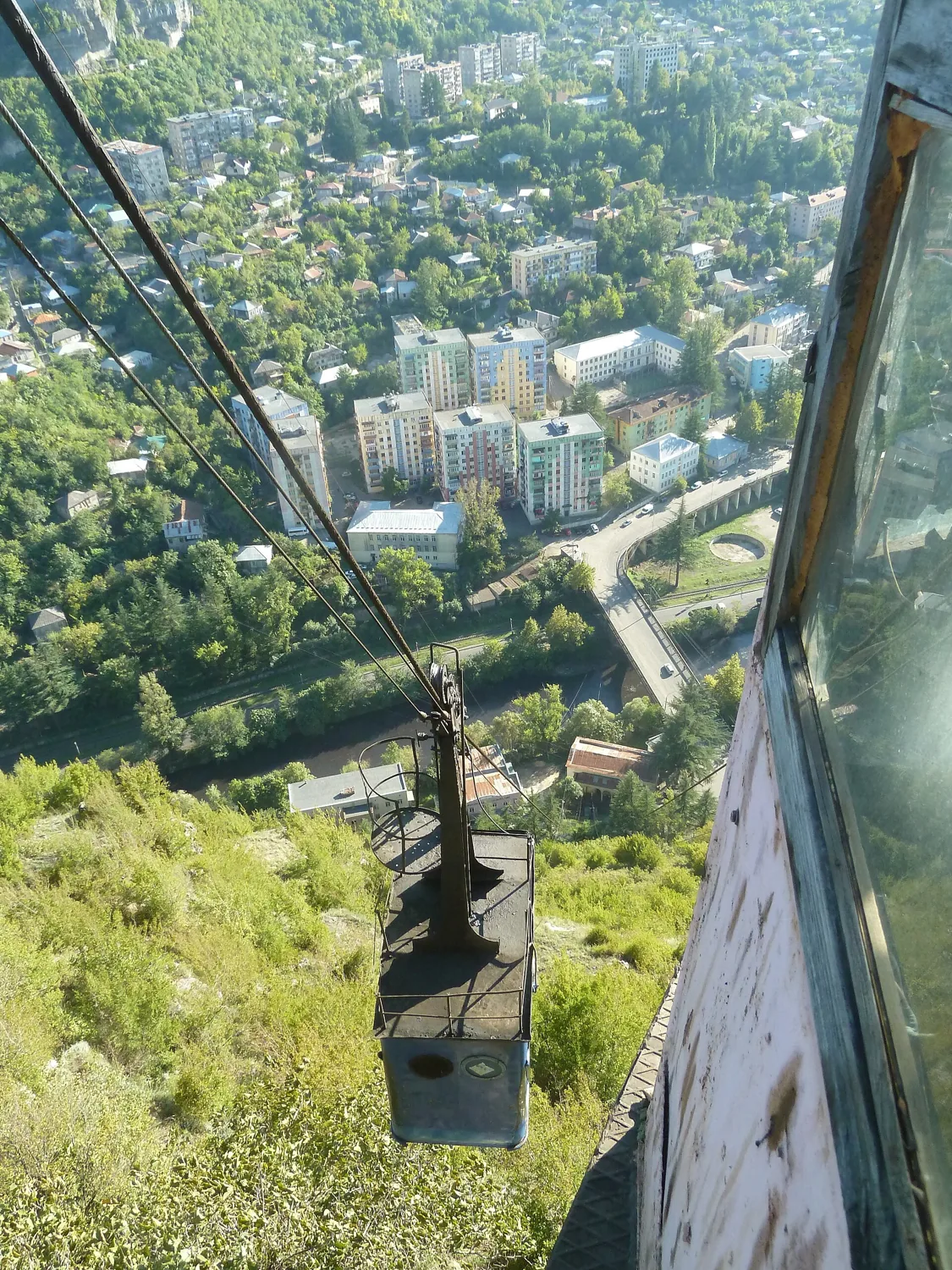
Chiatura developed as a manganese-mining town where the narrow river valley and steep hills encouraged aerial transport. Its much-photographed Soviet-era cable-car network became a symbol of the city. That historical reputation is not evidence that every old cabin or station can legally be entered or ridden today. Newer public cable lines were developed to replace older infrastructure; routes and operating times must be confirmed with the actual municipal operator.
A guided tour may use an operating cable line for a panoramic look over the town. If it doesn't operate because of maintenance, the visit can still be about the valley, industrial history and nearby monuments, but a ticket headline should not imply that the old 'flying coffins' remain a tourist ride. Stay out of abandoned stations, rusting cables, shafts and mine structures. They are not safe viewpoints simply because other people have photographed them.
The Kutaisi excursion and its genuine stop list
The BFT GROUP GetYourGuide listing advertises a Chiatura day trip from Kutaisi via Katskhi Pillar, the Mghvimevi cave monastery and the town's modern cable-car/viewpoint areas. Its meeting reference is the McDonald's at 1 Tbilisi Street, with red-scarf staff. The headline says around seven and a half hours, although the text lays out a 10:00 meeting and an 18:00 finish, so the booked return time needs checking directly.
Cable-car fares and lunch are separately described in the listing; the exact amounts are not fixed visitor promises. The operator includes guiding and transport. Some listed station, theatre and railway-stop language is overambitious: public access may not be available, and a recent verified review explicitly notes the theatre and station could not be visited. Judge the tour on its realistic core sites, not on every line of a long marketing itinerary.
Katskhi Pillar is a viewing visit, not a climb
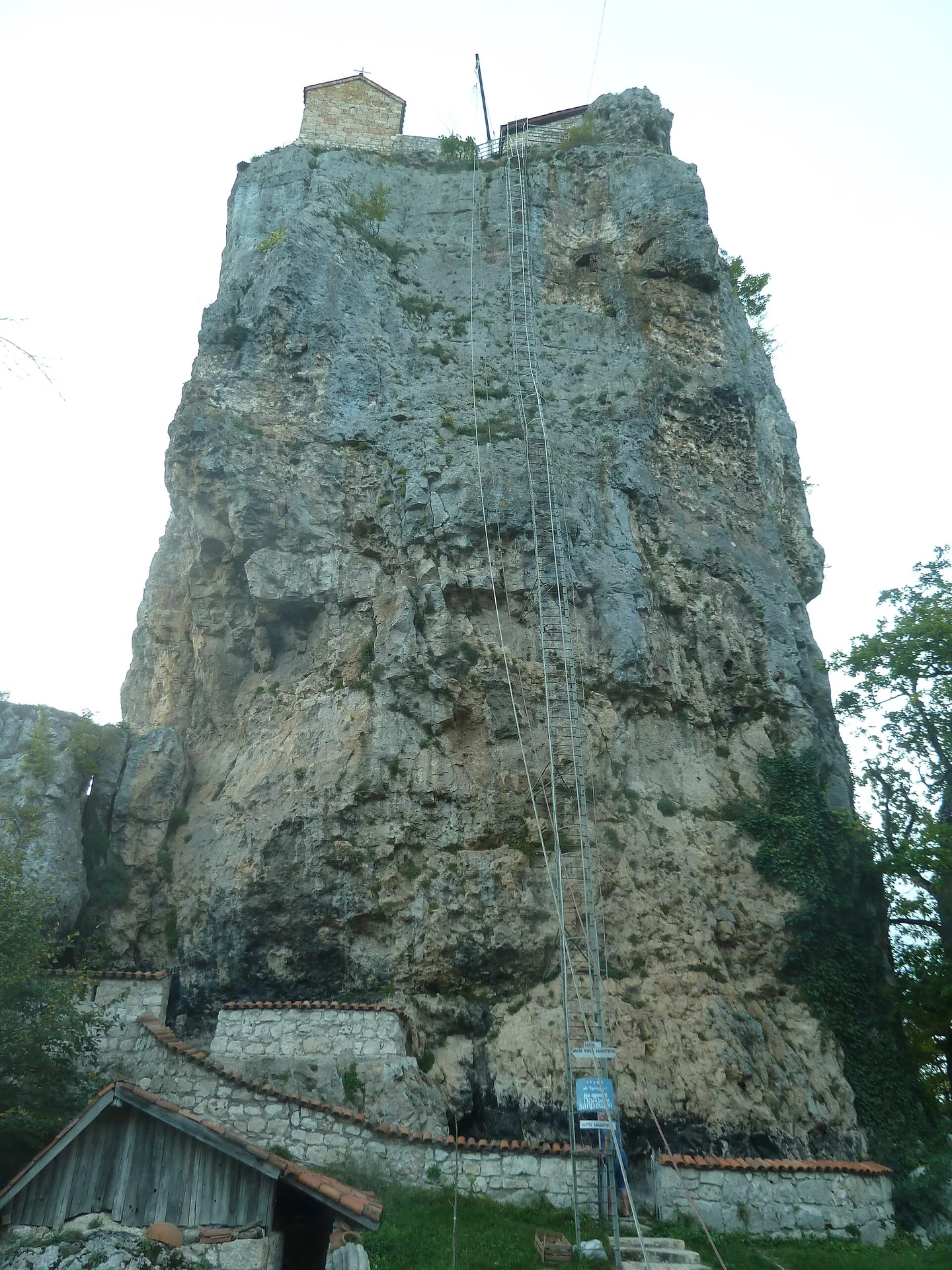
Georgia Travel explains that Katskhi Pillar is roughly forty metres high and bears a small church at the top. The ascent is restricted: ordinary visitors are forbidden to climb it. The rock is a religious place as well as a natural landmark. Expect a ground-level view of the pillar and accessible surroundings rather than a rope, ladder or guided ascent arranged by an activity provider.
There are additional religious monuments near the pillar and at Mghvimevi, but each follows its own worship, dress, access and photography rules. A tour that offers the pillar is not promising entry to its upper church. Respect the prohibition even if old internet photographs show someone on the summit.
Independent transport takes planning beyond a town name
If you drive independently from Kutaisi, decide how to combine Chiatura town, the pillar and Mghvimevi without doubling back unnecessarily. The sites are separated by road, and the town's vertical layout makes map distances misleading. A driver can provide a practical return but confirm waiting arrangements, fare and what counts as a stop. Public transport to Chiatura alone doesn't guarantee onward access to each religious site.
Take time for urban history beyond exoticising the town as a 'ghost city': Chiatura remains a lived-in place. Respect homes and active industrial facilities. Local residents use public connections for work and daily journeys, not as amusement rides for visitors. A short guided circuit gives structure; an independent day is better if photography and the mining story deserve slower observation.
Check operational access before paying
Ask the operator which modern cable route will be used, whether it is running, what happens if the service is suspended, which historic buildings may actually be entered and the latest total return time. Footwear matters on steps around monasteries and valley slopes. Don't take a young child onto unsafe structures or promise a person with reduced mobility that every religious approach is step-free.
The reason to book is the combined itinerary and informed transport, not a guaranteed ride in an obsolete cable car. With accurate expectations, this can be one of Imereti's most distinctive days without turning its industrial past or religious places into unsafe attractions.
Questions before you go
Can tourists climb Katskhi Pillar?
No. Georgia Travel says access to the summit is forbidden to ordinary visitors; visit the ground-level sites and viewpoints.
Does the excursion leave from Tbilisi?
No. The checked BFT GROUP product departs from central Kutaisi and returns there.
Can you ride an abandoned Soviet cable car?
Do not assume so. The tour refers to contemporary operating Chiatura cables; abandoned equipment is not a lawful or safe visitor ride.
Is the cable-car ticket included?
The reviewed listing shows it as an optional extra. Recheck the exact option and fare.
Can I enter the theatre and railway station?
Do not rely on those claims; recent supplier reviews report that interior visits were not possible. Confirm actual access before booking.
How long is the whole day?
The headline lists about 7.5 hours but its timetable suggests a longer day. Confirm the actual Kutaisi return.
Continue planning independently
Sources and further checking
Research reviewed in October 2026. Activity options, entrance conditions and provider routes can change. Confirm inclusions and the selected date before committing.
Photograph sources and licenses
Katskhi limestone pillar topped by a monastery in Imereti. By Lorenz King, JLU, university Giessen.de. Original photograph · CC BY-SA 4.0. Resized and converted from Wikimedia Commons photo to WebP. Location/context photography, not supplier-owned tour imagery.
Entrance to a cable-car station in Chiatura, Imereti. By Matti&Keti. Original photograph · CC BY-SA 4.0. Scaled and converted to compressed WebP; original attribution and applicable share-alike terms retained. Location/context photography, not supplier-owned tour imagery.
Chiatura viewed from a cable-car station above the town. By Lorenz King, Giessen university.de. Original photograph · CC BY-SA 4.0. Scaled and converted to compressed WebP; original attribution and applicable share-alike terms retained. Location/context photography, not supplier-owned tour imagery.